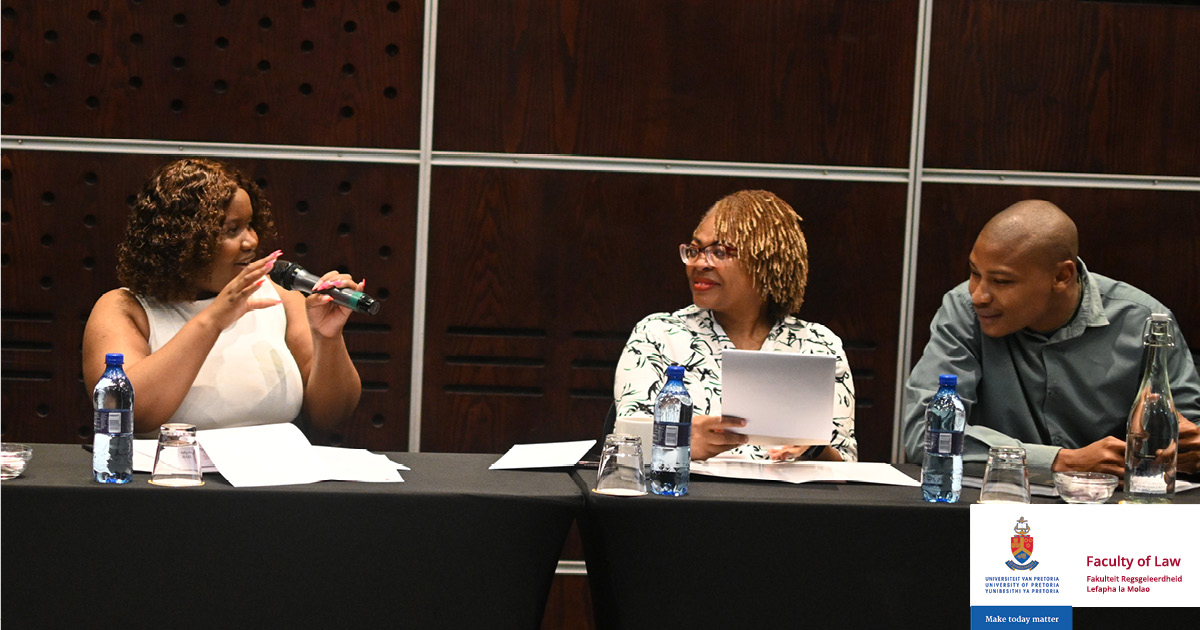
The Centre for Human Rights, Faculty of Law, University of Pretoria hosted the 5th edition of the Regional Convening on Access to Justice for Persons with Disabilities in Africa from 17 to 18 September 2026 at Premier Hotel, OR Tambo International Airport. Both the Convention on the Rights of Persons with Disabilities (CRPD) and the Protocol to the African Charter on Human and Peoples’ Rights on the Rights of Persons with Disabilities in Africa (African Disability Protocol) explicitly recognise the right of persons with disabilities to access justice under article 13. This recognition responds to the significant barriers persons with disabilities face in accessing justice, which adversely affect the enjoyment of their other human rights and fundamental freedoms.
The Regional convening has been taking place annually since 2021 with the aim of strengthening the capacity of relevant stakeholders including magistrates, police officers, organisations of persons with disabilities, legal aid officers and academics on how to address barriers to equal access to justice by persons with disabilities. During the convenings, a range of experts from various sectors including civil society, intermediaries and academia with expertise in law, disability advocacy, communication and speech therapy, have been sharing their research and experiences. This year’s convening brought together 35 participants from various African countries including Botswana, Kenya, Lesotho, South Africa, Zambia, Tanzania and Zimbabwe.
During the convening, participants highlighted that persons with disabilities face a number of barriers to accessing justice including accessibility, communication, legal, attitudinal, and procedural barriers at all the stages of the criminal justice process including the reporting, investigation, prosecution and trial stages. According to participants, addressing these barriers requires raising awareness on disability issues, ensuring accessibility and the provision of reasonable accommodations, facilitating the use of augmentative and alternative communication (AAC), and access to intermediaries, as well as ensuring the availability of legal aid for persons with disabilities. Moreover, participants underscored that ensuring access to justice for persons with disabilities necessitates taking into account identities intersecting with disabilities and addressing the needs of persons vulnerable to discrimination on multiple grounds.
This year’s regional convening placed emphasis on analysing recent developments on access to justice in Africa, including legislative developments in Kenya’s Persons with Disabilities Act of 2025, Lesotho’s Persons with Disability Equity Act of 2021 and the amendments to South Africa’s Criminal Procedure Act which strengthen access to justice for persons with disabilities by requiring the provision of procedural and regional accommodations, including the use of intermediaries. Participants also discussed Lesotho’s Disability and Equity (Procedure) Rules as an example of a good practice that ensures that persons with disabilities receive the accommodations they require in order to participate effectively in the justice system. The court rules provide guidance to members of the judiciary on accommodating persons with disabilities. Despite these developments, participants also shared their concern that even in states where access to justice reforms have taken place, the common and persistent practice of violating the right to legal capacity through the denial of the testimonial competence of persons with intellectual or psychosocial disabilities remains a concern. They therefore, stressed that effective access to justice requires recognition of universal legal capacity for all persons with disabilities, as envisaged by the CRPD and African Disability Protocol.
Participants also highlighted the impact of the regional convenings in strengthening their capacity to handle cases involving persons with disabilities, providing a platform for sharing knowledge and experiences, and creating opportunities for networking among actors in the justice systems of various African countries. Given the crucial role of the right to access justice in the effective enjoyment of other rights, the Centre will continue to undertake similar activities aimed at promoting the full and effective enjoyment of this right by persons with disabilities across Africa.


For more information, please contact: