The Centre for Human Rights, Faculty of Law, University of Pretoria (the Centre), in collaboration with MISA Zimbabwe, hosted the virtual launch of the Zimbabwe Elections Report on Wednesday, 8 April 2026. The report is titled “Proactive Disclosure of Information During Elections: An Evaluation of Zimbabwe's Compliance with the Guidelines on Access to Information and Elections in Africa During the Harmonised Elections of 23 August 2023”. The event convened academia, civil society, media practitioners, youth formations and public institutions to reflect on the extent to which Zimbabwe's electoral stakeholders complied with continental standards on access to information. The main goal was to present key findings from the report and to foster dialogue on strengthening legal frameworks, proactive disclosure practices and multi-stakeholder coordination to safeguard information integrity and democratic participation. Drawing on qualitative research conducted between July and October 2023, the programme examined patterns of non-disclosure during the electoral cycle, the role of digital and social media in shaping electoral information ecosystems, and the impact of information gaps on civic education, accountability, and public participation.
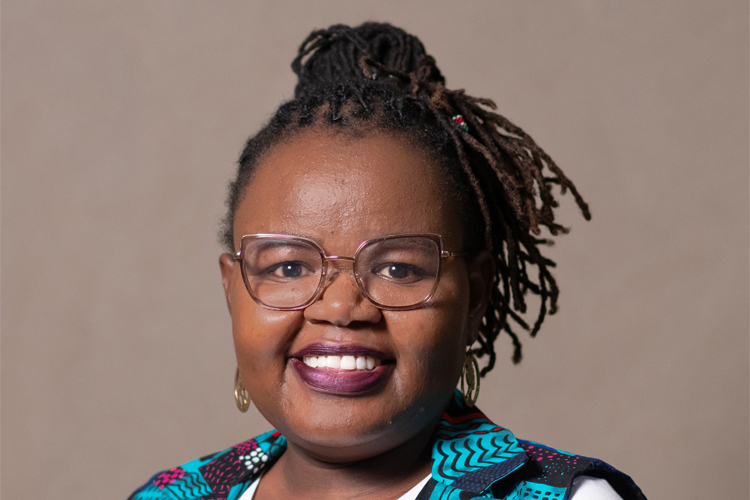
In her opening remarks, Ivy Gikonyo committed the Centre to advancing access to information as a foundation of democratic governance. Dr Sabelo, the Centre’s Assistant Director, underscored the importance of situating Zimbabwe's electoral practices within the framework of the Guidelines on Access to Information and Elections in Africa, adopted by the African Commission on Human and Peoples' Rights in 2017. Dr Tabani Moyo, Regional Director of the MISA Regional Secretariat, highlighted the critical role of civil society in holding electoral stakeholders accountable.
Professor Admire Mare, the author of the report, presented key findings, assessing compliance using four indicators: total, substantial, partial and non-compliance. Notable gaps emerged at ZEC and ZBC. ZEC failed to publish a verifiable voters’ roll, meeting minutes, or internal voting records, and its communication lacked clarity. ZBC, despite section 160(G) of the Electoral Act, showed significant media imbalance favouring the ruling party. Digital and social media amplified misinformation, disinformation, and hate speech (WhatsApp, X, Facebook, TikTok), including misleading flyers and online harassment targeting female journalists and candidates.
The first discussion reflected on institutional responsibilities and accountability. Discussion themes included institutional obligations under regional human rights standards, disclosure practices during electoral processes, and accountability mechanisms and oversight. The conversation was situated within the framework of the Guidelines on Access to Information and Elections in Africa, which articulate clear standards for proactive disclosure, equitable media access, transparency in electoral administration, and protection against information manipulation. The report noted that access to information is a prerequisite for credible elections and that institutional accountability remains a critical gap in Zimbabwe’s electoral cycle.
The second discussion centred perspectives from civil society, media and independent consultants working across electoral transparency, access to information and public accountability. Participants included Dr Tabani Moyo, Unique Zimuto (Heart & Soul TV), and Lloyd Kuveya (Independent Consultant). Discussion themes encompassed experiences of accessing information during the electoral cycle, the role of the media in addressing information gaps, and strengthening multi-stakeholder collaboration. Zimuto highlighted that polling stations did not open in Harare and Bulawayo, and that ZEC did not communicate adequately with the public about what was happening. She called for multi-stakeholder collaboration, including fact-checking segments in partnership with ZimFact, and expressed concern over the low participation of female candidates. Kuveya addressed the need to invest in alternative media while acknowledging the challenges of creating new transmission channels, noting that funding remains a bone of contention requiring innovative financing models. He also called for training to be extended to judicial officers and court officials to ensure human rights are protected while they remain well informed, and for a ban on internet shutdowns to be included within the legal definition of free and fair elections, as it currently does not cover this. Dr Moyo called for dual accreditation of journalists to be embedded in electoral law, with ZEC responsible for accrediting both local and foreign journalists and publicly explaining how accreditation decisions are reached, including criteria, timelines, and reasons for any rejections. He also called for institutionalised media monitoring to ensure fair and balanced coverage during elections, and for domestication of the UN Plan of Action on the Safety of Journalists to become part of domestic remedies protecting journalists before, during, and after elections.
A facilitated interactive session, led by Belinda Matore, focused on reform priorities and practical solutions and Priscilla Mbanga of the Zimbabwe Human Rights Commission offered institutional reflections, emphasising stakeholder accountability. She noted that security forces and traditional leaders must not be invited into partisan politics, nor should they coerce villagers to attend rallies. She confirmed that her findings mirrored those of the report.
Closing remarks were delivered by Ivy Gikonyo, who emphasised that moving beyond documentation toward concrete implementation is the central next step for electoral transparency work in Zimbabwe. The discussions reflected a shared commitment to strengthening institutional and public-interest responses to information governance during elections. A shared Call to Action was adopted, outlining priority reforms, institutional commitments and mechanisms for follow-up and monitoring. The report urged compliance with the Principles and Guidelines for the Use of Digital and Social Media in Elections in Africa, a framework designed to mitigate misinformation, disinformation and online hate speech in electoral contexts. The Centre for Human Rights reaffirmed its commitment to promoting accountability, transparency and responsible information governance in electoral contexts across Africa.
For more information, please contact: