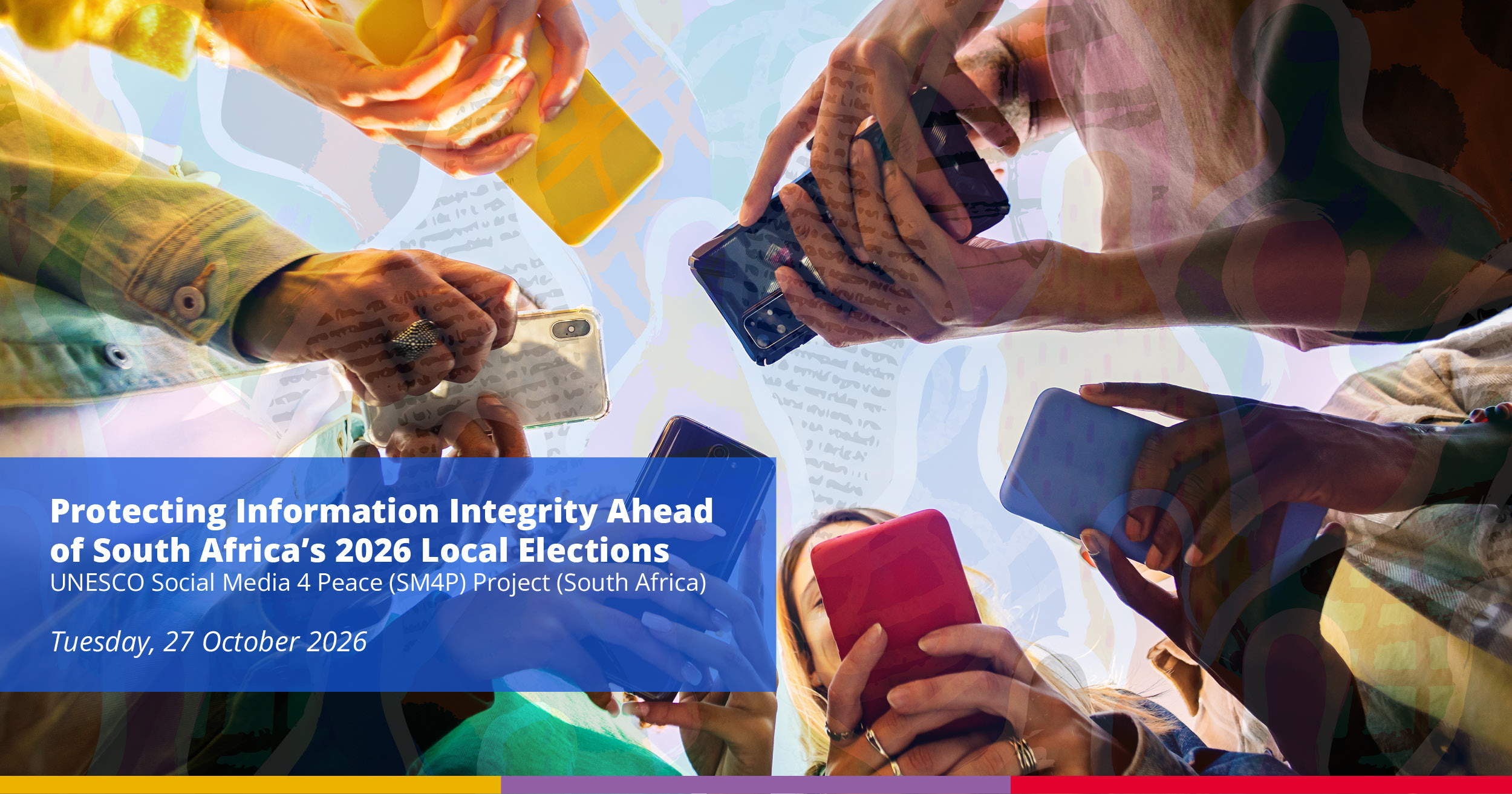
The Centre for Human Rights, Faculty of Law, University of Pretoria cordially invites you to a Pre-Election Engagement discussion. As South Africa approaches election day, what are the most significant information integrity risks facing voters, and what immediate measures can stakeholders take to ensure that citizens are able to make informed electoral choices based on accurate and reliable information? The discussion will approach this question through the interconnected principles of information integrity, freedom of expression, access to information, political participation, equality and non-discrimination.
Event Details
Date: 27 October 2026
Venue: Plant Science Auditorium, Hatfield Campus, University of South Africa
Register on Zoom RSVP (in person attendance)
Overview and Background
South Africa’s 2026 Local Government Elections will take place against a complex electoral and information environment. Local elections provide an important opportunity for voters to assess candidates and make informed decisions about issues affecting their communities, including service delivery, water and electricity, housing, unemployment, infrastructure, crime, local economic development and municipal governance. At the same time, voters increasingly access election-related information through social media, messaging platforms and other digital channels. While these channels can expand access to information and participation, they can also facilitate the rapid circulation of false or misleading information, manipulated content, AI-generated material and harmful narratives. The Electoral Commission has identified digital disinformation as an electoral concern and has developed mechanisms and guidance aimed at protecting the integrity of electoral information and supporting informed participation.
The circulation of misleading, discriminatory or other harmful narratives during election periods can affect public understanding, deepen social divisions and undermine informed participation. Such narratives may spread through online platforms, media reporting and community networks, particularly where claims are shared without adequate evidence or context. The Dialogue will examine how stakeholders can promote accurate, contextualised and reliable election-related information, address harmful content and strengthen public trust while safeguarding freedom of expression and access to information.
The Dialogue therefore asks a central question:
As South Africa approaches election day, what are the most significant information integrity risks facing voters, and what practical measures can stakeholders take to ensure that citizens can make informed electoral choices based on accurate and reliable information?
The discussion will approach this question through the interconnected principles of information integrity, freedom of expression, access to information, democratic participation, equality and non-discrimination.
Objectives
The Dialogue seeks to:
- Examine the quality and integrity of election-related information available to voters ahead of the 2026 Local Government Elections and its potential impact on informed decision-making.
- Identify practical actions that electoral institutions, media, civil society organisations, digital platforms and other relevant stakeholders can take before election day to address misleading information and harmful narratives.
- Examine how voters can be supported to access reliable, accurate and contextualised information on electoral processes, candidates and local governance issues.
- Distinguish legitimate debate on migration policy from misleading, discriminatory or other harmful narratives targeting groups in situations of vulnerability.
- Examine emerging information-integrity risks, including AI-generated content, disinformation, manipulated media and hyperlocal online narratives.
- Identify practical measures that electoral institutions, media, digital platforms and civil society can take to address harmful content, strengthen information integrity and support informed, rights-respecting participation during the election period and the immediate post-election period.
Thematic Areas for Discussion
Panel 1: Electoral communication and information integrity during local elections
This panel will examine how election-related information is produced, communicated and circulated during the 2026 Local Government Elections. It will consider the role of political parties, candidates, media organisations, digital platforms and civil society in supporting accurate, responsible and inclusive electoral communication. The discussion will explore how misleading information, manipulated content and unverified claims can affect public understanding, trust and social cohesion during election periods. It will also consider the responsibilities of information providers and the role of media, digital platforms and other stakeholders in promoting access to reliable, contextualised information while safeguarding freedom of expression, equality and human dignity. The panel will identify practical approaches to strengthening information integrity and public trust in the electoral information environment.
Discussants:
- Dr Phathiswa Magopeni, Executive Director, South African Press Council / SM4P Coalition
- Kyle Janse, Centre for Analytics and Behavioural Change (CABC)
- Adv Pansy Tlakula, Information Regulator
Panel 2: Digital Platforms, AI and Voter Agency in Electoral Information Integrity
This panel will examine how digital platforms and emerging technologies shape access to and circulation of election-related information during the 2026 Local Government Elections. It will consider how algorithmic recommendation systems, AI-generated and manipulated content, and engagement-driven platform design can influence the visibility, reach and credibility of electoral information. The discussion will explore the responsibilities of digital platforms, media organisations, fact-checkers and other relevant stakeholders in promoting transparency, addressing misleading information and supporting access to accurate, contextualised and locally relevant information. The panel will also consider practical approaches to strengthening media and information literacy, AI literacy and voters’ ability to assess information encountered online. Particular attention will be given to platform transparency and accountability, collaboration among stakeholders, and measures to strengthen information integrity while safeguarding freedom of expression, access to information and meaningful participation in the electoral process.
Discussants:
- Dr Victor Shale, Independent Electoral Commission (IEC) (TBC)
- William Bird, Director, Moxii Africa
- Oupa Makhalemele, Films and Publications Board (TBC)
- Reggy Moalusi, South African National Editors’ Forum (SANEF)
- Tholoana Ncheke-Mahlaela, Tiktok (TBC)
Target Audience
The Dialogue will bring together representatives of the IEC, political communication and electoral researchers, media and fact-checking organisations, digital rights and civil society organisations, migrant and refugee rights organisations, technology platforms, academia, youth and community organisations and members of the SM4PSA Coalition.
Expected Outcomes
The Dialogue is intended to produce:
- A shared understanding of key information-integrity challenges facing voters ahead of the 2026 Local Government Elections.
- Greater clarity on the relationship between electoral information integrity, freedom of expression, access to information and meaningful participation.
- Identification of emerging risks associated with AI, digital platforms and online harms, including disinformation and harmful narratives.
- Practical recommendations for electoral institutions, media, digital platforms and civil society on strengthening information integrity and addressing harmful content.
- Recommendations for evidence-based, inclusive and rights-respecting communication during election periods.
- A set of Pre-election information integrity recommendations to inform stakeholders in the period immediately preceding the elections.
Conclusion
Election integrity extends beyond the mechanics of voting. It also depends on whether voters can access reliable, contextualised and meaningful information that enables them to assess claims and participate in democratic life. The Pre-Election Information Integrity Dialogue will bring together electoral institutions, media, digital platforms, researchers and civil society to examine challenges within the electoral information environment and identify practical responses. The Dialogue seeks to strengthen information integrity, promote responsible communication and support informed, inclusive and rights-respecting participation in South Africa’s 2026 Local Government Elections.
For more information, please contact: