

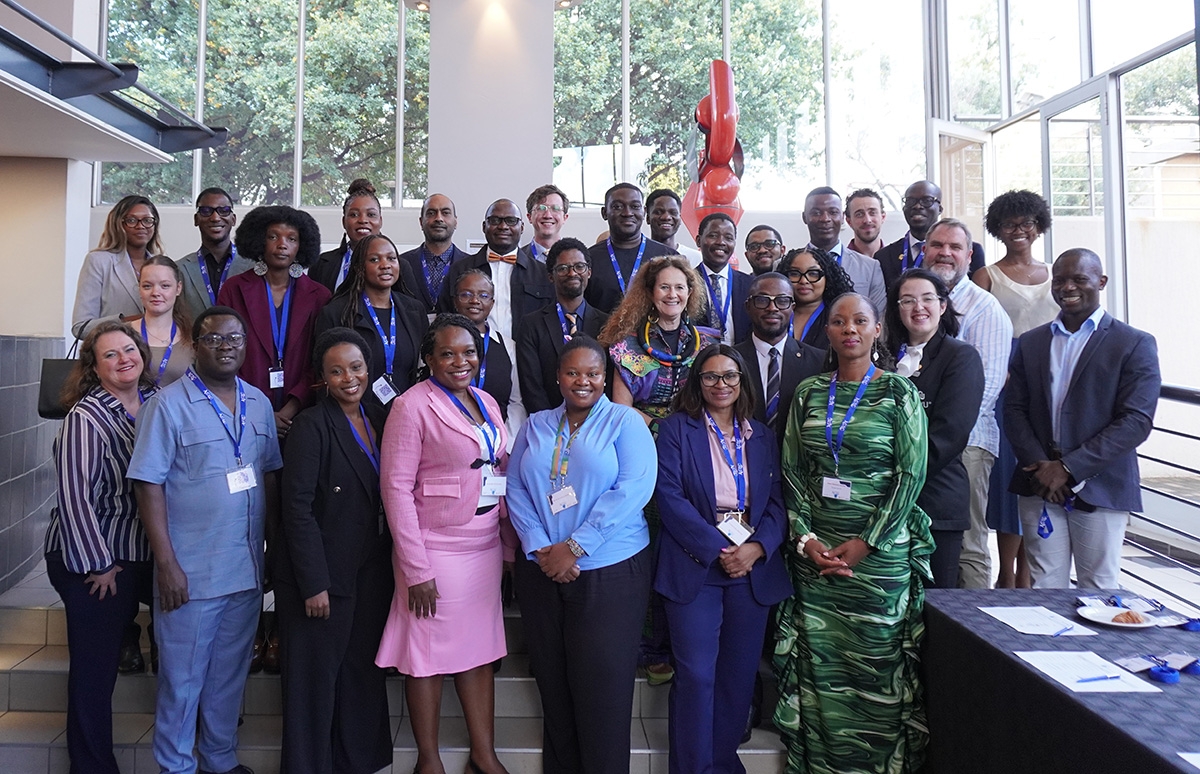
The African Cyber Law Conference 2026 was hosted by the School of Law, University of Witwatersrand, Johannesburg from 24-25 March 2026. The Conference brought together scholars, practitioners, and policymakers to examine the evolving landscape of Artificial Intelligence (AI) governance in Africa. The Centre for Human Rights, Faculty of Law, University of Pretoria was represented by Michael Aboneka from the Freedom of Expression, Access to Information and Digital Rights Unit who presented a paper on how Africans must be architects in developing AI that speaks to African contexts in legal research. His presentation was recognized as the best academic paper presentation at the conference, for which he received an award.
A major concern highlighted was the lack of transparency and explainability in AI systems. The “black box” nature of these technologies undermines accountability, particularly in sectors like law and healthcare where decision-making must be justified. Participants stressed that explainability is both a legal and ethical requirement, warning against superficial “checkbox compliance” that fails to ensure real accountability.
The conference strongly supported a human rights-based approach to AI governance, grounded in African philosophies such as Ubuntu. This approach promotes inclusivity, communal well-being, and participatory design, ensuring that communities are actively involved in shaping AI systems. Indigenous knowledge systems were highlighted as offering valuable governance principles, including custodianship, reciprocity, and collective responsibility.
Discussions also underscored the importance of contextualizing AI within African socio-economic realities. Participants cautioned against importing foreign regulatory models, advocating instead for evidence-based policymaking tailored to local conditions. Challenges such as linguistic diversity, data bias, and socio-economic inequality were identified as critical factors influencing AI deployment. Structural inequalities in the global AI ecosystem were another central concern. Africa remains largely a consumer and data provider rather than a developer of core AI technologies, resulting in power imbalances. While partnerships with global technology companies are necessary, participants emphasized the need for equitable collaboration, local capacity building, and strategic regulation.
Importantly, Aboneka’s presentation underscored persistent structural challenges, including lack of electricity affecting over 600 million people in Africa as well as low mobile phone penetration and limited connectivity, which further deepen the digital divide and significantly constrain inclusive AI development and deployment.
In conclusion, the conference called for a participatory, context-sensitive, and resilient approach to AI governance in Africa which integrates legal, technical, and societal dimensions while ensuring that African voices and realities shape the continent’s digital future.
For further information: