The African Coalition for Corporate Accountability (ACCA) and Partners envisions an Africa where businesses respect human rights, communities have access to effective remedies, and corporate actors are held accountable for harm. Yet despite shared struggles across the continent, African civil society continues to operate within colonial-era divisions that fragment solidarity and weaken collective action.
Webinar Details
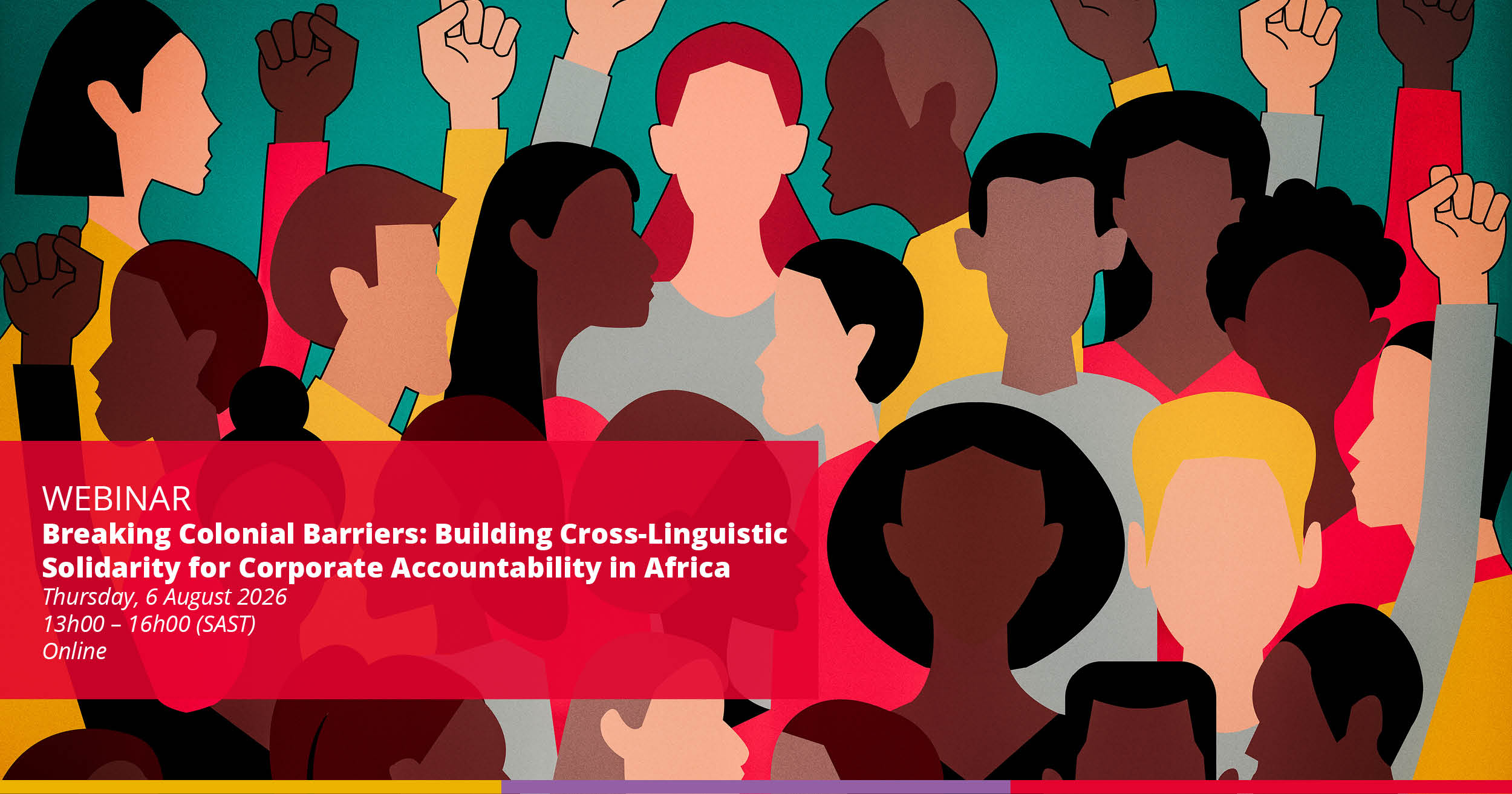
Thursday, 6 August 2026
13:00 – 16:00 (SAST)
Register on Zoom
One of the most persistent barriers is the divide between Anglophone, Francophone, and Lusophone Africa. While often viewed as a language issue, this divide is deeply structural.
Different legal traditions, particularly Common Law and Civil Law systems, lead to unequal approaches to litigation, standing, evidence, and public-interest advocacy. Similarly, language
barriers, visa restrictions, expensive travel routes, and weak intra-African transport connectivity continue to isolate activists, lawyers, researchers, and affected communities from one another. It is often easier and cheaper to travel to Europe than to neighbouring African countries. In many cases, advocates must transit through former colonial hubs to reach fellow Africans working on the same struggles. These barriers significantly undermine the development of a truly pan-African movement for corporate accountability.
Meanwhile, multinational corporations (MNCs) operate seamlessly across borders. Capital, extractive operations, supply chains, and investments move freely across jurisdictions, while
civil society actors remain constrained by fragmented legal systems, mobility restrictions, and linguistic silos. Corporations are therefore able to exploit regulatory inconsistencies and gaps in cross-border cooperation to avoid accountability.
This webinar seeks to confront these barriers directly and ask a critical question: How do African civil society actors build meaningful cross-linguistic and cross-border solidarity
capable of responding to transnational corporate power?
The discussion also comes at an important moment for continental integration. The African Continental Free Trade Area (AfCFTA) and the Protocol on Free Movement of Persons provide
an opportunity to rethink mobility not only in economic terms but also as a tool for human rights protection, community solidarity, and cross-border accountability. Freedom of movement must not benefit corporations alone. It must also empower communities, lawyers, defenders, journalists, and civil society organisations working to protect human rights across Africa.
2. Objectives
This webinar aims to:
- Examine how colonial linguistic divisions, visa regimes, legal dualism, and transport inequalities undermine collaboration on corporate accountability across Africa.
- Create dialogue between Anglophone, Francophone, and Lusophone civil society actors working on business and human rights issues.
- Discuss how the AfCFTA Protocol on Free Movement of Persons can support cross-border advocacy, investigations, litigation, and community engagement.
- Identify practical tools and institutional strategies for bilingual and cross-jurisdictional cooperation.
- Promote coordinated continental advocacy on mandatory human rights due diligence, extractives governance, environmental justice, and the Binding Treaty on Business and
Human Rights.
3. Guiding questions
- Why do colonial linguistic divisions continue to shape civil society collaboration in Africa?
- How do visa restrictions and transport systems undermine regional solidarity?
- How can civil law and common law practitioners work more effectively together?
- What role can AfCFTA and free movement frameworks play in strengthening human rights work?
- How do we build faster cross-border responses to corporate harm affecting multiple jurisdictions?
- What practical mechanisms are needed to sustain bilingual and cross-regional cooperation?
4. Target audience
- ACCA Member Organisations
- Business and Human Rights practitioners
- Public interest and environmental lawyers
- Trade and AfCFTA policy experts
- Human rights defenders and grassroots activists
- Community representatives affected by extractive industries
- Researchers and academics working on corporate accountability
- Regional economic and legal experts
Session 1: Colonial Borders, Language, and Legal Fragmentation (30 Minutes) Focus
Understanding the structural barriers limiting pan-African solidarity.
Key Discussion Points
- Common Law vs Civil Law approaches to corporate accountability
- Public interest litigation and standing (locus standi)
- Language as a barrier to justice and movement-building
- Visa regimes and transport inequalities in Africa
- The continued colonial architecture of African mobility
Session 2: Reimagining Free Movement as a Human Rights Tool (30 Minutes) Focus Using continental integration frameworks to strengthen accountability.
Key Discussion Points
- The AfCFTA Protocol on Free Movement of Persons
- Mobility for human rights defenders and affected communities
- Cross-border evidence gathering and investigations
- Building regional rapid-response networks
- Countering transnational corporate mobility with transnational accountability
Session 3: Practical Pathways for Collaboration (30 Minutes) Focus Building sustainable systems for joint action.
Proposed Solutions
- Legal twinning between Francophone, Lusophone, and Anglophone lawyers
- A multilingual corporate accountability resource hub
- Joint investigations and regional fact-finding missions
- Shared litigation and jurisprudence databases
- Interpretation and translation support systems
- Coordinated advocacy on the Binding Treaty and mandatory human rights due diligence
6. Expected outcomes
- Strengthened collaboration between Anglophone, Francophone, and Lusophone ACCA members
- Establishment of a cross-linguistic working group on corporate accountability
- Recommendations on mobility and visa barriers affecting civil society cooperation
- Development of practical bilingual collaboration tools and knowledge-sharing mechanisms
- Increased awareness of AfCFTA free movement provisions among human rights actors
- A stronger and more unified African civil society voice on business and human rights Policy anchor African Continental Free Trade Area Secretariat – Senior Technical Representative
7. Conclusion
Corporate harm in Africa is increasingly transnational. African civil society responses must therefore become equally transnational, coordinated, and united. Overcoming linguistic,
legal, and mobility barriers is not simply an operational necessity; it is central to decolonising corporate accountability work on the continent. This webinar seeks to move beyond identifying the divide and toward building the bridges necessary for a truly pan-African movement for justice, accountability, and community protection.