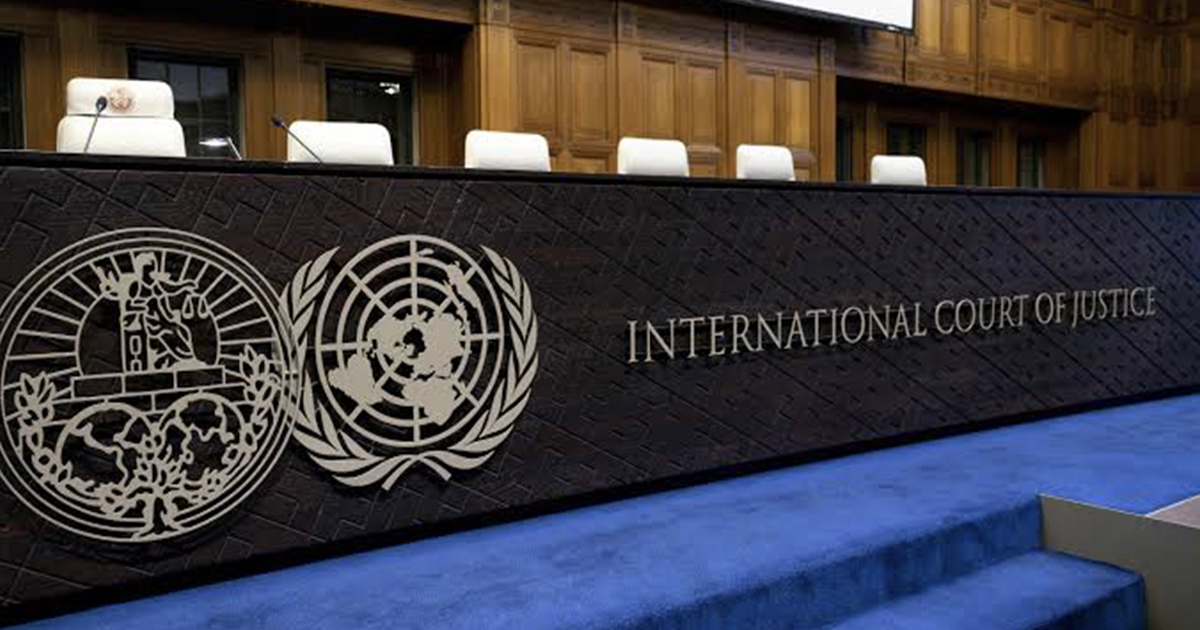
The Department of International Relations and Cooperation (DIRCO), South Africa, the Embassy of the Kingdom of the Netherlands and the Centre for Human Rights University of Pretoria are co hosting a one-day event in Pretoria to mark 80 years since the International Court of Justice (ICJ) started its work. Among the speakers is recent noble laureate jurist, Judge Navanethem “Navi” Pillay, whose decades-long career has advanced human rights, international justice and the rule of law. The commemoration will reflect on the Court’s role in Africa and ask how international justice can respond to new evolving challenges such as climate change, cyber threats and new technology.
On 13 November 2026, the South Africa’s Department of International Relations and Cooperation (DIRCO) and the Embassy of the Kingdom of the Netherlands in partnership with the University of Pretoria’s Centre for Human Rights, will co-host a commemorative event at DIRCO to mark 80 years since the International Court of Justice (ICJ) commenced. The event is part of a series of “global stocktaking” activities organised by Dutch embassies worldwide to reflect on the role of the court and imagine its future.
Minister Ronald Lamola said: “This commemoration is timely: at a moment when the world needs more international law not less, but implemented consistently, and without exception.”
The Netherlands, as host country of the ICJ in The Hague, has a particular interest in ensuring that the Court can continue to fulfil its mandate independently and effectively.
Netherlands Minister of Foreign Affairs Tom Berendsen said: “An increasing number of States are turning to this Court, relying on it to resolve conflicts through legal means. These cases reflect the most pressing global challenges, including climate change, human rights violations, territorial demarcation and allegations of genocide. This underscores the Court’s role as the highest judicial organ of the UN, working with authority, professionalism and independence.”
South Africa and the Netherlands are constitutional democracies committed to international law, rule of law everywhere, multilateralism, the peaceful resolution of disputes, and support the work of the Court. The Netherlands hosts the Court in The Hague, the city of peace and justice, while South Africa has contributed some of the notable judges and officials of the court, not least Judge Dire Tladi, one of the current judges. This commemoration takes place in the same week as South Africa hosts the International Conference on Access to Justice.
The commemoration will reflect on the achievements and limits of international justice in Africa, and on Africa’s own contribution to the Court’s development. It will also look ahead, aiming to engage the next generation of African international lawyers and international relations students on what they think the future of international justice should look like.
The program will have two sessions. The first, "What Has International Justice Meant for Africa?", in a HagueTalks storytelling format. This will feature a conversation with a South African former judge of the court and exchange with a predominantly young audience. The second session is a high-level panel, on “The Next Eighty Years: An ICJ for a Changing World panellists include representatives from the Netherlands and South African government and young international law scholars. It will look at how the international justice system must evolve to meet emerging threats to peace and security, including climate change, cyber security, and technological disruption.
Dr Sabelo Gumedze, Assistant Director at the Centre for Human Rights, University of Pretoria stated that, “The International Court of Justice has, over the past 80 years, played a vital role in affirming the importance of international law in the peaceful settlement of disputes and the pursuit of justice among States. For Africa, the Court represents both an important avenue for the advancement of international justice and a reminder that the promise of international law depends on its consistent and equal application. As we look to the next 80 years, the challenge is to strengthen the Court’s contribution to a rules-based international order that responds effectively to contemporary threats, including climate change, technological disruption and threats to international peace and security. The legitimacy of international justice ultimately rests not only on the authority of its institutions, but also on the confidence that States and peoples place in their fairness, independence and effectiveness.”
All views expressed at the event are those of the individual speakers. They do not represent the positions of the Kingdom of the Netherlands, the Government of South Africa or the Centre for Human Rights.
ENDS
Issued by the Embassy of the Kingdom of the Netherlands in South Africa, Department of International Relations and Cooperation & University of Pretoria, Centre for Human Rights
Media enquiries:
Embassy of the Kingdom of the Netherlands in South Africa
Meghan Rossouw
Communication Policy Officer
meghan.rossouw@minbuza.nl
+27 (0)83 845 3558
Department of International Relations and Cooperation
Nelson Kgwete
Medial Liaison
kgweten@dirco.gov.za
+27 76 431 3078
University of Pretoria, Centre for Human Rights
Bonolo Makgale
Programme Manager: Democracy and Civic Engagement Unit
Bonolo.Makgale@up.ac.za