- Details

Somewhere in Africa, a multinational company is tick-boxing its way through a human rights checklist while a community loses its land anyway.
The company might have a policy. It might have commissioned an impact assessment. The project team probably held consultation meetings, recorded the minutes, and filed the documents. A sophisticated grievance mechanism sits on a project website, but a local villager doesn’t know it exists. On paper, the company has done everything the UN Guiding Principles on Business and Human Rights require. People still end up displaced. Livelihoods disappear, and a dispute that the company should have foreseen ends up in a courtroom or on a barricade years later.
- Details

The East and Horn of Africa Business and Human Rights Dialogue convened in Nairobi on 10 - 11 June 2026 to advance corporate accountability and climate justice. This subregional platform united diverse institutional stakeholders to translate policy into tangible, rights-respecting outcomes. Key ACCA leaders—Dr Dorcas Basimanyane (Regional Coordinator), Joseph Byomuhangyi (Chair), and Lassané Ouedraogo (Project Coordinator)—spearheaded the core discussions. By bridging regulatory frameworks with grassroots realities, they successfully championed a structural shift for local populations. Their efforts effectively transitioned community members from passive policy participants into legally empowered architects of institutional change.
- Details
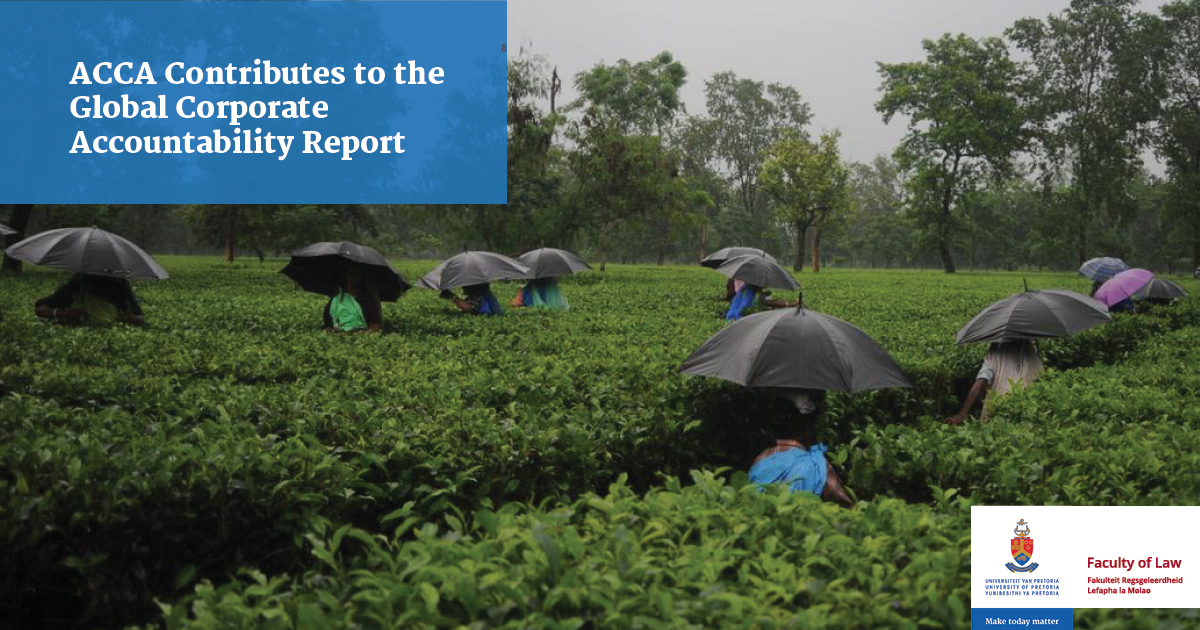
Following years of strategic campaigning for a Business, Human Rights and Environment Act (BHREA), the UK Government initiated a formal review into responsible business conduct. To ensure that any new legislation is grounded directly in the insights of frontline rightsholders from the Global South, the African Coalition for Corporate Accountability (ACCA) partnered with the Corporate Justice Coalition (CJC) and other regional networks. Together, they co-hosted a series of regional consultations gathering experts from over 50 civil society organisations and trade unions globally to shape a model accountability law.
- Details

On 20 August 2026, the African Coalition for Corporate Accountability (ACCA), Centre for Human Rights and partners convened an online webinar to mark 15 years since the unanimous endorsement of the United Nations Guiding Principles on Business and Human Rights (UNGPs) by the UN Human Rights Council. The webinar provided a continental platform for African civil society organisations, community representatives, National Human Rights Institutions, academics, regional institutions and other stakeholders to reflect on Africa’s business and human rights journey and consider what needs to change in the years ahead.
- Details

On 6 August 2026 the African Coalition for Corporate Accountability (ACCA), Centre for Human Rights and partners convened an online webinar titled “Breaking Colonial Barriers: Building Cross-Linguistic Solidarity for Corporate Accountability in Africa.” The three-hour discussion brought together business and human rights practitioners, lawyers, human rights defenders, researchers and other stakeholders from across Africa to examine the practical barriers that continue to limit cross-border cooperation on corporate accountability.