University of Johannesburg and University of Reading
Abstract
 It has become almost a mantra of international human rights law that all human rights are interdependent and interconnected. Yet, this statement is often accepted as a form of dogma without engaging with the questions it raises. If human rights are so intertwined, how do courts determine when one right should be applied instead of any other? How are rights individuated from one another? If they are distinct, in what way are fundamental rights interconnected? In this presentation, I will consider these complex questions concerning the individuation and interconnection of fundamental rights specifically in relation to a particular right: the right to adequate housing. I shall utilize the Dladla case[1] where the Constitutional Court had to address whether the right to adequate housing applied. In doing so, the majority of the Court and the judgment of Cameron J outline starkly different approaches to determining whether the case implicates the right to housing or other rights. I will distinguish two approaches: a ‘differentiation approach’ adopted by the majority and an ‘integrated approach’ adopted by Cameron J in his minority judgment. I compare the South African approach with that adopted by the Constitutional Court of Colombia towards the individuation and interconnection of the right to housing. I then consider how these considerations play out in circumstances where there is a stark need to prioritise resources in circumstances of emergency and temporary accommodation. The paper ultimately seek to consider which approach is preferable and able best to capture fully why individuals have an interest in housing and the consequent obligations that should flow from such an understanding.
Bio:
David Bilchitz is a Professor of Fundamental Rights and Constitutional Law at the University of Johannesburg and Director of the South African Institute for Advanced Constitutional, Public, Human Rights and International Law (SAIFAC). He is also a part-time Professor of Law at the University of Reading in the United Kingdom. He was appointed as an Acting Justice of the Constitutional Court of South Africa from February to May 2024, the first full-time academic to have been appointed directly to act as judge on the Court in over 20 years. He is also a Vice-President of the International Association of Constitutional Law and a Member of the Academy of Sciences of South Africa.
Bilchitz has multiple publications covering a wide range of topics including writings on proportionality, socio-economic rights, business and fundamental rights, the separation of powers, and the rights of non-human animals. In the field of socio-economic rights, his monograph Poverty and Fundamental Rights (OUP, 2007) remains a central text in defending the minimum core approach to determining the content of socio-economic rights. In addition to impactful journal articles and book chapters, teaching and conference presentations, he has, notably, developed an important course on socio-economic rights for the Mexican judiciary.
[1] Dladla v City of Johannesburg 2018 (2) SA 327 (CC).
HRDA Alumni

The original mandate of HRDA to strengthen human rights debate on the continent has been largely achieved in the last twenty years with its alumni spread in almost all sectors including legal practice, inter-governmental organisations, national judiciaries, academic institutions, governments, philanthropy and many more in and out of Africa.
Read MoreSRRA Alumni

The SRRA Alumni seeks to yield to individuals, and communities in the African region and beyond, tangible social benefits which include grooming of leaders with a capacity to influence the social transformation of societies and raising of public awareness about sexual and reproductive health and rights.
Read MoreTILA Alumni
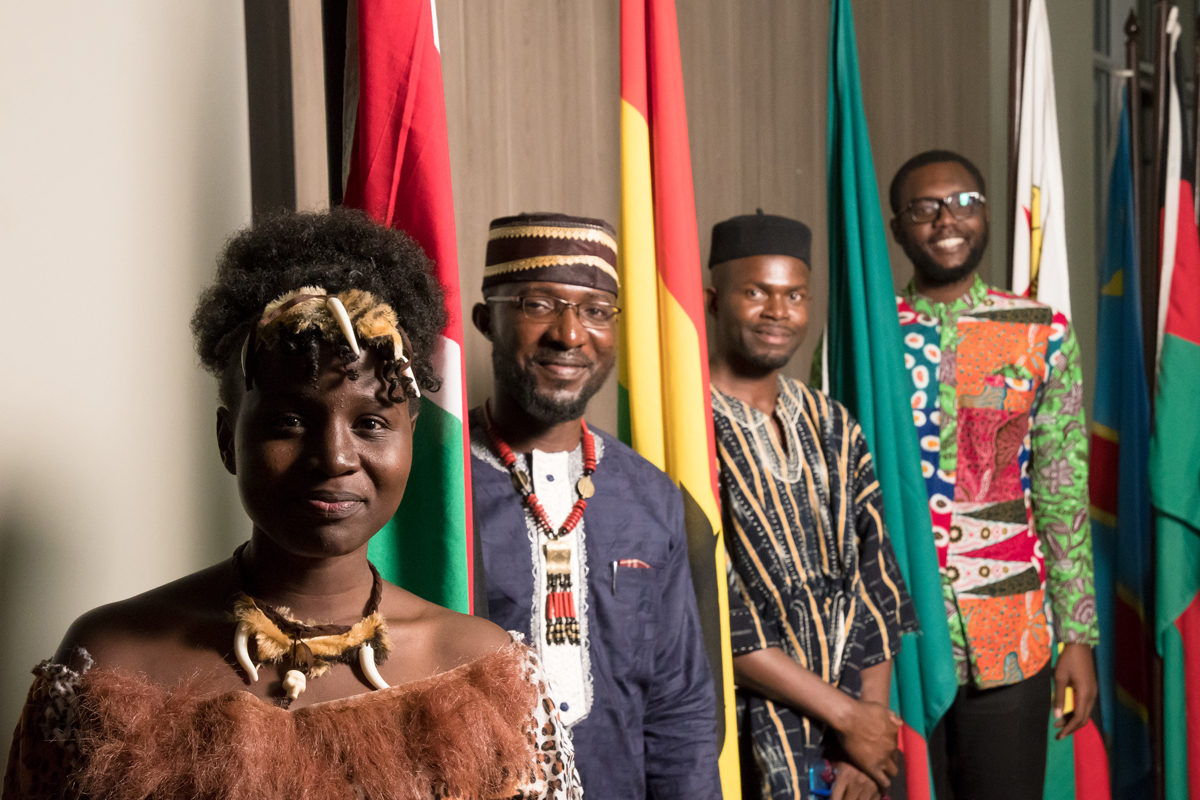
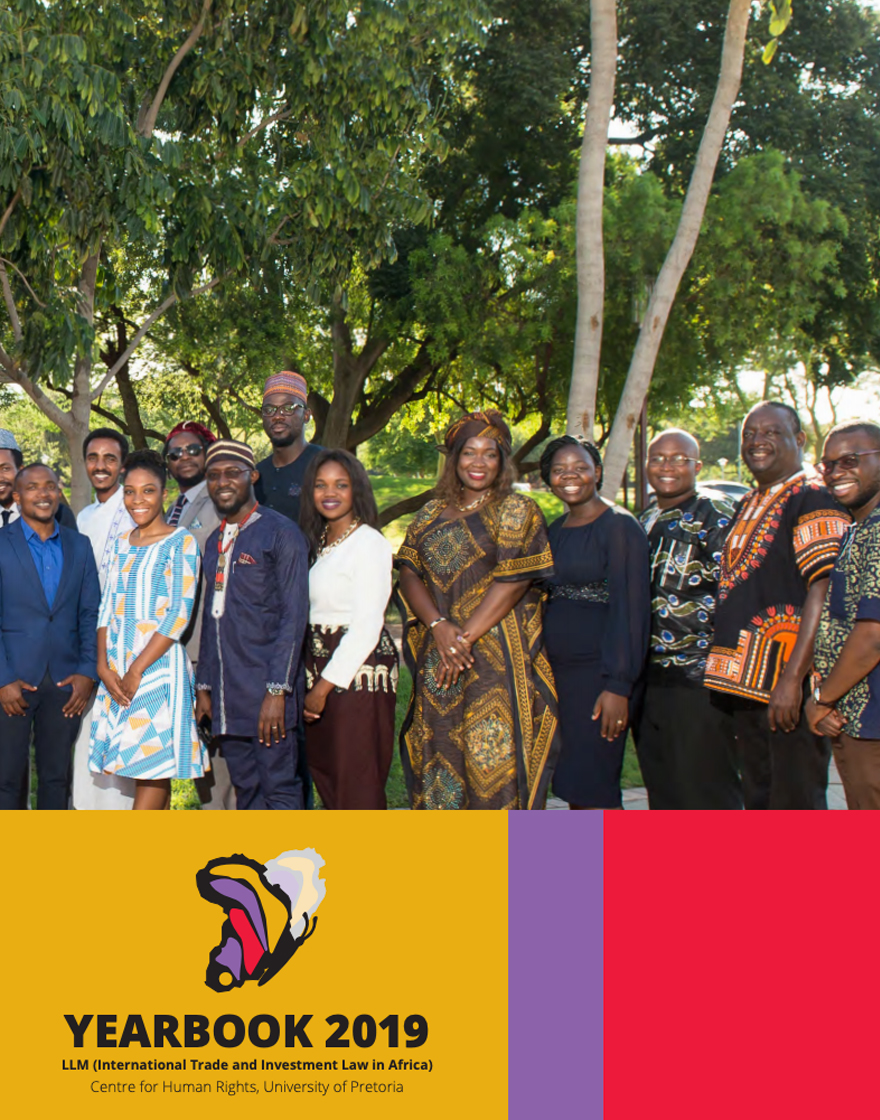
The International Trade and Investment Law in Africa (TILA), Alumni are trained in a programme focused on, Africa with full exposure to the international world of trade and investment.
Read MoreAlumni Publications

LLD students who graduated in 2025
- Marie-Louise Aren
(supervisor Prof Bradlow (then Prof Titus UCT))
Prospects for an African continental model multilateral tax agreement for the coordination of cross-border corporate tax challenges - Barbara Kitui
(supervisor Prof Magnus Killander)
The land governance architecture and securing women’s land rights in Uganda - Anita Achieng Nyanjong
(supervisor Prof Magnus Killander Co-Supervisor: Prof Nkatha Murungi)
Examining the justice paradigms for African feminists in traditional dispute resolution mechanisms: A case study of Nyando sub-county in Kenya - Janet Gbam
(supervisor Prof Frans Viljoen)
Shifting from Eurocentrism to Afrocentrism: Reimagining the curriculum and pedagogy of human rights education at selected law faculties in Commonwealth Africa - Stephen Ndlovu
(supervisor Dr Thomas Probert)
Sexual and gender-based violence against women and the criminal justice system response in Malawi - Dagnachew Wakene
(supervisor Prof Nkatha Murungi)
The states’ duty to respect and protect persons with disabilities from violence: A case study of Ethopia
LLD students who graduated in 2024
- Baiye Mbu Nelson
(supervisor Prof Frans Viljoen)
Towards an African approach to reparations for harm to Indigenous Peoples - Oyakhirome Iruebafa Lily
(supervisor Dr Thomas Probert)
The role of social activism in pursuing accountability for police abuse of power - Ayo-Ojo Bayode Sunday
(supervisor Prof Frans Viljoen)
The domestic legal incorporation and institutionalisation of the international legal prohibition of torture in the Federal Republic of Nigeria - Nyemba Nice Mpala
(supervisor Prof Michelo Hansungule)
The right to basic education of immigrant children in the Southern African Development Community region: A case study of South Africa and the Democratic Republic of Congo - Ochieng Claire Adionyi
(superviser Dr Thomas Probert)
Harnessing open source evidence to enhance accountability for human rights violations in Kenya - Simiyu Marystella Auma
(supervisor Prof Magnus Killander)
Towards a rights-based approach to media protection in the digital age for meaningful political participation of the electorate in Kenya - Bhebe Babra Ontibile
(supervisor Prof Michelo Hansungule)
The state and the politics of human rights protection: Assessing the effectiveness of the Zimbabwe Human Rights Commission in advancing the domestic implementation of Socio-Economic Rights - Machacha Mandipa Goitsemang
(supervisor Prof Michelo Hansungule)
Socio-legal perspectives on the realisation of human rights of migrant women: A case study of Zimbabwean migrant women who work in Botswana's informal economy
LLD students who graduated in 2023
- Ikpo, David Nnana
(supervisor: Prof Frans Viljoen)
Using indigenous storytelling and African Commission soft law in Nigerian law classrooms to advance queer rights - Denise Zambezi
(supervisor: Prof Frans Viljoen)
The right of transgender persons to access healthcare in South Africa - Ms Dorcas Basimanyane
(supervisor: Prof Magnus Killander)
Mobile technology and internet development in Africa: Legal and human rights challenges in South Africa and Uganda - Ms Omotunde Enigbokan
(supervisor: Prof Magnus Killander)
South Africa's implementation of human rights law on the right to acquisition of nationality
LLD students who graduated in 2022
- Fenemigho Alero Itohan
(supervisor: Prof Christof Heyns (deceased), Co-supervisor: Prof Stuart Maslen)
The use of force in counter-terrorism policing in Africa under international law - Geng, Joseph Geng Akech
(supervisor: Prof Magnus Killander)
Foreign influence and the legitimacy of constitution building in South Sudan - Ahumuza, Dianah Attenyi
(supervisor: Dr A Budoo, Co-supervisor: Prof Attiya Warris)
Tax incentives and the realization of economic and social rights: The right to basic education in Uganda - Okeowo, Adebayo Olayinka
(supervisor: Prof Magnus Killander)
Advancing accountability for human rights violations through citizen media: An African perspective - Olutola, Bamisaye Olawaye
(supervisor: Prof Michelo Hansungule (retired))
The right to political participation of the youth in terms of the African Youth Charter: A case study of Nigeria - Udegbunam, Linda Uzoamaka
(supervisor: Prof Killander)
Improving access to medicines for persons with psychosocial disabilities in Nigeria in realization of their right to health: The role of the WHO-AIMS and WHO access to medicines frameworks - Ilori, Tomiwa
(supervisor: Prof Magnus Killander, Co-supervisor: Prof Jay Aronson)
A rights-respecting approach to preventing online harms, protecting online expression and ensuring effective platform governance in Nigeria and South Africa
LLD students who graduated in 2021
- Ako, Ernest
(supervisor: Prof Frans Viljoen)
Towards the decriminalisation of consensual same-sex conduct in Ghana - Ginamia, Melani
(supervisor: Prof Michelo Hansugule)
The right to development in post-conflict societies: Lessons from the Acholi in Northern Uganda - Kapapelo, Eduardo
(supervisor: Prof Magnus Killander)
The Role of State Institutions in Preventing Violent Conflict in Angola - Loots, Josua
(supervisor: Prof Daniel Bradlow)
Infrastructure for development: The use human rights impact assessments in public-private partnerships - Masamba, Magalie L
(supervisor: Prof Daniel Bradlow)
An African perspective on reforming sovereign debt restructuring of privately held debt - Okoloise, Chairman
(supervisor: Prof Magnus Killander)
The role of the African human rights system in advancing corporate accountability in the extractive industries - Chigudu, Rudo
(supervisor: Prof Charles Ngwena)
A phenomenological study of the gendered and sexualised politics of a lesbian identity in contemporary Zimbabwe - Sogunro, Ayodele
(supervisor: Prof Frans Viljoen, Co-supervisor: Dr Ciara O’Connell (Trinity College))
Advocacy, social control, and the criminalisation of same-sex relationships : the evolution and enforcement of ‘anti-gay laws’ in Nigeria -
Tresor, Mahindo Makunya
(supervisor: Prof Charles Fombad)
Legal traditions and constitutional interpretation of bill of rights in Africa: Comparative perspectives from the constitutional courts of Benin, the Democratic Republic of Congo and South Africa - Holness, Willene
(supervisor: Prof Charles Ngwena)
Access to justice for mothers with intellectual disabilities in cases of child neglect at two Kwazulu-Natal children’s courts
LLD students who graduated in 2020
- Chitsove, Emma
(supervisor: Prof Daniel Bradlow)
Combatting corruption in international investment law: challenges and prospects - Hofisi, Sharon
(supervisor: Prof Magnus Killander, Co-supervisor: Prof Bonolo Dinokopila)
Towards transitional justice in Zimbabwe: the role of the National Peace and Reconciliation Commission and Zimbabwe Human Rights Commission - Igbayiloye, Oluwatosin Busayo
(supervisor: Prof Daniel Bradlow)
A human-rights-based approach to mining of solid minerals in Nigeria - Kariseb Johannes Donavan Kennedy
(supervisor: Prof Magnus Killander, Co-supervisor: Dr A Budoo)
The role of the African Commission’s Special Rapporteur on the Rights of Women in Africa in combating violence against women - Nabaneh, Satang
(supervisor: Prof Charles Ngwena, Co-supervisor: Prof Siri Gloppen)
Power dynamics in the provision of legal abortion : a feminist perspective on nurses and conscientious objection in South Africa - Ndambo, Dennis Mutua
(supervisor: Prof Magnus Killander)
The Use of International Human Rights Law by Superior National Courts : A Comparative Study of Kenya and South Africa - Odo, Godwin Chinedu
(supervisor: Prof Charles Ngwena)
Promoting gender justice in Nigeria through constitutionalising the prevention of maternal death
LLD students who graduated in 2019
- Chofor Che, Christian Aime
(supervisor: Prof Charles Fombad)
An analysis of decentralisation under the 1996 Constitution Cameroon - Nwebo, Osy Ezechukwunyere
(supervisor: Prof Charles Fombad)
The role of the Pan African Parliament in promoting constitutionalism and democratic governance in Africa : lessons from other supranational parliaments - Ofuani, Anwuli Irene
(supervisor: Prof Charles Ngwena)
The viability of supported decision-making in protecting adolescent girls with intellectual disability from involuntary sterilisation in Nigeria
LLD students who graduated in 2018
- Agada, Akogwu
(supervisor: Prof Frans Viljoen)
Assessing the human rights implications of the Nigerian law dealing with sexual orientation - Ayeni, Victor Oluwasina
(supervisor: Prof Frans Viljoen)
State compliance with and influence of reparation orders by regional and sub-regional human rights tribunals in five African states - Jjuuko, Adrian
(supervisor: Prof Frans Viljoen, Co-Supervisor: Prof Joe Oloka-Onyango (Makerere))
Beyond court victories: Using strategic litigation to stimulate social change in favour of lesbian, gay and bisexual persons in common law Africa - Kamunyu, Mariam Wambui
(supervisor: Prof Frans Viljoen)
The gender responsiveness of the African commission on human and peoples’ rights - Kareithi, Moincah Wanjiru
(supervisor: Prof Frans Viljoen)
A historical-legal analysis of woman-to-woman marriage in Kenya - Karugonjo-Segawa, Roselyn Irene
(supervisor: Prof Magnus Killander)
The right to participation in development : a case study of Uganda - Lukanda, Kapwadi Francky
(supervisor: Prof Daniel Bradlow)
Legal accountability of international financial institutions in financing development - Ogendi, Paul Omondi
(supervisor: Prof Magnus Killander, Co-supervisor: Prof Attiya Waris)
Pharmaceutical trade policies and access to medicines in Kenya - Vohito ep Anyanwu, Sonia Esther
(supervisor: Prof Charles Fombad)
Constitutionalisation of the rights of political parties in Africa and its impact on constitutionalism : a comparative study of the car. Senegal and South Africa
LLD students who graduated in 2017
- Adeniyi, Olayinka Oluwakemi
(supervisor: Prof Michelo Hansungule)
Legal protection of the girl child against child marriage (Aure Yarinya) in Nigeria - Chipasa, Mulenga
(supervisor: Prof Michelo Hansungule)
Foreign direct investment in Zambian mining sector : the need for environmental protection and human rights - Imeira, Prince Pius
(supervisor: Prof Magnus Killander)
Developing a legal framework for state compensation of crime victims in Nigeria - Lando, Victor Valery Okoth
(supervisor: Prof Magnus Killander, Co-supervisor: Prof Solomon Ebobrah)
The domestic effect of the East African Community’s human rights practice - Malila, Mumba
(supervisor: Prof Christof Heyns, Co-supervisor: Prof Benyam Mezmur)
The place of individuals? Duties in international human rights law: perspectives from the African human rights system - Nkrumah, Bight
(supervisor: Prof Magnus Killander)
Mobilising for the realisation of the right to food in South Africa - Okurut, Emmanuel
(supervisor: Prof Magnus Killander)
Preventing human rights violations by law enforcement during counterterrorism operations in Kenya and Uganda - Ozubide, Alabo
(supervisor: Prof Christof Heyns, Co-supervisor: Prof Hennie Stydom)
Extraterritorial use of force against non-state actors and the transformation of the law of self-defence - Shyllon, Ololade Olakitan
(supervisor: Prof Frans Viljoen)
The contribution of legal frameworks on access to information to socio-economic progress in Africa: Case studies of Nigeria, South Africa and Uganda - Umeh, Ngozi Chuma
(supervisor: Prof Charles Ngwena)
Realising access to inclusive education for the hearing-impaired learner in Nigerian primary schools
LLD students who graduated in 2016
- Abdulrauf, Lukman Adebisi
(supervisor: Prof Charles Fombad, Co-supervisor: Prof Anneliese Roos)
The legal protection of data privacy in Nigeria : lessons from Canada and South Africa - Ambani, Solomon Osogo
(supervisor: Prof Frans Viljoen)
The second wave of criminalising homosexuality in Kenya, Nigeria and Uganda - Budoo, Ashwanee
(supervisor: Prof Magnus Killander, Co-supervisor: Dr Attiya Waris)
The role of gender budgeting in implementing the obligation to provide resources to realise women's human rights in Africa - Ho Tu Nam, Nora Christabelle
(supervisor: Prof Magnus Killander)
The role of European Union in the legal protection of human rights defenders in Kenya and Uganda - Maja, Innocent
(supervisor: Prof Michelo Hansugule)
A human rights framework towards the protection of minority languages and linguistic minorities in Africa : case studies of South Africa and Zimbabwe - Wekesa, Seth Muchuma
(supervisor: Prof Charles Fombad, Co-supervisor: Prof Anton Kok)
A constitutional approach to the decriminalisation of homosexuality in Africa : a comparison of Kenya South Africa and Uganda
LLD students who graduated in 2015
- Achan, Patricia Okiria
(supervisor: Prof Michelo Hansungule)
Equality in treatment : towards a quest for the right to participation for the Batwa in Uganda - Adeola, Romola
(supervisor: Prof Frans Viljoen)
Development-induced displacement in Africa: Striking a balance between the imperative of development and the rights of persons likely to be displaced - Chengeta,Thompson
(supervisor: Prof Christof Heyns)
The challenges of increased autonomy in weapon systems : in search of an appropriate legal solution - Gravett, Willem Hendrik
(supervisor: Prof Christof Heyns)
To save succeeding generations from the scourge of war : Jan Christian Smuts (1870 - 1950) and the genesis of international organisation and human rights - Kabata, Faith Njoki
(supervisor: Prof Magnus Killander, Co-supervisor: Dr Godfrey Musila)
Impact of international human rights monitoring mechanisms in Kenya - Kameni, Enga Innocent
(supervisor: Prof Frans Viljoen Co-supervisor: Prof Brook Baker)
Implementation of trips public health flexibilities in the African Intellectual Property Organisation (OAPI) region: problems and prospects - Lubaale, Emma Charlene
(supervisor: Dr. Geert Stevens, Co-supervisor: Prof Koos Malan)
Bridging the justice gap in the prosecution of acquaintance child sexual abuse: a case of South Africa and Uganda - Manyatera, Gift
(supervisor: Prof Charles Fombad)
A critique of the superior courts judicial selection mechanisms in Africa : the case of Mozambique, South Africa and Zimbabwe - Nyathi, Mkhululi
(supervisor: Prof Magnus Killander)
Exploring shared governance as an alternative institutional model for the Southern African development community - Onuora-Oguno, Azubike Chinwuba
(supervisor: Prof Michelo Hansugule)
Realising the right to basic education in Nigeria - Pfumorodze, Jimcal
(supervisor: Prof Daniel Bradlow)
Rebalancing foreign investor and host state interests under the new generation of South Africa Bilateral Investment Treaties (BITs)
LLD students who graduated in 2014
- Abdalla, Amir Kamaledin Ahmed
(supervisor: Prof Michelo Hansungule)
Strengthening the right to a fair trial in Sudan: A Human Rights perspective - Beredugo, Ayebaesin Jacob
(supervisor: Prof Frans Viljoen, Co-supervisor: Dr. Magnus Killander)
The role and effectiveness of National Human Rights Commissions in advancing domestic implementation of socio-economic rights in Commonwealth Africa - Jegede, Ademola Oluborode
(supervisor: Prof Michelo Hansungule)
Human rights implications of the climate change regulatory framework on indigenous peoples’ lands in Africa - Kabumba, Busingye
(supervisor: Prof Frans Viljoen)
Soft Law and legitimacy in International Law: A case study of the Doha Declaration on the TRIPS Agreement and Public Health - Miamingi, Remember Philp Danie
(supervisor: Prof Frans Viljoen)
Constructing a conception of Childhood in Africa - Possi, Ally
(supervisor: Prof Frans Viljoen)
Striking a balance between community norms and human rights : the continuing struggle of the East African Court of Justice
LLD students who graduated in 2013
- Adjolohoun, Horace
(supervisor: Prof Erika De Wet, Co-supervisor: Dr Magnus Killander)
Giving effect to the human rights jurisprudence of the Court of Justice of the Economic Community of West African States: Compliance and Influence - Nsibirwa, Martin
(supervisor: Prof Frans Viljoen)
The obligation of African states to realise women's rights to participate in politics and decision making in Africa - Ozoemena, Rita
(supervisor: Prof Michelo Hansungule)
The Protocol on the Rights of Women in Africa: An instrument for advancing gender justice - Dinokopila, Bonolo Ramadi
(supervisor: Prof Frans Viljoen)
The role of the Pan-African parliament in the promotion of human rights in Africa
LLD students who graduated in 2012
- Abebe, Adem Kassie
(supervisor: Prof Frans Viljoen; co-supervisor: Dr Magnus Killander)
The role of human rights litigation in the realisation of human rights in Africa: The case of Ethiopia from a comparative African perspective - Acirokop, Prudence
(supervisor: Dr Magnus Killander)
Accountability for mass atrocities – The LRA conflict in Uganda - Oluyelu, (Soyeju) Olufemi Olugbemiga
(supervisor: Prof Danny Bradlow)
Creative financing for infrastructure projects in sub-Saharan Africa: Its implications for foreign investment inflow, economic growth and development
LLD students who graduated in 2011
- Djoyou Kamga, Serges Alain
(supervisor: Prof Michelo Hansungule)
Human rights in Africa: Prospects for the realisation of the right to development under the New Partnership for Africa’s Development - Murungu, Chacha Bhoke
(supervisor: Prof Michelo Hansungule)
The head of state immunity from prosecution for international crimes: Law and practice in Africa - Rukare, Donald
(supervisor: Prof Michelo Hansungule, Co-supervisor: Prof Frans Viljoen)
The role of development assistance in the protection and promotion of human rights in Uganda
LLD students who graduated in 2010
- Kaguongo, Waruguru
(supervisor: Prof Christof Heyns)
The realisation of economic and social rights in Africa with special reference to national budgets - Lim, Hye-Young
(supervisor: Prof Frans Viljoen)
Legally recognising child-headed households through a rights-based approach : the case of South Africa - Mutangi, Tarisai
(supervisor: Prof Frans Viljoen)
A critical examination of compliance with judgments of the African Court on Human and Peoples’ Rights: Prospects and challenges - Nkhata, Mwiza
(supervisor: Prof Frans Viljoen, Co-supervisor: Prof Karin Van Marle)
Constitutionalism and good governance in Africa: (Re) Discovering the relevance and viability of social trust-based governance in Malawi
LLD students who graduated in 2009
- Killander, Magnus
(supervisor: Prof Christof Heyns)
The role of the African Peer Review Mechanism - Ally, Dane
(supervisor: Prof Frans Viljoen)
Constitutional exclusion under section 35(5) of the Constitution of the Republic of South Africa, 1996 - Nassali, Maria
(supervisor: Prof Frans Viljoen)
NGOs, governance and human rights in Kenya, Tanzania, Uganda and South Africa: Conceptual and strategic questions - Ebobrah, Solomon
(supervisor: Prof Frans Viljoen)
Legitimacy and feasibility of human rights realisation through regional economic communities in Africa: The case of the Economic Community of West African States
LLD students who graduated in 2008
- Wachira, George Makundi
(supervisor: Prof Frans Viljoen, Co-supervisor: Prof Theunis Roux)
Vindicating indigenous peoples' land rights in Kenya
LLD students who graduated in 2007
- Nienaber, Annelize Gertruida
(supervisor: Prof Frans Viljoen, Co-supervisor: Prof PA Carstens)
Ethics and human rights in HIV-related clinical trials in Africa with specific reference to informed consent in preventive HIV vaccine efficacy trials in South Africa - Kok, Johann Anton
(supervisor: Prof Frans Viljoen)
A socio-legal analysis of the Promotion of Equality and Prevention of Unfair Discrimination Act4 of 2000
LLD students who graduated in 2005
- Chenwi, Lillian Manka
(supervisor: Prof Frans Viljoen, Co-supervisor: Prof Michelo Hansungule)
Towards the abolition of the death penalty in Africa: A Human Rights perspective
LLD students who graduated in 2004
- Louw, Lirettte
(supervisor: Prof Frans Viljoen)
An analysis of state compliance with the recommendations of the African commission on human and peoples’ rights - Baimu, Evarist Felician
(supervisor: Prof Frans Viljoen)
The linkage between human rights and trade, and parallel international law obligations: the GATS, the ICESCR and health services in Tanzania and South Africa
LLD students who graduated in 2002
- Kindiki, Kithure
(supervisor: Prof Frans Viljoen)
Humanitarian intervention in Africa: the role of intergovernmental organisations
For administrative enquiries please contact:
Ms Melissa Erasmus
Student Administration
Tel: +27 (0)12 420 5472
E-mail: melissa.erasmus@up.ac.za
If you are interested in undertaking doctoral studies at the Centre for Human Rights please contact a potential supervisor to discuss your suggested topic.
Information about supervisors in other departments and their fields of specialisation can be found in the Postgraduate Programmes brochure of the Faculty of Law which also sets out practical information about the programme and how to apply.
For administrative enquiries please contact:
Ms Melissa Erasmus
Student Administration
Tel: +27 (0)12 420 5472
E-mail: melissa.erasmus@up.ac.za