- Details
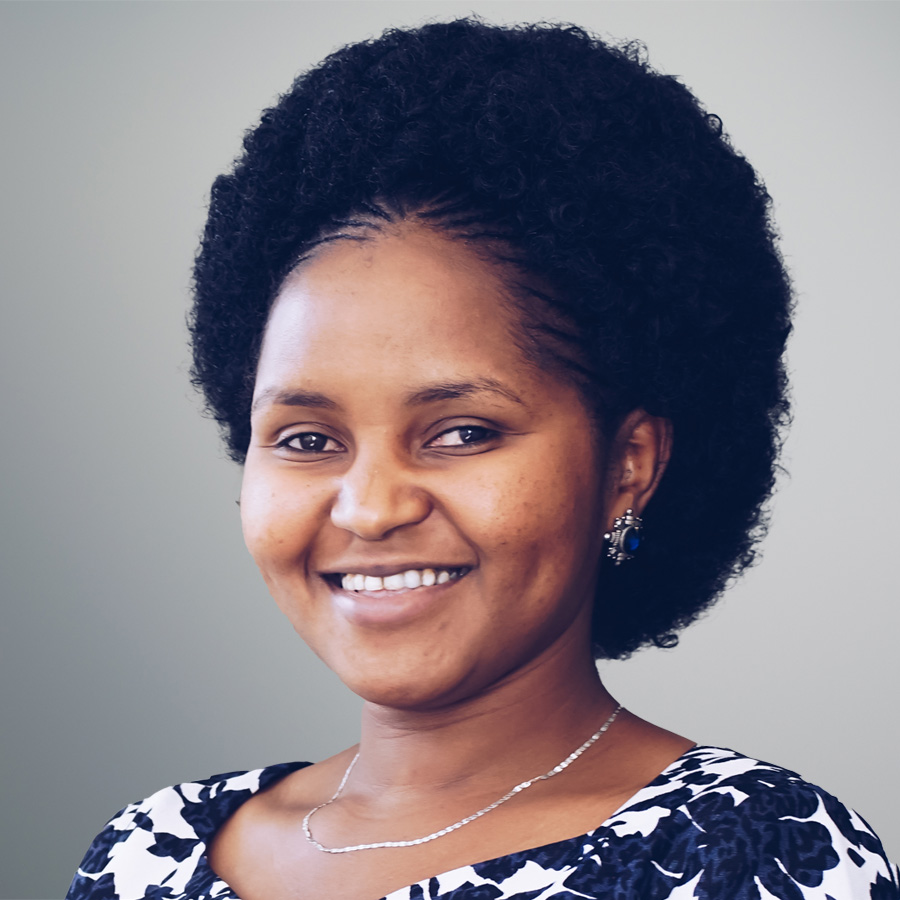
LLB (Moi) LLM (UP) LLD (UWC) ORCID
ORCID
Assistant Director: Centre for Human Rights
Member: Executive Committee
+27 (0)12 420 4684
Nkatha.Murungi@up.ac.za
- Details
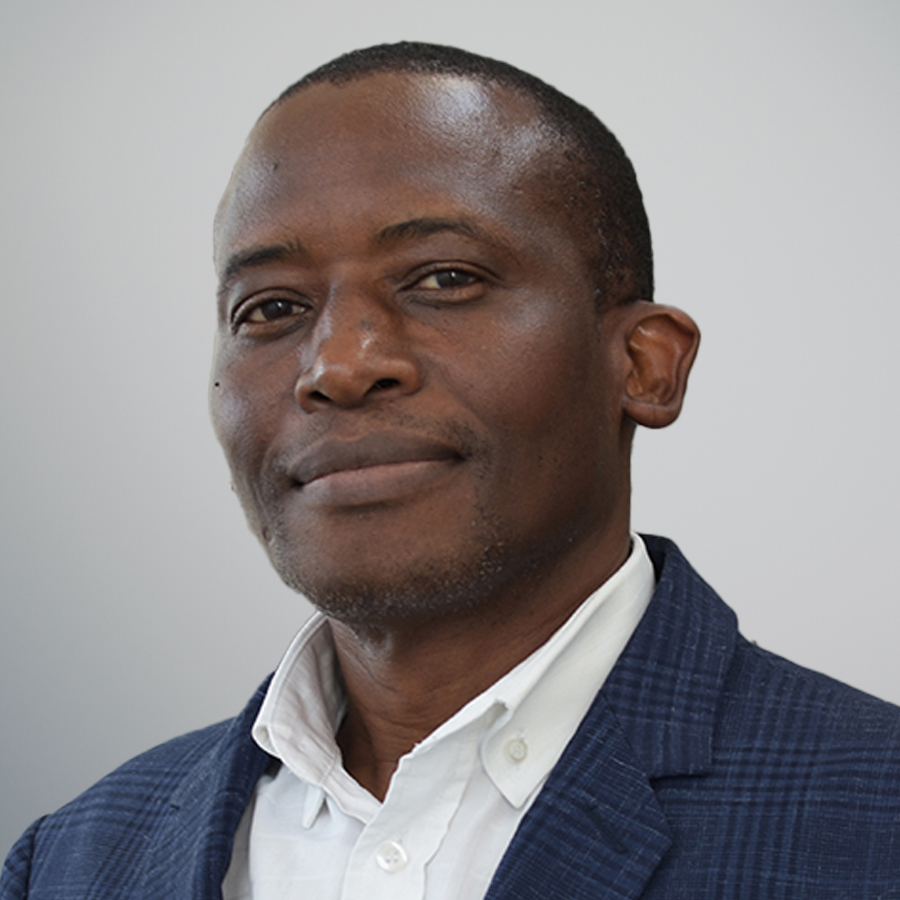
LLB (Honours) (UZ) LLM (UP)
Assistant Director: Centre for Human Rights
Member: Executive Committee
+27 (0)12 420 3810
lloyd.kuveya@up.ac.za
- Details
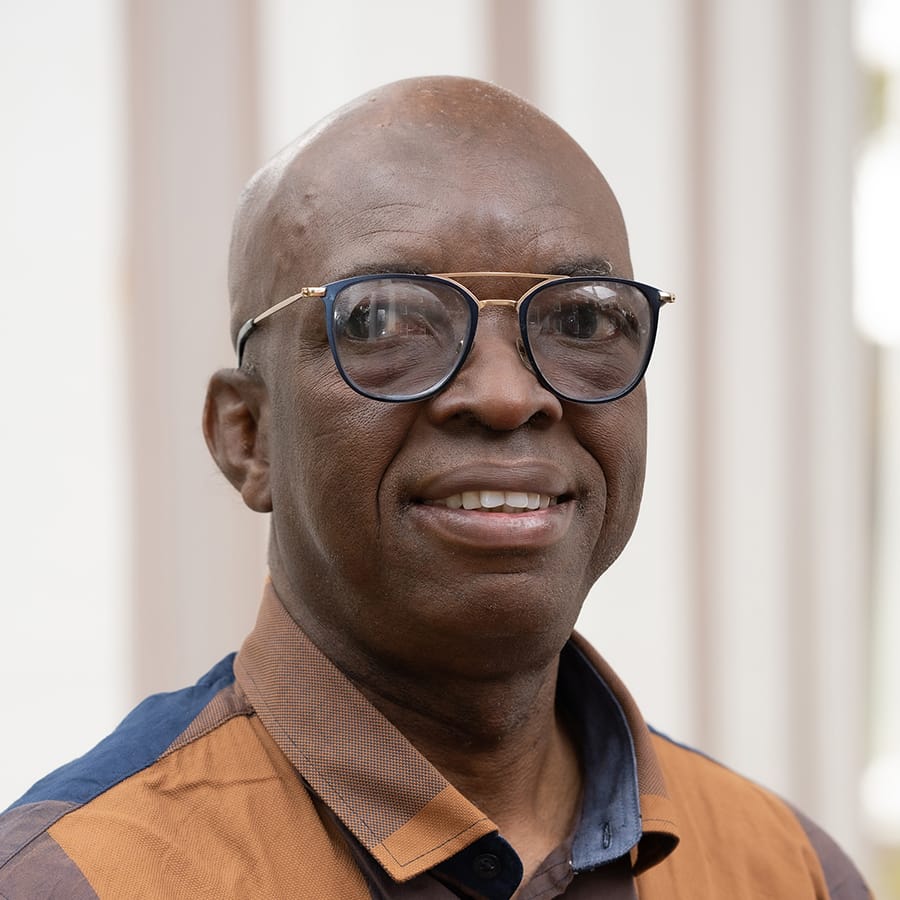
Acting Director: Centre for Human Rights
+27 (0)12 420 4532
Bio
Prof Durojaye areas of research interest include international human rights law, socio-economic rights, the rights to health, sexual and reproductive health and rights, constitutionalism and gender equality, the impact of culture on women’s rights, adolescent sexual and reproductive health and rights, and the socio-economic rights of refugees and asylum seekers
- Details
 PLEASE NOTE:
These programmes and projects are no longer operational. This page is for archival purposes only.
Integrated Bar Project
The Integrated Bar Project (IBP) was established in the late 1980's with the objective of exposing senior black South African law students to the legal practice of especially commercial law in the country's larger law firms. Since then approximately 1385 students from all law faculties in South Africa have undertaken 3-week internships during the July university holidays. Almost all the top law firms in the country participated and additional specialised phases were added.
The Integrated Bar Project (IBP) aimed to place 100-150 senior black law students from all South Africa's Universities on July holiday internships with South Africa's top law firms. Twenty of these students advanced to specialised internships with the High Courts, the Constitutional Court and the largest commercial banks in South Africa.
SASVO (Southern African Student Volunteers)
The Southern African Student Volunteers (SASVO) was established in 1993 to give students and communities in the southern African region the opportunity to work together as volunteers in sustainable community development projects. Although based at the University of Pretoria, students from all universities in southern Africa and from all disciplines participated in SASVO projects
SASVO goals were to improve the quality of life in rural areas by working with community members on various projects. Three-week work camps were organised for student volunteers during holiday periods. Special camps were organised for student leaders so that they could develop volunteer programmes from their campuses.
NEPAD Book Project
With financial support of the GTZ, Dr Hesphina Rukato, the CEO of the New Partnership for Africa’s Development (NEPAD) was assigned the responsibility of writing a comprehensive monograph on NEPAD. This was published during 2009 and the launch of the book took place on 11 November. The keynote address was delivered by former president Thabo Mbeki. The book has since been launched in the United States, the United Kingdom and in Ethiopia.
Indigenous Peoples' Rights
The Centre embarked on a project on indigenous peoples rights in selected African states, which culminated in a publication Overview Report of the Research Project by the International Labour Organization and the African Commission on Human and Peoples’ Rights on the constitutional and legislative protection of the rights of indigenous peoples in 24 African countries
For more information on this publication and the Indigenous Peoples' Rights database, please visit www.chr.up.ac.za/chr_old/indigenous/
Xenophobia Project
Since May 2008, the Centre for Human Rights has been engaged in the Strengthening Democracy Project, which focuses on researching the extent, solutions to, and possible causes of xenophobia and xenophobic violence in South Africa. A Centre project on the xenophobic violence of 2008 was completed in 2009, and published as The nature of South Africa’s legal obligations to combat xenophobia.
In March 2008, a wave of xenophobic violence swept across many parts of South Africa, including Tshwane. This study aims to provide an analysis of the potential role that law, and particularly human rights law, may play in combating such violence and its root causes. The study considers the issue from a multidisciplinary perspective, by informing itself of the views of both nationals and non-nationals on pertinent issues. Against this background, an analysis is made of South Africa’s legal obligations, deriving from its Constitution as well as United Nations and African Union treaties to which it is a state party.
Access to Medicines
The Access to Medicines project focuses on Intellectual Property (IP), Human Rights, and Access to Medicine. The Project monitors trends in international trade that impact Access to Medicines, at the regional and country levels; and also examines emerging measures to improve access to medicines in Africa. The project further provides a forum for intergovernmental deliberations, supported by discussions with experts and exchanges of experience aimed at raising awareness of the current challenges to ‘Access to Medicines’ and generating best options and solutions to advance the cause.
Human Rights & Foreign Policy
The Human Rights & Foreign Policy research project is a collaboration between the Centre for Human Rights and the Department of Political Science at the University of Pretoria.
State Reporting Project
In line with its obligations under the various human rights treaties to which it is a party, the South African government is currently in the process of preparing several state reports. The Centre for Human Rights has been working with the Department of Justice and Constitutional Development in preparing these reports. While the Department of Justice and Constitutional Development coordinates this project, the Centre for Human Rights provides the expertise on this project. Specifically, the reports under the following treaties are being produced: the International Covenant on Civil and Political Rights, the International Convention on the Elimination of all Forms of Racial Discrimination, the African Charter on Human and Peoples’ Rights and the Convention Against Torture and Other Cruel, Inhuman or Degrading Treatment or Punishment. Work on producing the reports under the listed treaties is at a very advanced stage and will be concluded shortly.
- Details
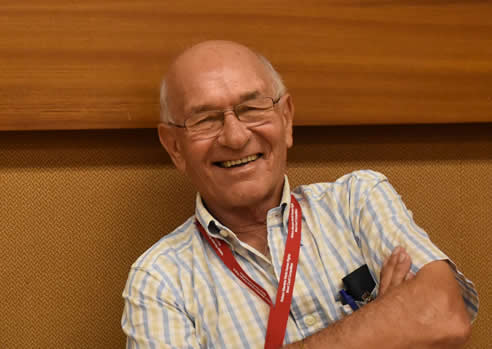
Mr Edouard Jaco-Guillarmod is a Chartered Accountant and Partner for 21 years at PriceWaterhouseCoopers. He was a Member of the firm’s National Policy Board and Executive Management Committee and Chairman of the Pretoria branch. He is also the CEO of the Gauteng Gambling Board and a former member of the National Transport Commission. Currently, he is a private consultant mainly acting as an accounting expert witness in litigation matters.
- Details
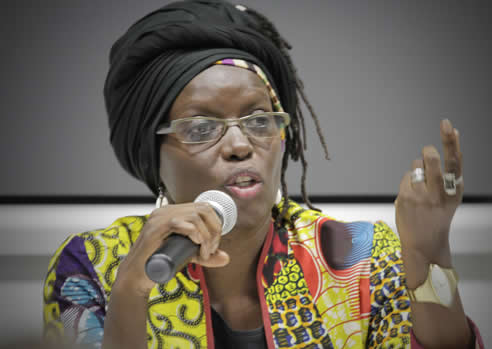
Prof Sylvia Tamale is a leading African feminist lawyer and scholar based in Kampala, Uganda. She holds a Bachelor of Laws from Makerere University, a Masters in Law from Harvard Law School and a PhD in Sociology and Feminist Studies from the University of Minnesota. She is the immediate outgoing Dean of Law at Makerere University and has been a visiting professor at several academic institutions around the world. Her latest publication is African Sexualities: A Reader (Pambazuka Press, 2011). She has won several awards for defending the human rights of marginalized groups such as women, sex workers, homosexuals and refugees.
- Details
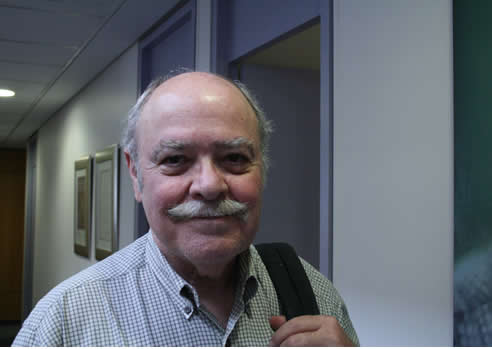
Dr David Padilla is an American Fulbright professor on International Human Rights Law and former legal counsel for the Organization of American States (OAS). He previously served as a consultant and Fulbright senior specialist in Asia and Africa. He is also the former Executive Secretary: Inter-American Commission on Human Rights.
- Details
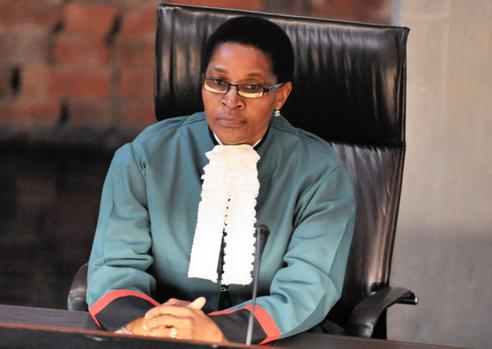
Justice Bess Nkabinde-Mmono is Justice of the Constitutional Court of South Africa since 2006. She facilitated a discussion on 'The Rights of Minorities within the context of Access to Justice' at the First South Asian Regional Judicial Colloquium on 'Access to Justice' (New-Delhi) which was convened by the Chief Justice BN Kirpal and facilitated by Commonwealth Human Rights Initiative (CHRI), International Center for the Legal Protection of Human Rights (Interights) and the Office of the High Commissioner for Human Rights (OHCHR) in 2002.
- Details

Justice Johann van der Westhuizen has a long association with the University of Pretoria where he was educated. He was appointed a professor in 1980 and in 1986 became the founding director of the Centre for Human Rights, a position he held until 1998. He joined the Transvaal Provincial Division of the High Court of South Africa in 1999 and was appointed a judge on the Constitutional Court on 1 February 2004. Justice van der Westhuizen was intimately involved in the drafting of South Africa’s final Constitution in 1995 and 1996. He organised several conferences between 1984 and 1994 on human rights and related matters and participated in discussions with the then-banned liberation movements in Dakar, Harare, Lusaka and New York. He has published numerous articles and edited books on legal history, criminal law, jurisprudence and human rights and has lectured and participated in several courses and seminars for new judges and magistrates. Justice van der Westhuizen is an Extraordinary Professor in the Faculty of Law at the University of Pretoria and teaches from time to time in the LLM in Human Rights and Democratisation in Africa Programme. He delivered the keynote address at the Graduation Ceremony for the Class of 2002. He has served as a judge in the final round of the African Human Rights Moot Court Competition and has been a Board Member at the Centre for Human Rights for many years.
- Details
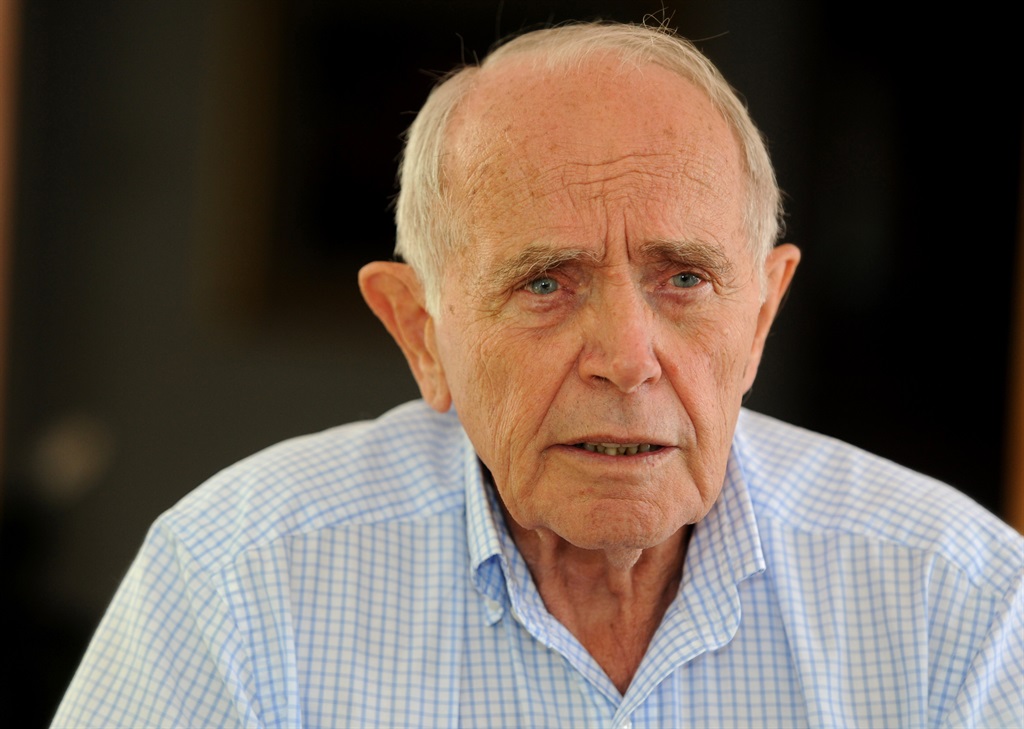
An advocate at the Johannesburg Bar for 25 years, prior to becoming a provincial and thereafter appellate judge, Justice Johann Kriegler was appointed a Justice of the Constitutional Court on its foundation in 1994, a position he held until 2002. He headed the Independent Electoral Commission, which ran the country’s first democratic elections in 1994, and was instrumental in establishing the permanent electoral commission, which he chaired until 1999. Since then he has participated in numerous national and international judicial missions and has lectured on judicial and electoral matters in numerous countries throughout the world. Justice Kriegler has had a long and close relationship with the Centre for Human Rights where he lectures from time to time to students in the LLM in Human Rights and Democratisation in Africa programme. He has also served as a judge in the final round of the African Human Rights Moot Court Competition. He is an Extraordinary Professor in the Faculty of Law at the University of Pretoria and has been a Board Member at the Centre for Human Rights for many years.