- Details

Ms Lidya Stamper
BA(University of Redlands)
Fax +27 (0)86 580 5743
- Details

Ms Bonolo Makgale
Bth (CI-CPT) BA Hons (Wits) MMPP (Wits)
Programme Manager: Democracy and Civic Engagement Unit
+27 (0) 12 420 4199
bonolo.makgale@up.ac.za
Media Publications
- COVID 19 and the working class
Originally published in DDP
25 September 2020 - Political Open Sesame: Navigating the Inclusion of Independent Candidate Participation in South African Electoral Processes
Originally published in DDP
25 September 2020 - Populism v Politics: An Analysis of Corruption & Inequality in the ANC Governance Systems
Originally published in DDP
25 October 2020 - Strategies of Resistance By Women: Then and Now
Originally published in DDP
21 August 2020 - The impact of Covid-19 on South Africa Political Landscape
Originally published on DDP
16 June 2020 - The scourge of homelessness and evictions during COVID-19
Originally published in AfricLaw
6 May 2020 - Young and Free? The vulnerability of young people in a COVID-19 South Africa
Originally published in DDP
6 May 2020
- Details

BA(University of Washington), LLM(Irish Centre for Human Rights) PhD(University of Sussex)
Postdoctoral Researcher, UP Vice Chancellor Fellow
Project Officer: Women's Rights Unit
Tel: +27 (0) 12 420 4397
Fax: +27 (0) 86 580 5743
ciara.o'connell@up.ac.za
- Details
2005 - 2007 Editions
Subscription enquiries and orders for the 2005, 2006 and 2007 editions should be sent to:
PULP (Pretoria University Law Press)
Faculty of Law
University of Pretoria
Pretoria
0002
Tel: +27 12 420 4948
Fax: +27 (0) 86 580 5743
Email:pulp@up.ac.za
Website: www.pulp.up.ac.za
Brochure
Click here to download the brochure for the 2005 edition
Order forms
Click here to download the order form for the 2005 edition
Click here to download the brochure for the 2006 edition
Click here to download the order form for the 2007 edition
2000 - 2004 Editions
Subscription enquiries and orders for the 2000 - 2004 editions should be sent to:
Juta Law Customer Services
Business Reply Service CB 0920
Lansdowne 7779
South Africa
Telephone: (021) 763 3600
Fax: (021) 761 5861
Email: cserv@juta.co.za
- Details
Cases from national courts that would be of interest to include in future issues of the African Human Rights Law Reports can be brought to the attention of the Editors:

Prof Magnus Killander
jur kand(Lund) EMA(Padua) LLD(UP)
Academic Coordinator: LLM/MPhil Human Rights and Democratisation in Africa (HRDA)
Professor of Human Rights Law
Tel: +27 (0) 12 420 5407
Fax: +27 (0) 86 580 5743
magnus.killander@up.ac.za
- Details
The African Human Rights Law Reports is a joint publication of the African Commission on Human and Peoples' Rights and the Centre for Human Rights at the University of Pretoria and are published by Pretoria University Law Press.
The editors are:
[module-634]
- Details
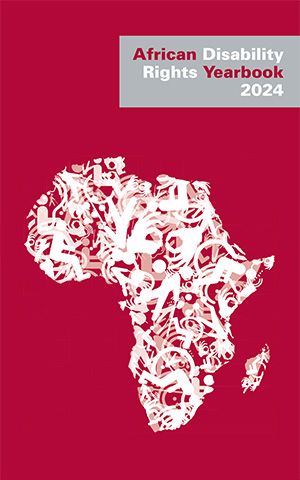
African Disability Rights Yearbook (ADRY)
The African Disability Rights Yearbook aims to advance disability scholarship. Coming in the wake of the United Nations Convention on the Rights of Persons with Disabilities, it is the first peer-reviewed journal to focus exclusively on disability as human rights on the African continent.
African Human Rights Law Journal (AHRLJ)
The African Human Rights Law Journal (AHRLJ) a leading peer-reviewed journal focused on human rights related topics of relevance to Africa, Africans and scholars of Africa. The Journal aims to contribute towards strengthening indigenous African scholarship.
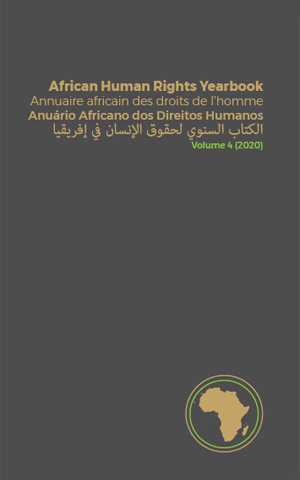
African Human Rights Yearbook (AHRY)
The African Human Rights Yearbook spearheads studies on the promotion and protection of human rights and provides a forum for constructive engagement about the African human rights system with academics and other human rights commentators on the continent.
African Human Rights Law Reports
African Human Rights Law Reports contains legal decisions of relevance to human rights law in Africa. These include selected domestic decisions from the whole continent, as well as the decisions of the African Commission on Human and Peoples’ Rights and the United Nations treaty bodies, dealing with African countries
African Human Rights Policy Paper
This African Human Rights Policy Papers series is one of the means by which the research and advocacy Units of the Centre for Human Rights, together with the self-standing Institute for International and Comparative Law in Africa (ICLA) and the International Development Law Unit (IDLU).
Guide to the African human rights system
This Guide provides an overview of developments related to the African Charter on Human and Peoples’ Rights, its supervisory body, the African Commission on Human and Peoples’ Rights, the African Court on Human and Peoples’ Rights, as well as the African Charter on the Rights and Welfare of the Child and its supervisory body, the African Committee of Experts on the Rights and Welfare of the Child.
Pretoria University Law Press (PULP)
Pretoria University Law Press is an open-access publisher based at the Centre for Human Rights, University of Pretoria.
AfricLaw Blog
AfricLaw, launched in April 2012, is a blog that provides a platform for discussion for those interested in the rule and role of law in Africa.
- Details
- Details
Ageing in the LGBT community: a positive outlook for older lesbian women in South Africa?
*Glossary of terms and abbreviations:
LGBT stands for Lesbian, Gay, Bisexual and Transgender; GFBT stands for Gay, Female Bisexual, and Transgender; ‘Closeted’ means secretive about one’s sexual orientation.
Author: Geoffrey Ogwaro1

The Constitution of the Republic of South Africa (thereafter the Constitution), protects older lesbian women through its provision that prohibits discrimination based on an intersectional number of grounds for lesbian women: age, gender, sex, marital status, pregnancy, sexual orientation, disability, and conscience.2 I have chosen these eight grounds for discrimination because they may apply, at any one given time or different times, to the average situation of older lesbian women: Older lesbian women will be older, have a sexual orientation that is same gender-loving, identify as biological women, might not be married or might never have married, have never had children, have age-related disabilities, might be discriminated against for the fact they are women, and believe in lesbian equality/gender equality and strongly and publicly express these views therefore becoming victims or prisoners of conscience.
The Constitution also protects the inherent dignity of everyone and stipulates that that dignity must be respected and protected.3 This provision will definitely also apply to older lesbian women too.
South Africa has legislation that governs the wellbeing of older persons. The Older Persons Act 13 of 2006 defines ‘older persons’ as ‘in the case of a female is 60 years of age or older’. The age is higher for males and stands at 65 years of age.4 However, there is nothing in the Act that deals with diverse older persons which highlights the unique challenges that older lesbian women (or the wider LGBT community) might face in terms of ageing.5
The question that this article addresses is what is the situation of older lesbian women in South Africa. The article does not restrict itself to the age of 60 but accommodates the other ages below 60 but above 50 because there is very limited research on older lesbian women to begin with, and older lesbian women who are from the age of 60 going up. This could be for the reason that not many older lesbian women are visible because they came from an era when LGBT rights were not much emphasized and LGBT identities were on the down low for the most part. Additionally, there is very little research on older lesbian women- specific wellbeing in South Africa. Therefore the article alludes to general LGBT aggregated research that would highlight statistics of older LGBT persons in general. However, the situations faced by older GFBT persons can be generalized to older lesbian women as well.
Human rights violations against older lesbian women in South Africa – is their need to fill some gaps?
Having read through many media reports of the murder, rape and assault of younger lesbian women in the country, one would expect that many older lesbian women would be closeted in fear of being stigmatized and violated. However, a research done in 2016 by the Love Not Hate (LNH) Campaign conducted by OUT LGBT Well-being, found that 55% of older LGBT persons sampled were open about their sexuality to those around them despite the danger of being stigmatized or violated; 51% of those LGBT persons from the age of 55 going up were reported to not have any fear of discrimination due to their sexual orientation or gender identity and; 88% of those LGBT from and above the age of 55 reported not having experienced any discrimination in the health care sector due to being gay, lesbian, bisexual or transgender.6 However, the same research showed that 20% of those older LGBT persons from and above the age of 55 said they had experienced verbal insults directed at them because they were lesbian, gay, bisexual or transgender; 9% had been threatened with physical violence; 7% had had personal property or possessions damaged or destroyed because of their sexual orientation or gender identity and; 4% had been sexually abused or raped because of their sexual orientation or gender identity in the previous 24 months.7 Although these statistics do not disaggregate the data according to sex or gender, the picture could be as grim for older lesbian women too.
Though a significantly higher percentage of those older LGBT individuals interviewed reported being free from any violations against them because of their sexual orientation or gender identity, a smaller but worth noting percentage reported violations as serious as sexual abuse and rape, which, though not exclusively, is a violation that affects disproportionately more women than men.
The problem is that no significantly larger and specific research exists on the human rights situation for older lesbian women in the country and until this gap is filled, not much can be said about older lesbian women. The recommendation would be to start disaggregating data and research to target older lesbian women in particular. The other alternative would be to centre research around lesbian women and girls and in that way aggregate them by age category.

1 Geoffrey Ogwaro heads the Sexual Orientation, Gender Identity and Expression Unit of the Centre for Human Rights, Faculty of Law, University of Pretoria. He is also a DPhil student writing his thesis on the participation of LGBT individuals and groups in the Equality Courts of South Africa.
2 The Constitution of the Republic of South Africa, 1996, section 9(3).
3 As above, section 10.
4 Older persons Act 13 of 2006, section 1.
5 Neil Henderson, and Kathryn Almack, Lesbian, gay, bisexual, transgender ageing and care: A literature study
6 Hate crimes against lesbian, gay, bisexual and transgender (LGBT) people in South Africa, 2016, OUT LGBT Well-being.
7 Same as above.
- Details
Since its formal recognition as an academic department in the Faculty of Law, the Centre for Human Rights has been able to invest its efforts in both formal academic programmes, on the one hand, and research, advocacy and less formal human rights teaching and training, on the other. In 2008, the Centre continued with the Master’s in Human Rights and Democratisation in Africa, again preparing 30 of Africa’s most talented young lawyers to make a difference within the sphere of international human rights law in Africa. An innovation introduced in 2008 was the LLM Partner’s Conference, held just before graduation on 10 December. Academics from participating faculties and LLM students presented work-in-progress and summaries of their dissertations, respectively, at an event aimed at stimulating further reflection among partners about the content and methodology of themes covered in the Master’s programme. The Centre further continued to cultivate continuous and constructive discussions among registered doctoral students on topics in human rights in Africa.
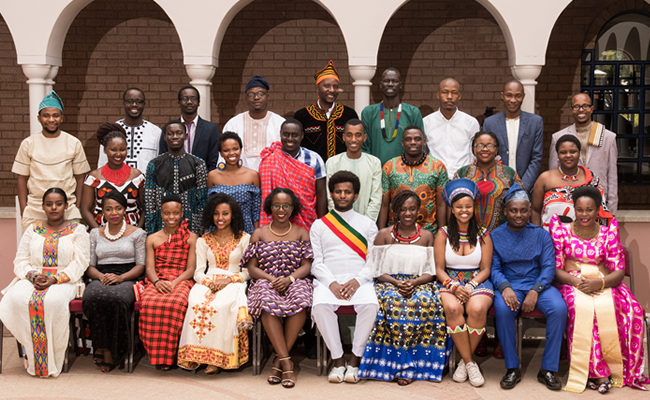
HRDA
LLM (Human Rights & Democratisation)
The LLM in Human Rights and Democratisation in Africa is a prestigious one-year intensive course where 25-30 exceptional individuals spend 6 months in Pretoria and 6 months at one of the 13 partner universities all over Africa.
Read more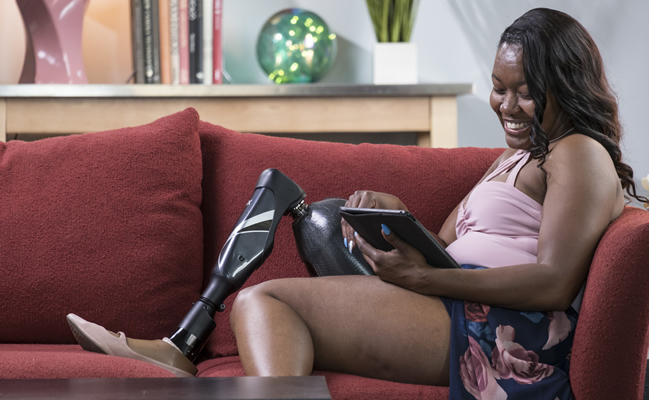
DRIA
LLM (Disability Rights in Africa)
The Masters in Disability Rights in Africa is embedded in the international human rights framework, the programme explores disability rights in the light of United Nations Convention on the Rights of Persons with Disabilities and the Protocol to the African Charter on Human and Peoples’ Rights on the Rights of Persons with Disabilities in Africa
Read More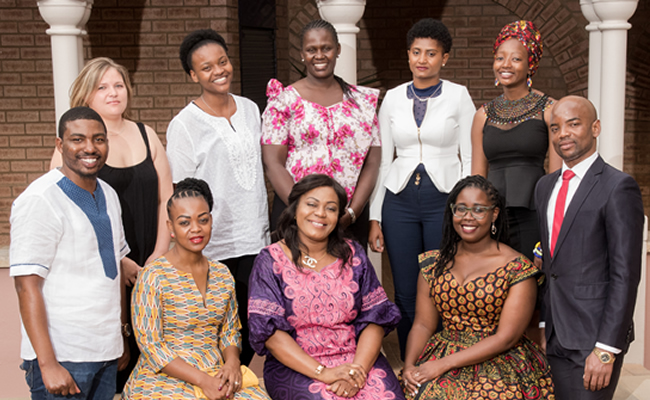
MDHR
LLM Multidisciplinary Human Rights
The LLM degree in Multidisciplinary Human Rights gives students from various disciplines the opportunity to engage with human rights issues from a number of perspectives. This programme is for lawyers and non-lawyers.
Read more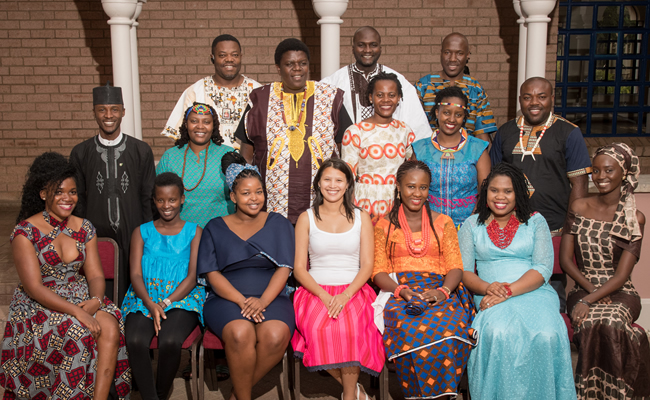
SRRA
LLM (Sexual Reproductive Rights in Africa)
The Master's degree (LLM) in Sexual and Reproductive Rights in Africa is a two-year programme that is offered as a blended learning course comprising of online interaction and residential block-weeks in Pretoria.
Read more
TILA
LLM (International Trade & Investment Law in Africa)
The Master's of Law (LLM) degree in International Trade and Investment Law in Africa is the first of its kind to be offered in Africa. It establishes a higher education and training programme based in and focused on, Africa with full exposure to the international world of trade and investment.
Read More