- Details
The Research Units of the Centre for Human Rights contribute to the realisation of human rights in Africa and beyond.

The Business and Human Rights Unit is a multi- and trans-disciplinary research unit which focuses on the extractive industries law, trade and development law, as well as general international human rights law – and is relevant to the business environment.

The Children’s Rights Unit is a pan-African platform established to carry out & support pan-African research in children’s rights, provide capacity strengthening training for government, intergovernmental and non-governmental institutions and organisations.

The Democracy and Civic Engagement Unit works with the Pan-African Parliament (PAP) – the chief legislative organ of the African Union. From its seat in South Africa, PAP provides a regional platform for Africans and their civil society organisations to have a greater impact on the decisions affecting the continent.

The Disability Rights Unit works to find ways of addressing the rights of persons with disabilities on the African continent by conducting research on international disability rights standards and instruments, building capacity among governments, national human rights institutions, academia, civil society, and communities.

The Expression, Information, and Digital Rights Unit is aimed at supporting the mandate of the Special Rapporteur on Freedom of Expression and Access to Information in Africa of the African Commission on Human and Peoples’ Rights in the promotion and protection of Freedom of Expression and Access to information on the continent.

The Freedom from Violence Unit was established in 2014 to research the incidence of unlawful killings across the African continent, working within the Centre for Human Rights and the Institute for International and Comparative Law in Africa. The Unit looks to explore the drivers of violence & the legal framework in which they operate.
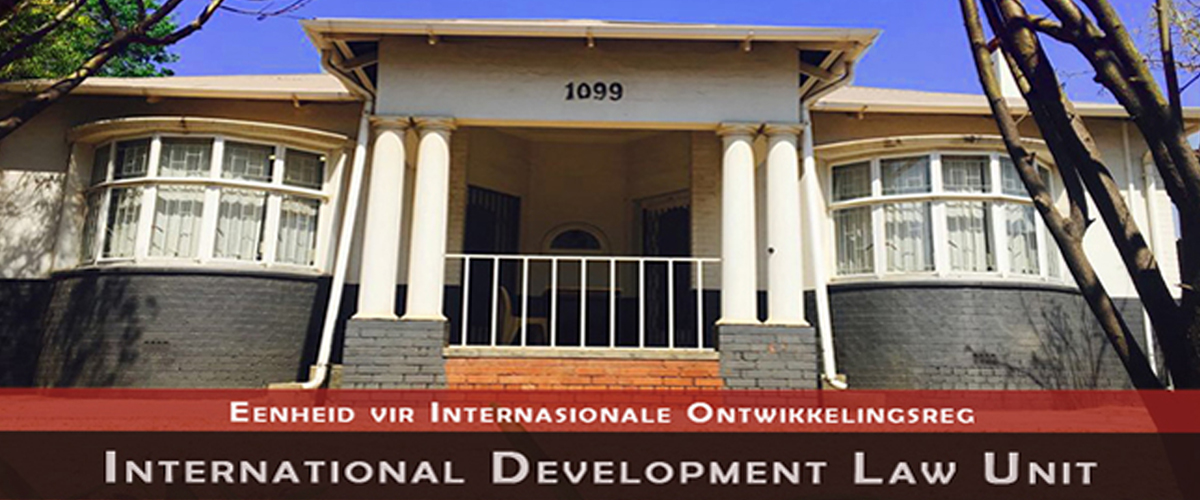
The International Development Law Unit presents the LLM (International Trade and Investment Law in Africa) and its mission is to conduct and promote policy-oriented legal research on international development law topics.

The Litigation and Implementation Unit strategically uses the law through the instrumentality of judicial and quasi-judicial institutions to enforce human rights, prevent human rights violations and seek redress for human rights violations.

Established in May 2016, the SOGIESC Unit’s mandate is to advocate for and work towards equality inclusion non-discrimination, non-violence, and non-heterosexism for lesbian, gay, bisexual, transgender, intersex, queer, questioning, and asexual persons (LGBTIQ+ persons).

The Women’s Rights Unit works towards the realisation of the rights of women and girls in Africa. The Unit aims to promote the implementation & popularisation of the Protocol to the African Charter on Human & Peoples’ Rights on the Rights of Women in Africa through research, training, and advocacy.
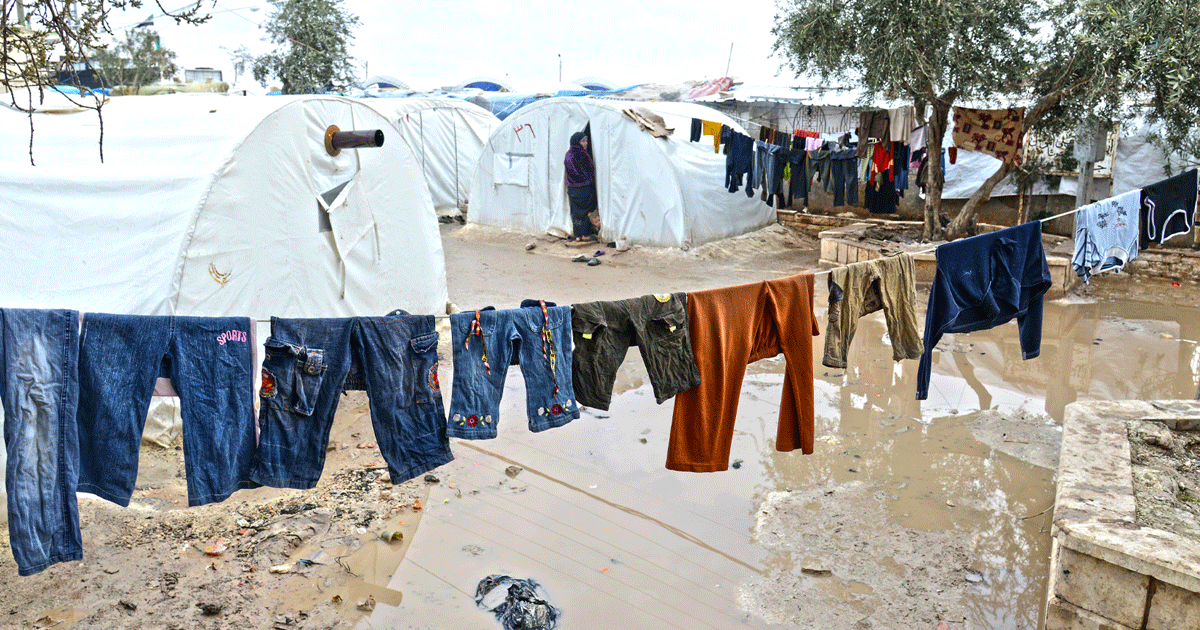
The Migration Unit at the Centre for Human Rights, University of Pretoria, engages in research and activities on migration. The migration Unit works through research, advocacy and training in contributing to the regional discussion on migrant rights. The Unit responds to the need for evidence-based work. The focus areas of the Migration Unit include the protection of migrants, refugees, internally displaced persons and stateless persons.
- Details

Dr Tresor Makunya
Postdoctoral Fellow and Publications Coordinator
+27 (0) 12 420 3810
Tresor.Makunya@up.ac.za
Areas of research: African Comparative Constitutionalism; International Human Rights Law in Africa; Democratisation in Africa; African Union Law & Public International Law
Media Publications
- 'The function of constitutional judges and judicial philosophy in Africa: Introduction to the special issue'
AfricLaw 17 December 2021 - DRC’s Constitutional Court: Broken shield in overseeing the executive in emergencies?
Originally published in ConstitutionalNet
27 May 2020 -
TM Makunya ‘Fostering a gendered approach to peacebuilding in the African Great Lakes Region: Perspectives from the Democratic Republic of Congo’ 13 October 2021 in Kujenga Amani
-
TM Makunya ‘DRC’s Constitutional Court: Broken shield in overseeing the executive in emergency?’ 27 May 2020 in ConstitutionNet
-
TM Makunya ‘An agenda for constitutional reform in Democratic Republic of Congo (DRC)’ 5 February 2019 in ConstitutionNet
-
KB Kennedy & T Makunya ‘Bringing the African human rights system into classrooms: Somes lessons drawn from a lecture delivered at the Université Libre des Pays des Grands Lacs (DR Congo’ 4 February 2019) in AfricLaw
-
EB Bope & T Makunya ‘Les conséquences juridiques de la déclaration de l’Union africaine sur les élections en République démocratique du Congo : Un simple avis ou une mesure contraignante ?’ 19 January 2019 in Club des Amis du Droit du Congo
-
T Makunya ‘Voting in the Democratic Republic of Congo (DRC) against all odds: An account of the 30 December 2018 elections in one of the polling centres’ 4 January 2019 in AfricLaw
Edited book
- TM Makunya L’État africain et la crise postcoloniale: Repenser 60 ans d’alternance institutionnelle et idéologique sans alternative économique (L’Harmattan, Paris 2021) (with JB Akilimali)
Book chapters
- TM Makunya ‘La compétence consultative de la Cour africaine des droits de l’homme et des peuples: entre restrictions organiques et limitations matérielles’ in EB Bope & M Mubiala (eds) La République démocratique du Congo et le système africain de protection des droits de l’homme (Editions CAD Kinshasa, 2021) (with SZ Bitagirwa)
- TM Makunya ‘Le rôle et l’apport des tribunaux dans la réalisation de la justice sociale en Afrique du Sud’ in JB Akilimali & TM Makunya (eds) L’État africain et la crise postcoloniale: Repenser 60 ans d’alternance institutionnelle et idéologique sans alternative économique (L’Harmattan, Paris 2021)
- TM Makunya ‘The application of the African Charter on Human and Peoples’ Rights in constitutional litigation in Benin’ in F Viljoen and others (eds) A life interrupted: Essays in honour of the lives and legacies of Christof Heyns (PULP, 2022, 468).
- TM Makunya ‘The struggle for constitutional identity in Francophone Africa’ in CM Fombad & N Steytler (eds) Constitutional identity and constitutionalism in Africa (OUP, 2022, forthcoming) (with CM Fombad)
- TM Makunya ‘Soldiers in civilian uniforms: The role of the military in supporting third-termism in Africa’ in R Adeola & M wa Mutua (eds) The Palgrave handbook of democracy, governance and justice in Africa (2022) (with K Appiagyei-Atua).
Journal articles
- ‘Overcoming challenges to the adjudication of election-related disputes at the African Commission on Human and Peoples’ Rights: Perspectives from the Ngandu case’ (2022) 22(2) African Human Rights Law Journal 379-402
- ‘The nexus between constitutionalism, peace and security in the law and practice of the African Union’ (2022) 25 Recht in Afrika – Law in Africa – Droit en Afrique 53-83.
- TM Makunya ‘Selected development in human rights and democratisation during 2020 in Africa’ (2021) 5(2) Global Campus Human Rights Journal 185-216 (with Lornah, Ruddy and Davina).
- TM Makunya ‘A commentary on the African Commission’s General Comment on the Right to Freedom of Movement and Residence under Article 12(1) of the African Charter on Human and Peoples’ Rights’ (March 2021) 65(SA) Journal of African Law (with R Adeola and F Viljoen)
- TM Makunya ‘Constitutionalism, regional economic integration and the harmonisation of business law in Francophone Africa through the lenses of state sovereignty and statehood’ (2021) 1 Congolese Review of Social Sciences Research (with B Kahombo)
- TM Makunya ‘Decisions of the African Court on Human and Peoples’ Rights in 2020: Trends and lessons’ (2021) 21(2) African Human Rights Law Journal 1230 - 1264
-
T Makunya ‘Selected developments in human rights and democratisation during 2017: Sub-Saharan Africa’ (2018) 2 Global Campus Human Rights Journal 147-173 (with MG Nyarko).
-
TM Makunya ‘State security, securitisation and human security in Africa: The tensions, contradictions and hopes for reconciliation (2017) 1(2) Global Campus Human Rights Journal 326-349 (with K Appiagyei-Atua, I Oyakhirome, EK Kabachwezi & S Buabeng-Baidoo).
Ongoing research projects
Edited book
- Commentary on the Protocol to the African Charter on Human and Peoples’ Rights on the Rights of Women in Africa (2023) (With A Rudman & C Musembi)
Journal articles
-
‘Beyond legal measures: A review of the Democratic Republic of Congo’s initial report under the Protocol to the African Charter on Human and Peoples’ Rights on the Rights of Women in Africa’ (2023) Journal of African Law (approved for publication)
-
‘Advisory procedure: African Court on Human and Peoples’ Rights’ (2023) MaxPlanck Encyclopedia of International Procedural Law (approved for publication)
Book chapters
- ‘Article 15: The right to food security’ in A Rudman, TM Makunya & CN Musembi (eds) Commentary on the Protocol to the African Charter on Human and Peoples’ Rights on the Rights of Women in Africa (2023), forthcoming (with M Bwanaisa)
- 'Article 11: Protection of women in armed conflicts' in A Rudman, TM Makunya & CN Musembi (eds) Commentary on the Protocol to the African Charter on Human and Peoples’ Rights on the Rights of Women in Africa (2023), forthcoming (with J Mumbala)
- ‘The impact of COVID-19 on human rights and democracy in the Democratic Republic of Congo’ in F Adegalu and Others Covid-19 and human rights in Africa (2023)
- ‘The implementation of the Maputo Protocol in the Democratic Republic of Congo: an account of theoretical promises and little practical impact’ in S Mutambasere (ed) The impact of the Maputo Protocol in selected African countries (2023) forthcoming (With E Katusele & O Bahoze)
- Details
Country / Where did you grow up:
Ethiopia, Dhagahbur district
Academic qualifications:
LLB (cum laude) University of Hargeisa
B.Sc Agriculture & Natural Resource Management (cum laude) Gollis University
Experience:
I have worked for a number of international & local organisations in different capacities.
Academic fields of interest:
Public International Law, International Human Rights Law & Environmental Law.
husseinabdurahman197@gmail.com
- Details
Underpinning all of the Unit’s work is the creation and maintenance of a Database of Unlawful Killings in Africa, designed as a resource initially for policy-makers and practitioners, but ultimately also for academic and other researchers.
Building on the work of a comprehensive baseline study completed in 2013/4 in collaboration with the University of Cambridge (available here) this database will contain information concerning events in the following categories:
Death Penalty
Custodial Deaths
Extrajudicial Executions
Excessive Force
Political Violence
Armed Conflict
Intercommunal Violence
Killings by Non-State Actors
In order for this database to function properly it needs material from as diverse a source-base as possible. Researchers in Pretoria would benefit greatly from partners across the continent passing them relevant information from any source, in any language, so that the resources of the database can be as comprehensive as possible.
The Unit encourages researchers and practitioners from across the continent and beyond to contribute to this process by uploading relevant information using this web form.
If you have questions about this or any other aspect of the Unit’s work we encourage you please to contact us.
- Details
Unlawful Killings in Africa
Prepared by the Centre of Governance and Human Rights (University of Cambridge) for the UN Special Rapporteur on extrajudicial, summary or arbitrary executions, June 2014
Resource Pack on the Abolition of the Death Penalty in Africa
Prepared for the Joint Meeting of the Working Group on Death Penalty and Extrajudicial, Summary or Arbitrary Killings in Africa and the UN Special Rapporteur on extrajudicial, summary or arbitrary executions, Pretoria, South Africa, 26-27 July 2013
- Details
Download this information in PDF format
The World Coalition Against the Death Penalty has recently reviewed and updated the strategy for its campaign in favour of the international and regional protocols on abolition. Over the past five years, there have been positive steps taken by several African States with respect to the Second Optional Protocol of the ICCPR (ratifications by Benin, Gabon and Guinea Bissau, signatures by Angola and Madagascar). For 2015, the World Coalition has selected several African States as priority targets: Togo (Jan-Feb), Morocco & Cote d'Ivoire (Mar-Apr), Angola (Sept-Oct), and Madagascar & Sierra Leone (Nov-Dec). More information concerning the World Coalition's campaign, including information packs for lobbying actions, can be found here."
Penal Reform International has produced a report on Strengthening death penalty standards (2015) both underlining the existing minimum standards with respect to the continued application of the death penalty and exploring a number of emerging norms. The report can be found here.

- Details
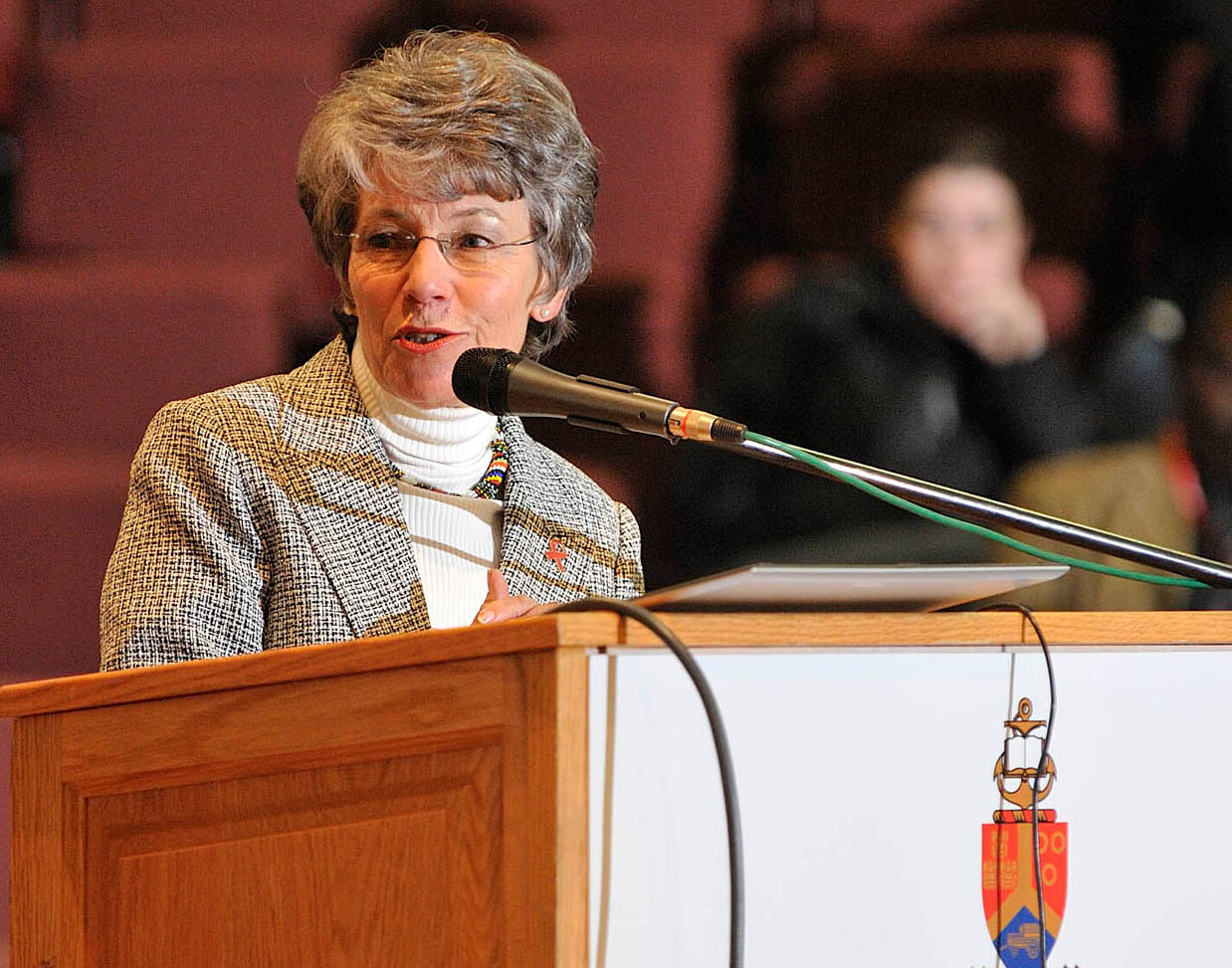
About the Gill Jacot Guillarmod Scholarship
In loving memory of Gill Jacot Guillarmod, Senior Project Manager and Liaison Officer of the Centre for Human Rights from 1 May 2001 to 15 January 2010, in deep appreciation for her role to the academic and other programmes of the Centre, and in recognition of her humanity and humour, which left a profound impression on everyone whose lives touched hers, the Centre for Human Rights in 2010 established the Gill Jacot Guillarmod Scholarship.
Scholarship Regulation document
The deadline for applications for the Gill Jacot Guillarmod Scholarship is 30 October each year.
Criteria Applicable to the Scholarship
-
The Scholarship will be awarded annually to a Masters or a Doctoral student studying towards a degree in human rights on a degree programme based within the Centre.
-
The Scholarship will be awarded annually, for a student undertaking studies in the following academic year. The Scholarship will be awarded for the first time in November 2010, for studies in 2011. The recipient of the scholarship will be publicly announced on or around 10 December every year, as part of the LLM Graduation Ceremony. The scholarship amount will only be paid to the recipient once he or she has been registered with the University of Pretoria.
-
All successful applicants for the LLM (Human Rights and Democratisation in Africa) may apply to be considered for this scholarship.
-
Any doctoral student or masters student registered on any other programme in the Centre may also apply for this scholarship.
-
The criteria for selection is:
proven commitment to human rights;
devotion to the cause of humanity;
academic excellence;
an ability to balance academic pursuit with other interests and financial need.
-
At the time of making the application, an applicant must reveal any other scholarships already awarded for the intended programme.
Procedure for Applying and the Awarding of the Scholarship
-
The Centre will advertise the Scholarship.
-
Applications must reach the Office Manager (chr@up.ac.za) of the Centre by 30 October annually. Applications must consist of a letter of motivation, at least two letters of support, and the candidate’s most recent academic results or progress report (for currently registered doctoral students).
-
Applicants should fulfil the criteria laid down by the University of Pretoria for enrolment for the field of study concerned.
-
The Selection Committee will select students for the award in accordance with the criteria for the scholarship and will submit a list of scholarship holders to the Division for Study Finance in order for the award to be made on the student’s account
-
The recipient of the scholarship is not precluded from holding other bursaries.
-
The scholarship will be utilised to cover tuition and accommodation fees should the student reside in a UP residence. The student may claim credits that arise on the student account due to the award.
Selection Committee
The selection panel, consisting of the Director of the Centre, the Assistant Director of the Centre, the HRDA Programme Manager, the Centre’s Operations Manager and Edouard Jacot Guillarmod, or his representative, will meet annually to decide on the award of the Scholarship.
Recipients of the Gill Jacot Guillarmod Scholarship
2011
- Melhik Bekele
- Japheth Biegon
- Ayalew Assefa
- Doris Sonsiama
- Meskerem Techane
2012
- Matthieu Ciaba
2013
- Rashid Dumbaya
- Bright Nkrumah
2016
- Monicah Kareithi
2019
- Eunice Sakaria
2021
- Candice Kasere