- Details

The Centre for Human Rights, Faculty of Law, University of Pretoria, cordially invites you to a webinar organised by the Democracy and Civic Engagement Unit on participation of young people in elections and politics on the continent with a specific focus on Kenya, Zambia and South Africa. The webinar will interrogate the influences driving participation of young Africans informed by trends of most recent election cycles in the selected countries. This webinar aims to understand the trend towards declining youth participation and the influences driving this as well as garner lessons from instances where youth participation in elections has been robust.
- Details

The Centre for Human Rights, Faculty of Law, at the University of Pretoria (Centre for Human Rights), is extending an invitation to you to participate in a webinar launching a study on the impact of COVID-19 on older women in Southern Africa.
- Details

Dr. Primrose E.R Kurasha is an International Law Expert who holds her professional certification from the International Court of Justice's Hague Academy of International Law. Her other professional certificates are from the University of Salzburg, Austria, the Pretoria Bar of Advocates and the Centre for Human Rights. Dr. Kurasha has also served as a board member.
- Details
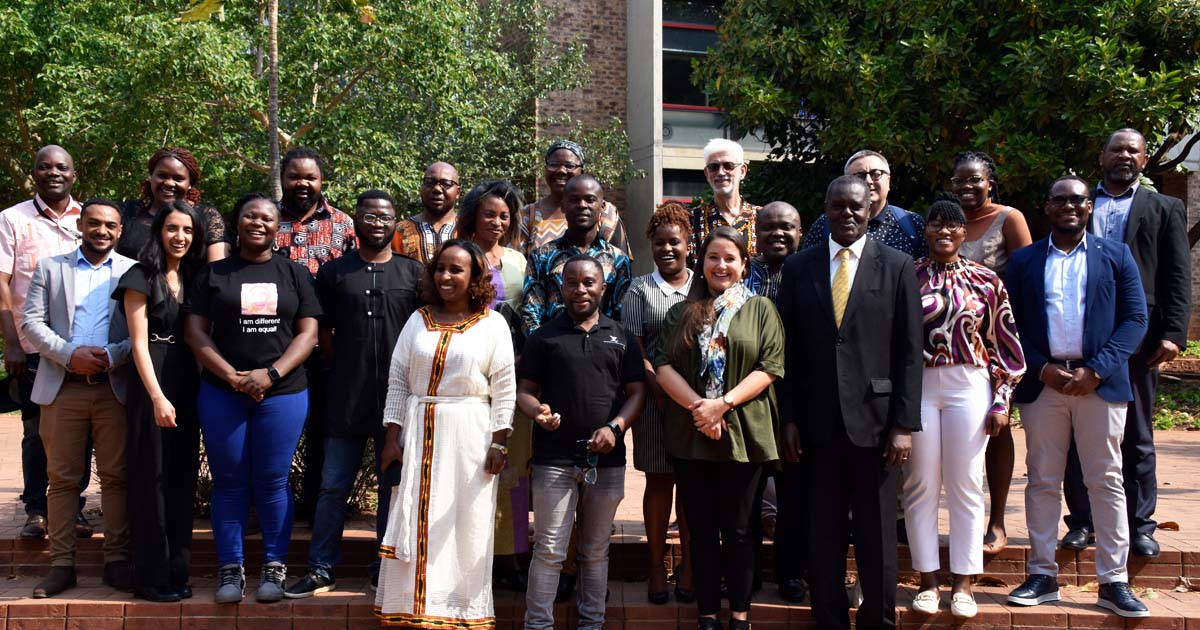
On September the 19th 2022, the Centre for Human Rights Migration Unit hosted a High-level Experts Forum on Durable Solutions to Protracted Displacement in Africa. The Forum engaged experts from various universities in Africa, the office of the United Nations Commissioner for Refugees, Ethiopian Human Rights Commission and rights organisations in Africa.
- Details
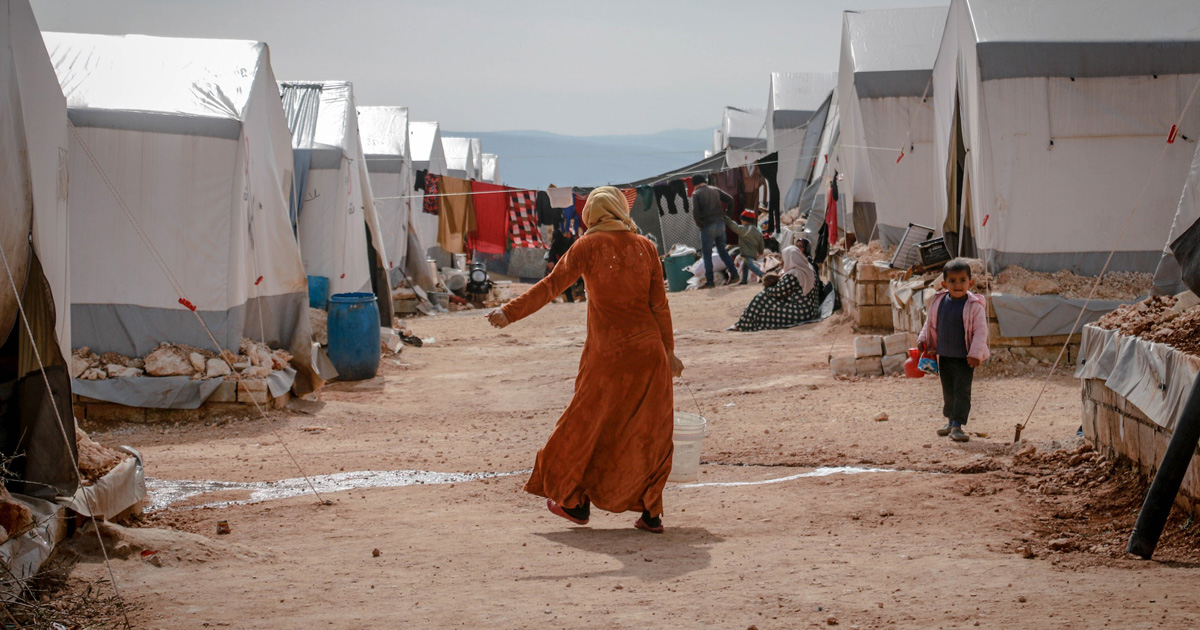
High-level experts forum on durable solutions to protracted displacement in Africa
Venues: Future Africa Campus, and Online
Monday 19 September 2022
- Details

The Centre for Human Rights (CHR), University of Pretoria (UP), in partnership with the African Policing Civilian Oversight Forum (APCOF) and Global Law Enforcement and Public Health Association (GLEPHA) held another advanced human rights course on “Policing and Vulnerability in Africa” from the 5th – 9th September 2022. The course was held virtually with over sixty (60) participants drawn from law enforcement agencies, government parastatals, students, academic institutions, legal practitioners, civil societies, human rights advocates, non-profit organizations, and other institutions of learning across countries in Africa and globally.
- Details

The Sexual Orientation, Gender Identity and Expression, and Sex Characteristics (SOGIESC) Unit of the Centre for Human Rights, Faculty of Law, is recruiting for: (i) a part-time position and (ii) a full-time position of Project Officer each under a twelve-month contract beginning in January 2023 and ending on 31 December 2023, renewable based on performance and continued funding.
- Details

The Centre for Human Rights is calling for papers that will form part of a book that contributes to critical communication surveillance and human rights studies in Africa.
- Details
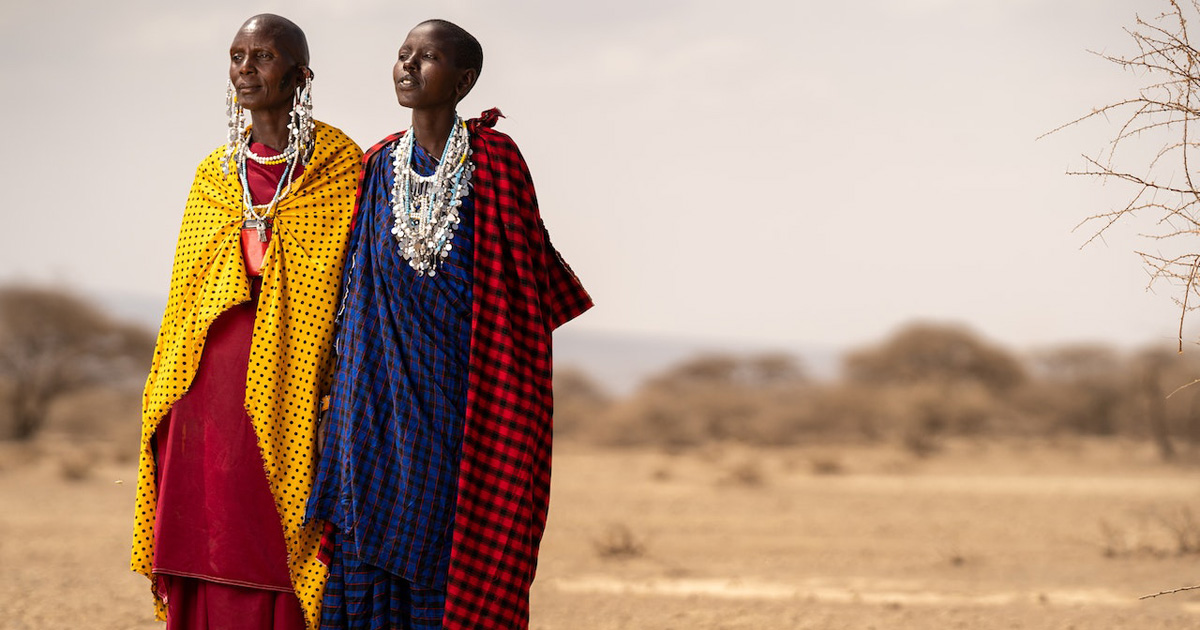
The Centre for Human Rights, Faculty of Law, University of Pretoria, invites you to a webinar discussion of a case on the rights of indigenous people recently decided by the African Court on Human and Peoples’ Rights. This event is the second in a series of discussions of decisions by African human rights bodies.
Date: 20 September 2022
Time: 11:00 - 12:30 SAST
Venue: Zoom
Host: Prof Frans Viljoen
Moderator: Ms Henrietta Ekefre
RSVP: Foluso Adegalu (foluso.adegalu@up.ac.za)
- Details
Download Pretoria Declaration on Technology and Human Rights
Download abstract and a list of bios of participantsabstract and a list of bios of participants
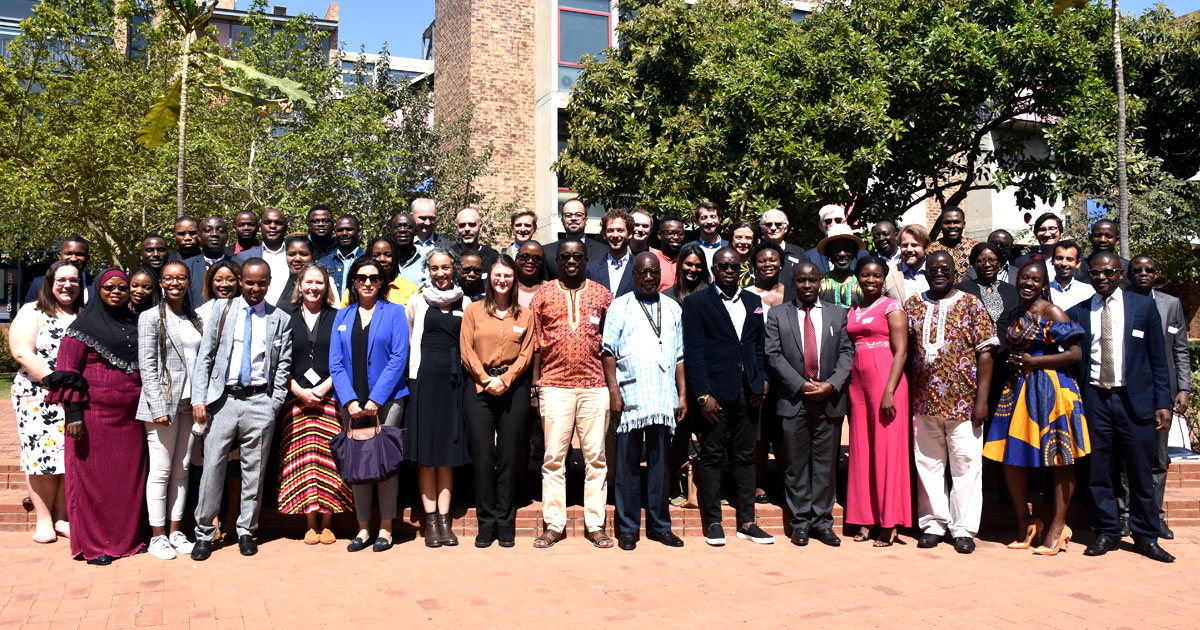
From 1 to 3 September, the Centre for Human Rights organised the conference of the Association of Human Rights Institutes (AHRI). AHRI was established in 2000 by seven human rights institutes in Europe and has grown to include more than 80 university-based human rights institutes across the world. The 2022 conference was the first time that AHRI held its annual conference outside Europe. The Centre for Human Rights organised the 2020 conference on the theme of socio-economic rights, but due to Covid-19 this conference was moved fully online.
- Details
On 9 June 2022 the Centre for Human Rights (CHR) at the University of Pretoria facilitated the fifth event in the Pretoria-Marburg Queer Conversations: Scholarly and Activist Perspectives on LGBTIQ+ Lived Realities in Africa in collaboration with the Centre for Sexualities, AIDS, and Gender (CSA&G) at the University Pretoria, the Center for Gender Studies and Feminist Futures (CGS) and the Center for Conflict Studies (CCS) at the University of Marburg. The Pretoria-Marburg Queer Conversations series creates a monthly space for in-depth discussions designed to tap into the intersections of knowledge-production and transfer between diverse scholarly and activist spheres and contributes to methodological, conceptual, and normative aspects of centering LGBTIQ+ rights and lived realities in African contexts.
The Pretoria-Marburg Queer Conversations continue on 8 September 2022 with the topic ‘Prospects and Challenges for Transnational Activism to Advance LGBTIQ+ Rights in Africa’ organised by the Center for Gender Studies and Feminist Futures (CGS) and the Centre for Conflict Studies (CCS) at the University of Marburg. Register for the following webinar below:
- 8 September 2022, 12:00 SAST to 13:30 SAST / 12:00 CET to 13:30 CET:
- Details
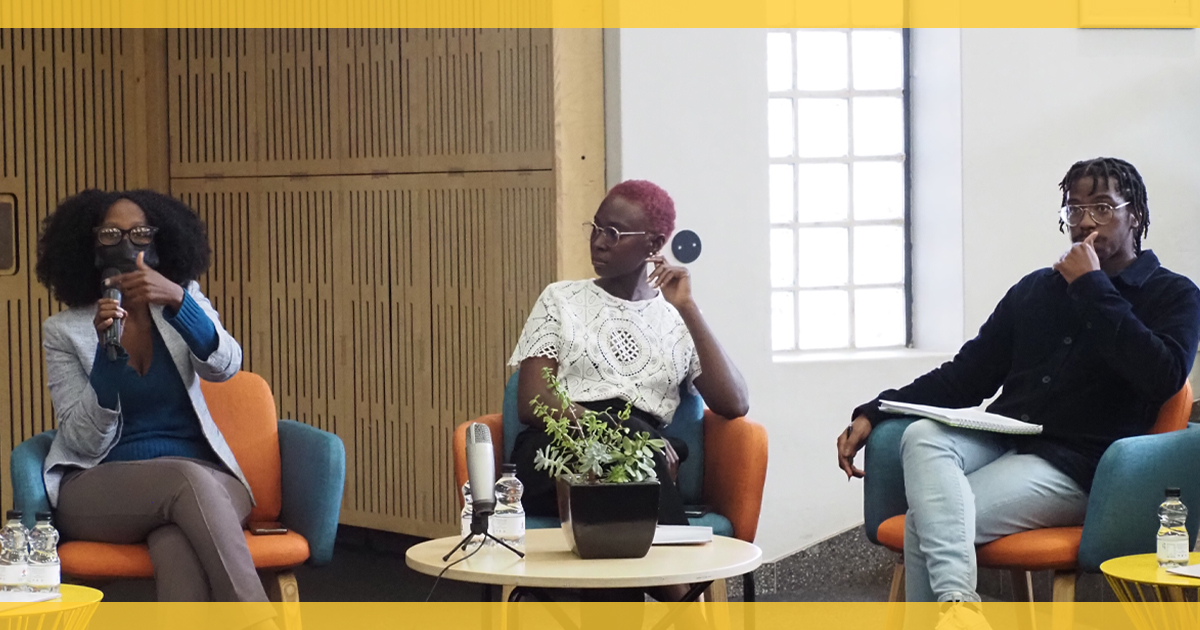
The Centre for Human Rights, Faculty of Law, University of Pretoria in partnership with the University of Antwerp, Belgium, conducted its annual Advanced Human Rights Course (AHRC) on the Right to Development in Africa. The course was held from the 15th to 19th of August 2022 in a hybrid format with physical participants at the University of Pretoria’s Future Africa Campus (Future Africa), and about 55 virtual participants joining via Zoom from all over the world. The Centre and its partners also hosted a two-day round table dialogue on the right to development on the 19th and 20th of August 2022 at Future Africa.
- Details
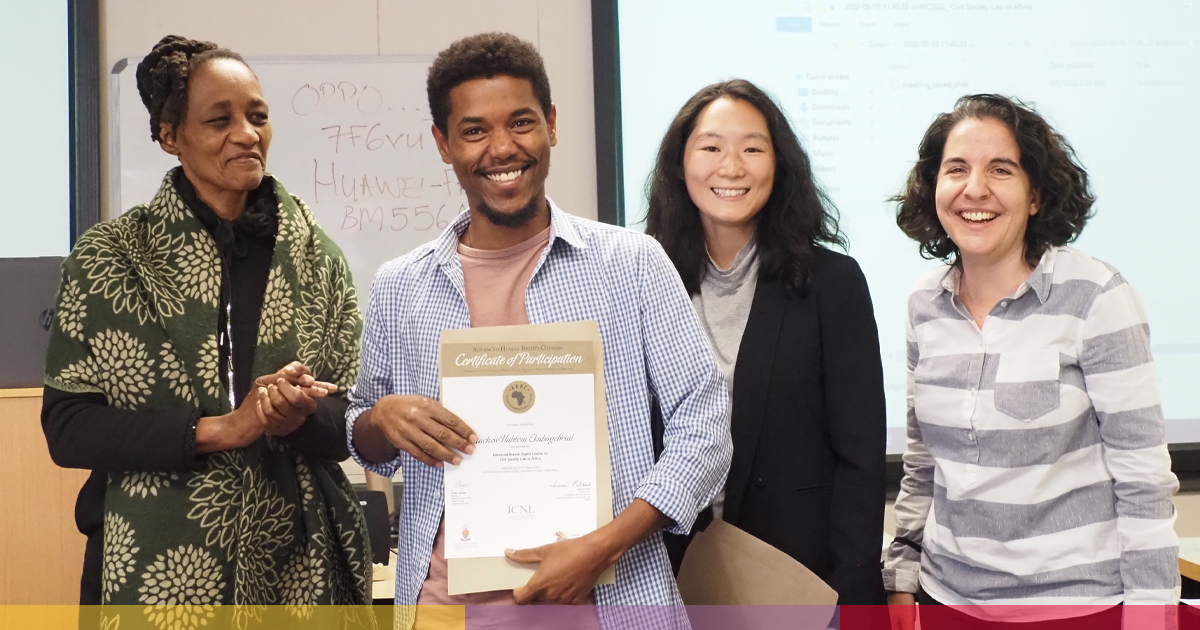
The Centre for Human Rights (CHR), University of Pretoria (UP), in collaboration with the International Center for Not-For-Profit law (ICNL) hosted its annual advanced human rights course on “Civil Society Law in Africa” at University of Pretoria. This year’s course was held in a hybrid format, about twenty participants from Southern and East African regions attended the course physically at the University, while about fifty attended online from other different parts of Africa. The participants included students, several civil society organizations representatives, legal practitioners, human rights advocates, members of government institutions, members of parliament, members of the judiciary and representatives of law enforcement agencies.
- Details
The 2022 Advanced Human Rights Course (AHRC) on the African human rights systems in comparative perspectives took place from 4 - 8 April 2022. The course was hosted by the Centre for Human Rights, University of in collaboration with Ghent University.
- Details

The Centre for Human Rights, Faculty of Law, University of Pretoria, in partnership with the University of Antwerp, cordially invites you to a webinar dialogue on clarifying the nature, content and importance of the right to development in Africa. The Dialogue will attempt to interrogate critical issues around Human Rights Based Approach to Development; Debt Financing, Taxation and development; IFFS and Development; Public Services and the SDG agenda; PPPs and development; Climate Change and Sustainable Development and the Draft Treaty on Right to Development among others. These will help guide formulation of strategic interventions to inform the right to development discourse in Africa and international mechanisms.
- Details
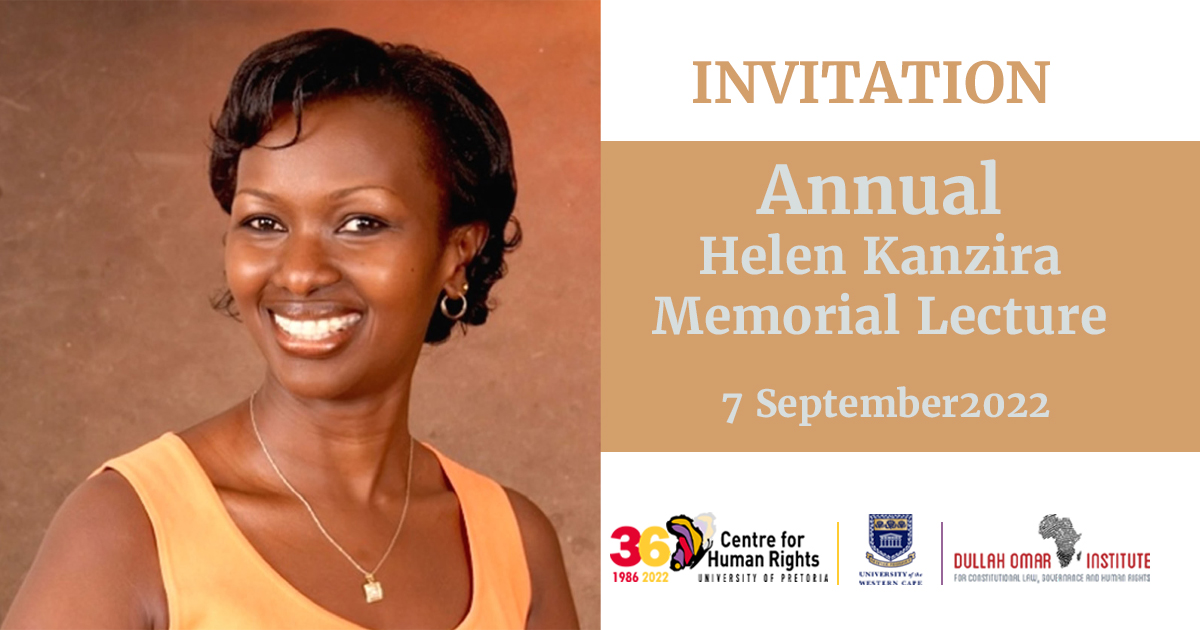
The Dullah Omar Institute, University of the Western Cape together with the Centre for Human Rights, University of Pretoria cordially invites you to the Helen Kanzira Memorial Lecture.
- Details

On 15 August 2022, the Centre for Human Rights’ Expression, Information and Digital Rights unit hosted a digital rights training and capacity-building workshop for civil society organisations from Botswana, DRC, Eswatini, Lesotho, Malawi, Mozambique, Madagascar, Namibia, Zambia and Zimbabwe. Among the participants were representatives of NGOs, journalists, lawyers, and academics. The training was based on the Digital Rights Landscape in Southern Africa report launched on 3 August 2022. The objective of the training was to advance and enhance public interest and awareness of digital rights among civil society organisations.
- Details

The Disability Rights Unit, Centre for Human Rights, University of Pretoria, conducted a research study to map out the barriers faced by persons with disabilities in accessing the criminal justice systems in Botswana, South Africa and Zambia. Botswana, South Africa and Zambia have ratified the United Nations Convention on the Rights of Persons with Disabilities (CRPD) in 2021, 2007 and 2010, respectively. The (CRPD) enshrines the rights of persons with disabilities, including the right to access justice on an equal basis with others under article 13.
- Details

The Centre for Human Rights is looking for an experienced consultant with research expertise to conduct a study on the role of the media in fomenting and countering xenophobia in South Africa.
- Details
The Centre for Human Rights, University of Pretoria, and the NorwegianCentre for Human Rights, University of Oslo, cordially invite you to a thematic and country-level discussion of the influence of the United Nations treaty system on the promotion and protection of human rights at the national level.
- Details

The Pretoria Regional Delegation of the International Committee of the Red Cross together with the Institute for International and Comparative Law in Africa and the Centre for Human Rights of the University of Pretoria will be presenting the nineteenth All Africa Course on International Humanitarian Law between 25 October and 04 November 2022.
- Details
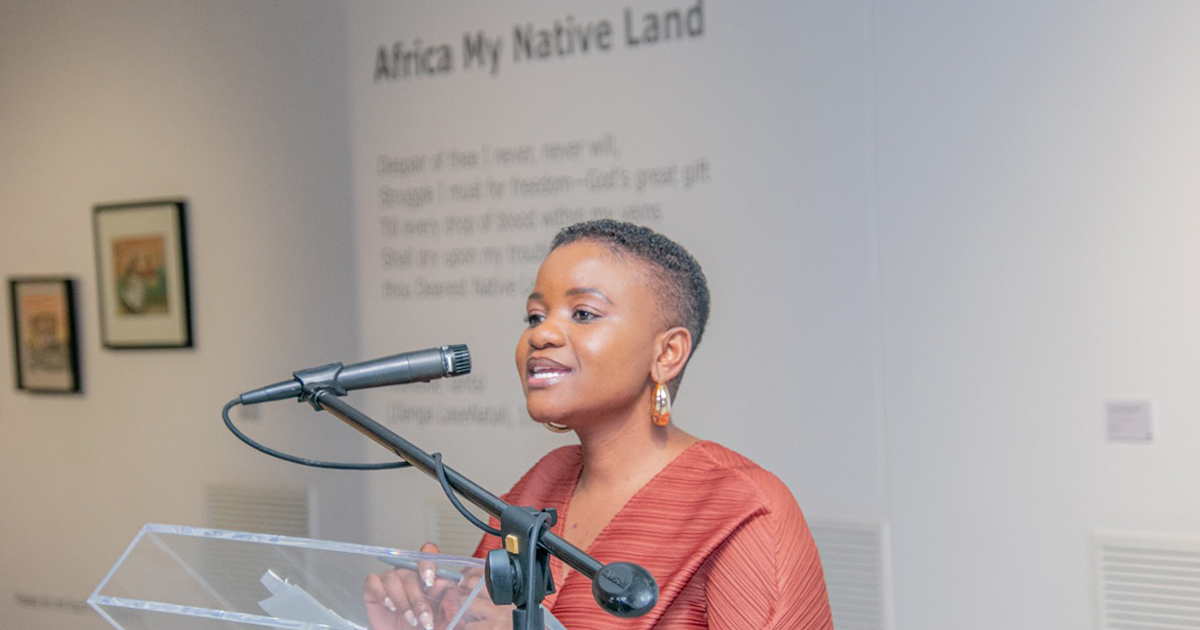
On 4 August 2022, The Democracy and Civic Engagement Unit of the Centre for Human Rights(the Centre), University of Pretoria(UP), in collaboration with the Africa Peer Review Mechanism (APRM) hosted a cocktail reception in honour of Dr. Nardos Bekele-Thomas, the new Chief Executive Officer of AUDA- NEPAD, and His Excellency Chief Charumbira Fortune Zefania, the New President of the Pan-African Parliament (PAP) and Members of the Bureau. The newly elected Members of the Bureau are: Hon. Prof. Massouda Mohamed Laghdaf; Hon. Dr Ashebiri Gayo; Hon. Lúcia Maria Mendes Gonçalves dos Passos; and Hon. Francois Ango Ndoutoume.
- Details
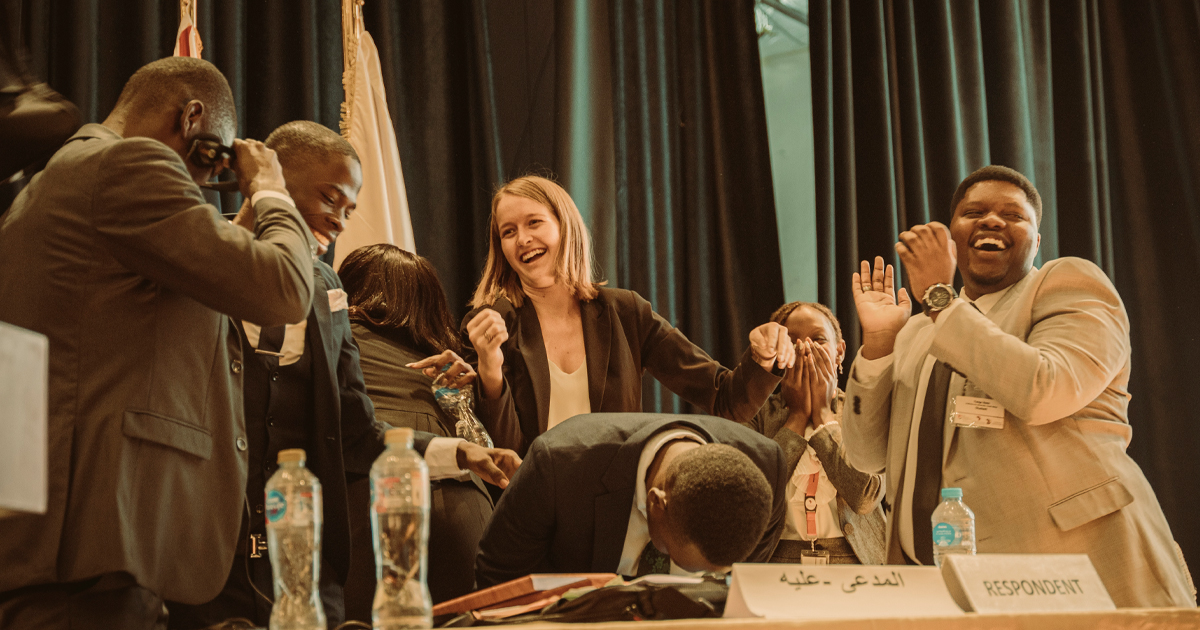
The British University in Egypt hosted the 31st edition of the African Human Rights Moot Court Competition in Cairo, from 25 - 30 July 2022. In commemoration of the human rights champion, founder of the African moot competition and former United Nations (UN) special rapporteur extrajudicial executions, Prof Christof Henys.
- Details
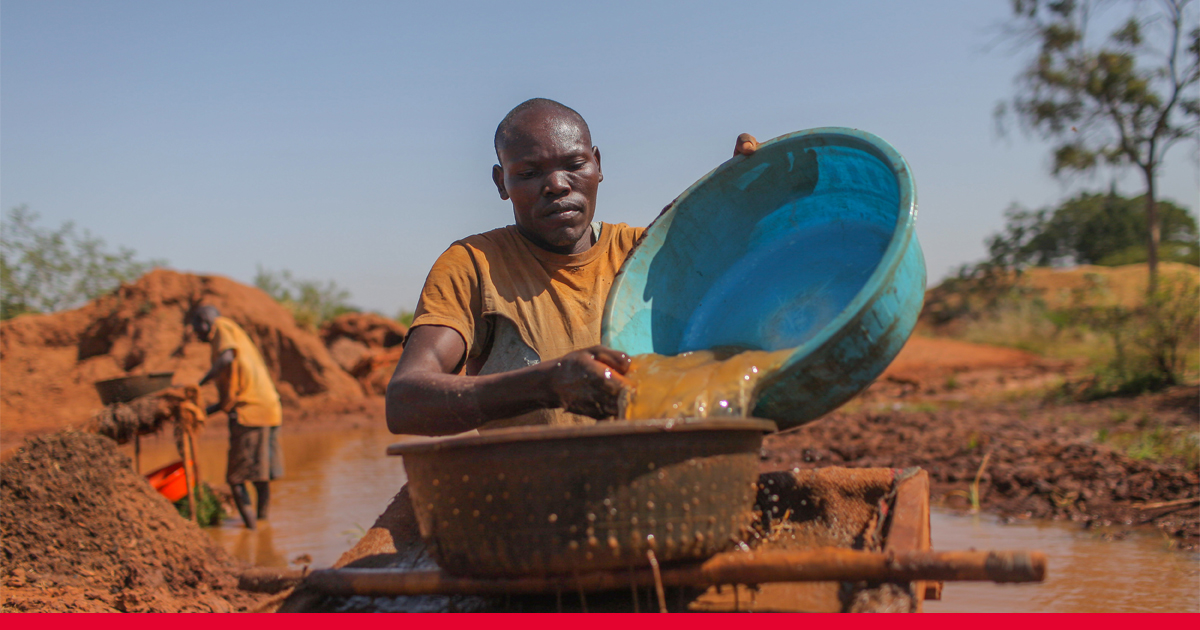
The African Coalition for Corporate Accountability (ACCA) congratulates the Centre for Applied Legal Studies (CALS), Alternative Information and Development Centre (AIDC) and Lawyers for Human Rights (LHR) on successfully convening the 4th Binding Treaty on Business and Human Rights Indaba in Johannesburg from the 27 - 28 July 2022, under the theme: ‘Towards a legally binding instrument’: Lessons learnt from the pandemic.’
- Details
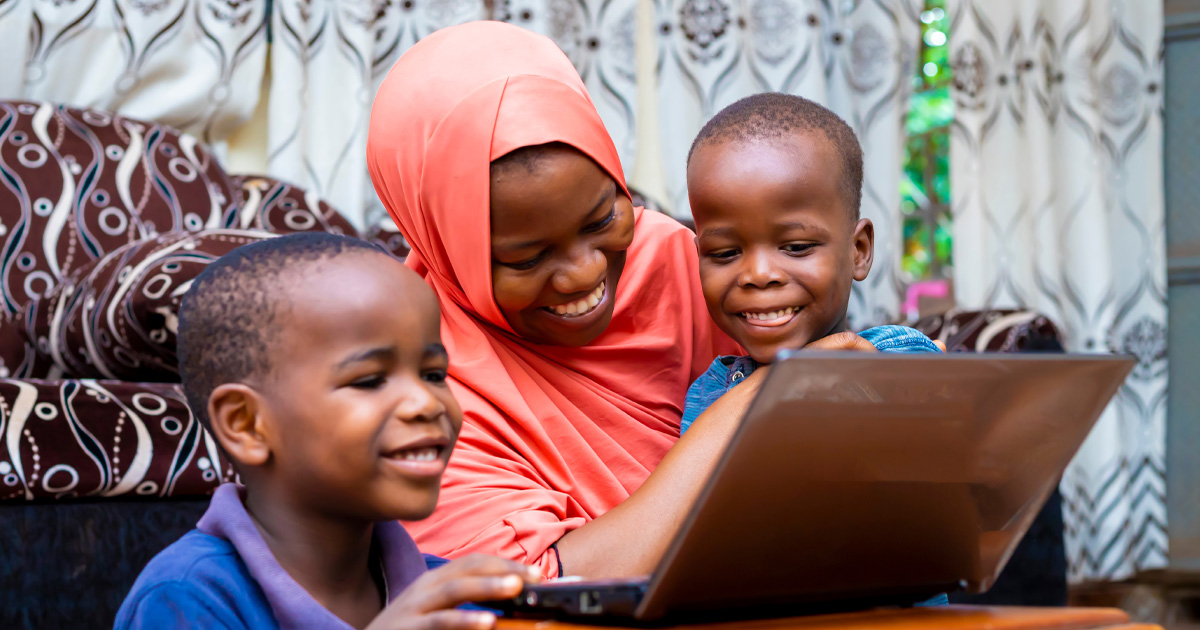
On 3 August 2022, the Expression, Information and Digital Rights unit, launched the Digital Rights in Southern Africa Landscape report. The report is based on the African Charter on Human and Peoples’ Rights, and other international and regional human rights instruments that are important in the enforcement of human rights in the digital age. It seeks to enhance public interest and awareness of digital rights to exert direct influence on Southern African states to implement normative human rights standards in the digital age.
- Details
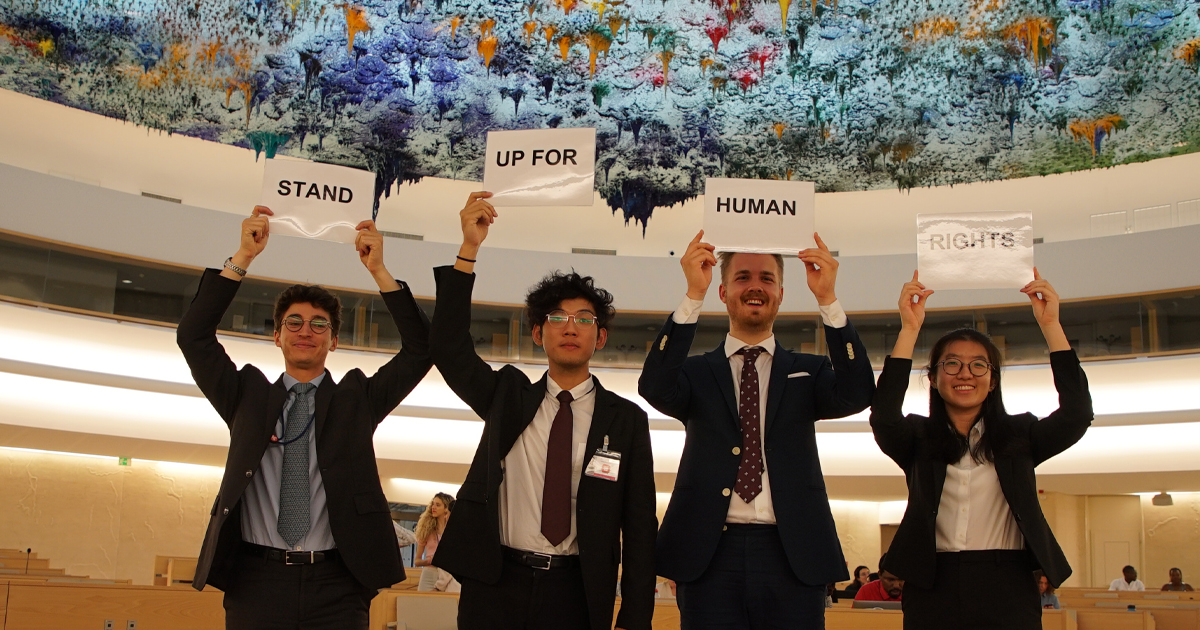
The Centre for Human Rights, Faculty of Law, University of Pretoria, successfully presented the 14th edition of the Nelson Mandela World Human Rights Moot Court Competition at the United Nations European headquarters in Geneva, Switzerland. The World Moot Court Competition focuses on the UN human rights treaties, where teams argue a hypothetical case in which state and non-state actors have violated these human rights treaties.
In commemoration of Nelson Mandela, the Moot, which is organised by the Centre for Human Rights, together with the Academy on Human Rights and Humanitarian Law at the American University, Washington DC, in collaboration with the Office of the High Commissioner for Human Rights in Geneva (Human Rights Council branch), ordinarily takes place during the late statesman’s birthday, 18 July. However, due to the challenges posed by the global pandemic, the 2022 edition took place in a hybrid format; with preliminary rounds taking place from 20 to 27 May 2022 and finals taking place on 21 July 2022.
- Details
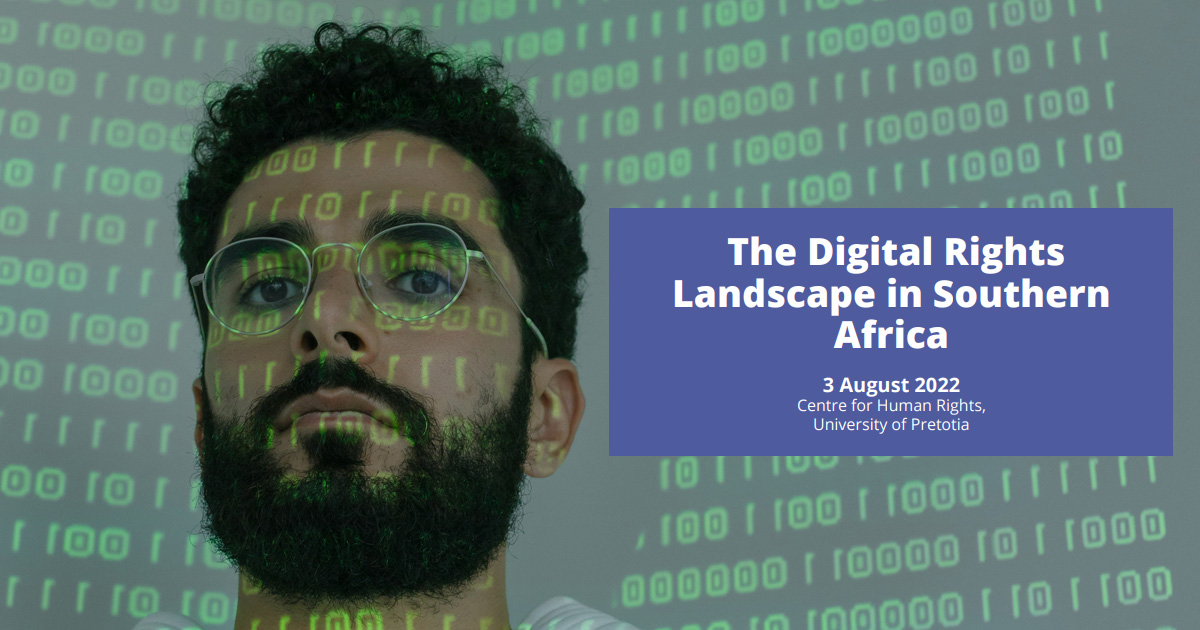
The Centre for Human Rights, University of Pretoria, cordially invites you to join the launch of The Digital Rights Landscape in Southern Africa report based on the African Charter on Human and Peoples’ Rights, and other international and regional human rights instruments that are relevant in articulating human rights in the digital age. The report aims to improve the level of public interest and awareness on digital rights to exert direct influence on Southern African states to implement normative human rights in the digital age.
- Details

The Expression, Information and Digital Rights Unit cordially invites you to the first of five interactive sessions on the Implementation of the Protection of Personal Information Act (POPIA), 2013.
SESSION I Topic: Protection of Personal Information and Consent under the POPIA
- Details
The fourth of six-event series in the Pretoria-Marburg Queer Conversations: Scholarly and Activist Perspectives on LGBTIQ+ Lived Realities in Africa was held on 7 July 2022. The Centre for Sexualities, AIDS, and Gender (CSA&G) at the University Pretoria facilitated the webinar session in collaboration with the Center for Gender Studies and Feminist Futures (CGS) and the Centre for Conflict Studies (CCS) at the University of Marburg and the Centre for Human Rights (CHR) at the University of Pretoria. The Pretoria- Marburg Queer Conversations creates a monthly space for in-depth discussions designed to tap into the intersections of knowledge-production and transfer between diverse scholarly and activist spheres and contributes to methodological, conceptual, and normative aspects of centering LGBTIQ+ rights and lived realities in African contexts.
- Details
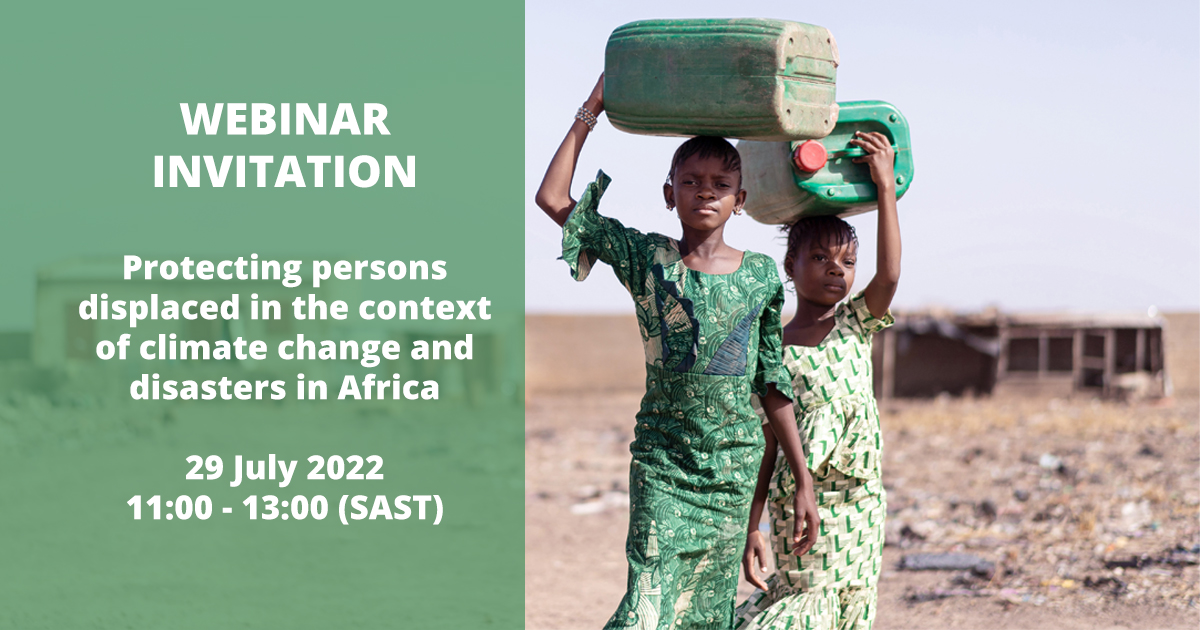
The Centre for Human Rights, in partnership with the UNHCR Regional Office for Southern Africa, cordially invites you to the webinar titled ‘Protecting persons displaced in the context of climate change and disasters in Africa’.
- Details
On 9 June 2022, the Center for Gender Studies and Feminist Futures (CGS) and the Centre for Conflict Studies (CCS) at the University of Marburg coordinated the third webinar in the Pretoria-Marburg Queer Conversations: Scholarly and Activist Perspectives on LGBTIQ+ Lived Realities in Africa in collaboration with the Centre for Sexualities, AIDS, and Gender (CSA&G) at the University Pretoria and the Centre for Human Rights (CHR) at the University of Pretoria. The Pretoria- Marburg Queer Conversations creates a monthly space for in-depth discussions designed to tap into the intersections of knowledge-production and transfer between diverse scholarly and activist spheres and contributes to methodological, conceptual, and normative aspects of centering LGBTIQ+ rights and lived realities in African contexts.
- Details
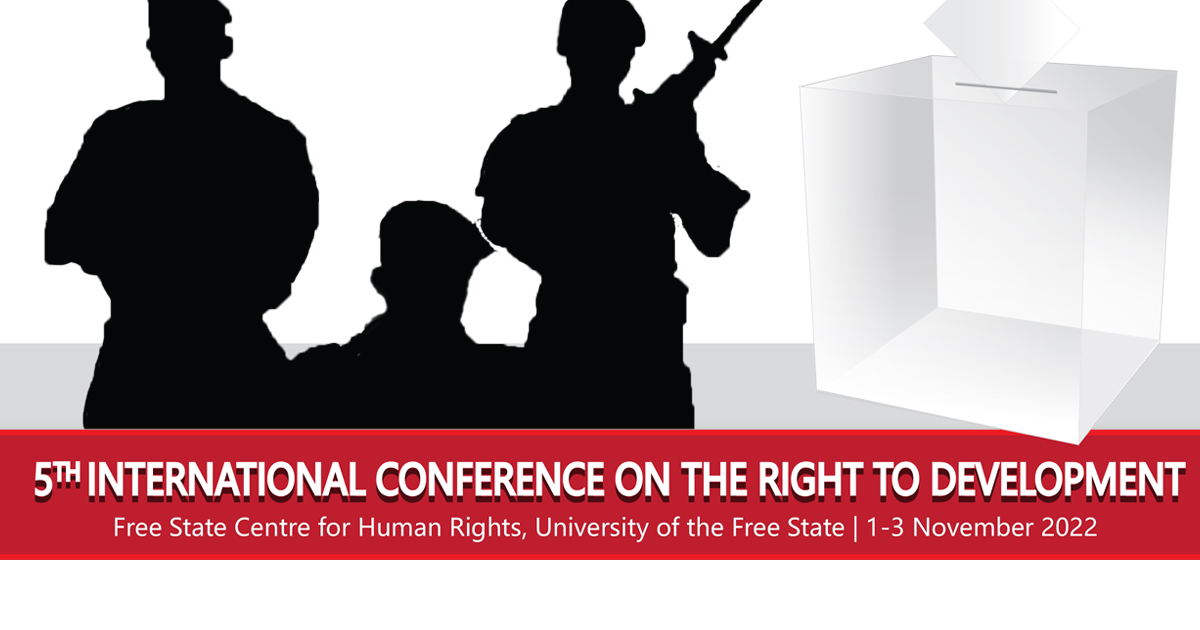
The Free State Centre for Human Rights, University of the Free State in collaboration with the Centre for Human Rights, University of Pretoria, the Thabo Mbeki School of International Affairs, University of South Africa, the Human Rights Centre, University of Dayton and the National University of Lesotho, present the Fifth International Conference on the Right to Development under the theme ‘Realising the Right to Development: Between coups d’état and the syndrome of life presidency in Africa’.
- Details
The Disability Rights Unit Clinic, Centre for Human Rights, Faculty of Law, University of Pretoria, hosted a Zoom webinar to call for the ratification of the Protocol to the African Charter on Human and People’s Rights on the Rights of Persons with Disabilities in Africa (African Disability Protocol).
- Details
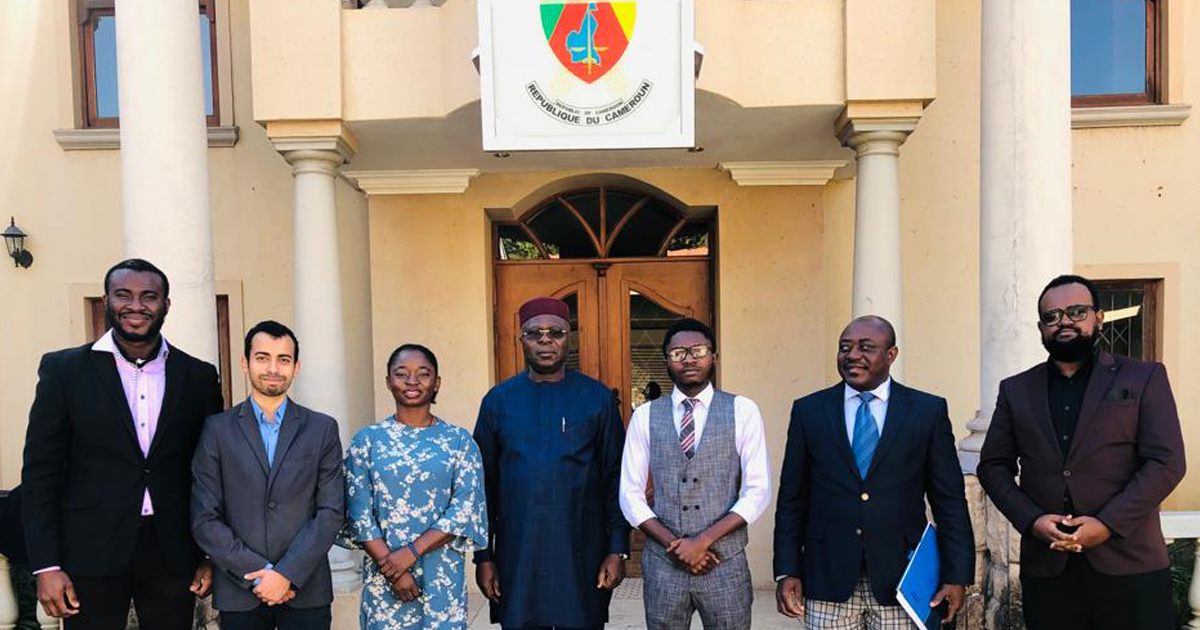
The LLM/MPhil in Human Rights and Democratisation in Africa (HRDA) class of 2022, from the Centre for Human Rights, Faculty of Law, University of Pretoria, visited Ambassadors, High Commissioners, Consular, and Chargé d'affaires of the Republics of Cameroon, Gabon, Togo, Uganda, Zimbabwe, and Malawi to the Republic of South Africa, to implore these African Union Member States to ratify the African Disability Rights Protocol.
The Ambassadors, High Commissioners, Consular, and Chargé d'affaires, welcomed the students’ call and pledged that their governments would take actionable steps toward ratifying the Protocol.
- Details
The Centre for Human Rights, University of Pretoria (CHR) is looking for a consultant to undertake a survey on the state of access to information during elections following the 2019 elections in South Africa. This falls under the access to information and elections project of the Expression, Information and Digital Rights Unit of the CHR.
- Details
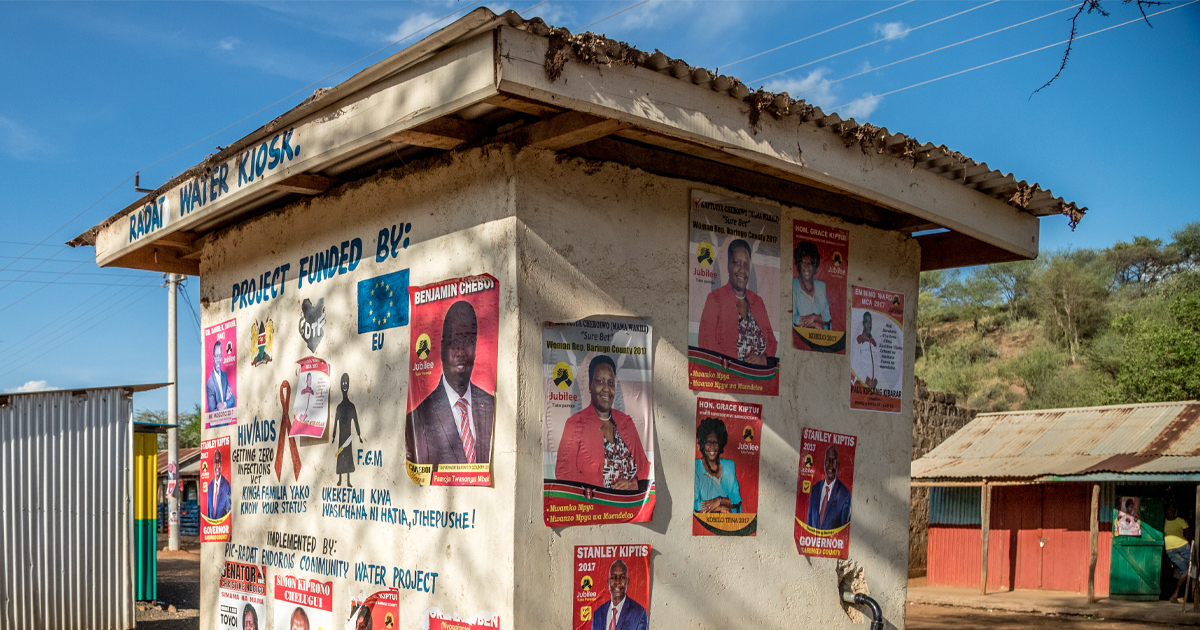
The Centre for Human Rights, University of Pretoria is pleased to announce the continued expansion of the project on assessing State compliance with the Guidelines on Access to Information and Elections in Africa (the Guidelines). The Guidelines is a soft law instrument developed by the African Commission on Human and Peoples’ Rights (African Commission) and adopted during its 61st Ordinary Session in November 2017. It derives from article 9 of the African Charter on Human and Peoples' Rights which guarantees the right of access to information. The Guidelines require the Member States of the African Charter to give effect to the right of access to information through legislative and other measures.
- Details

This year’s advanced course on Children’s rights in Africa took place from 20 to 24 June 2022. The course was hosted by the Centre for Human Rights (CHR), University of Pretoria (UP), in collaboration with the Centre for Child law, University of Pretoria and Dullah Omar Institute, University of Western Cape (UWC) online via zoom.
- Details
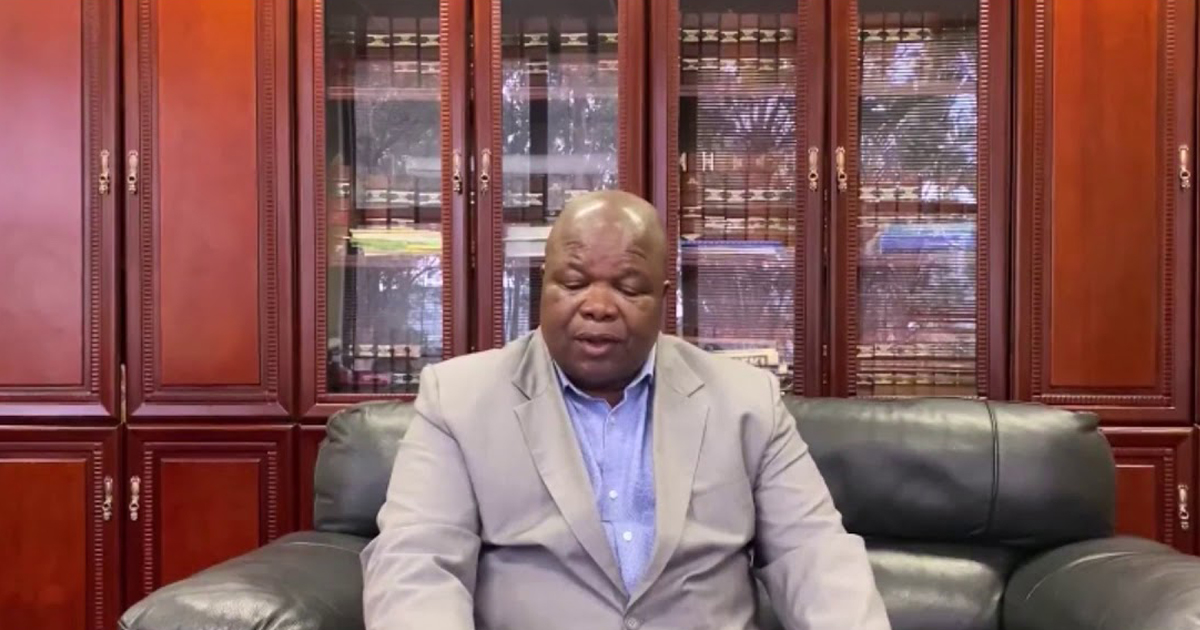
The Centre for Human Rights, Faculty of Law, University of Pretoria, condemns the disbarring of lawyer Muzi Simelane by Eswatini Chief Justice Bheki Maphalala. The Chief Justice disbarred Mr Simelane by way of notice in April 2018 on the basis of alleged contempt. Since he was banned from appearing in any court in Eswatini, Mr Simelane has not practised law for the past four years. The Chief Justice issued the notice from his chambers without any court hearing, application by the Law Society of Swaziland or determination by a tribunal that the lawyer had committed an act of misconduct. Chief Justice Maphalala purported to act in accordance with sections 139(5) and 142 of the Constitution of Eswatini when he issued the notice mero motu. On 10 June 2022, Mr Simelane challenged his disbarment by the Chief Justice in the Supreme Court of Eswatini after several failed attempts to secure judicial redress.
- Details
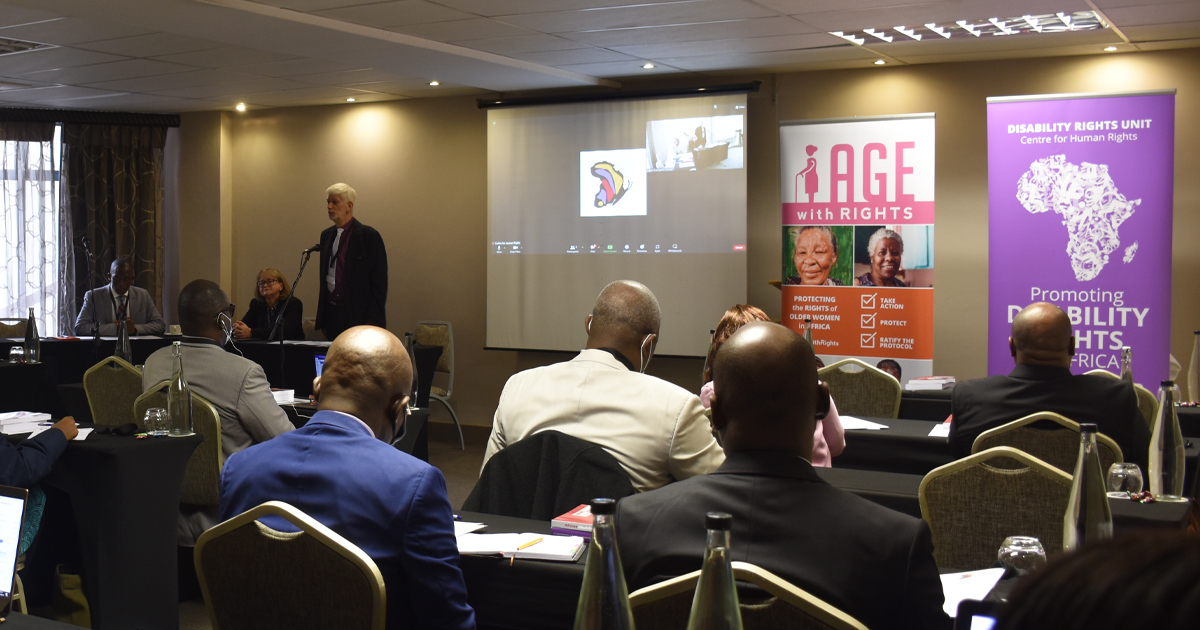
On 23 June 2022, the Centre for Human Rights held a high-level meeting to encourage African Union (AU) member states to ratify three instruments. First, is the Protocol to the African Charter on Human and People’s Rights on the Rights of Older Persons in Africa (Older Persons Protocol), which was adopted by the AU in 2016. Second, the Protocol to the African Charter on Human and People’s Rights on the Rights of Persons with Disabilities in Africa (African Disability Protocol), adopted in 2018. Third, the Convention for the Protection and Assistance of Internally Displaced Persons in Africa (Kampala Convention) was adopted by the AU in 2009. The Older Persons Protocol and the African Disability Protocol are both not yet in force as they are yet to receive the 15 ratifications necessary for them to come into effect.
- Details
On 23 June 2022, the Centre for Human Rights, University of Pretoria (the ‘Centre’) hosted a roundtable discussion for alumni of its Capacity Building Workshop on Strategic Litigation and Advocacy for LGBTIQ+ Human Rights Defenders in Africa. The workshop is the Centre’s annual event designed to assist LGBTIQ+ activists in Africa to effectively promote and protect LGBTIQ+ rights through domestic, regional, and international level strategic litigation and advocacy using African-specific approaches. The annual workshop is targeted at experienced activists in Africa who want to build on their capacity, develop their skills, and network with activists from other parts of Africa. The workshop seeks to strengthen the capacity of civil society organisations in Africa so that they can better pursue legal challenges and advocate on behalf of LGBTIQ+ individuals at risk of or who have suffered serious violations of human rights under domestic African laws. The workshop also aims to have participants think through and develop autochthonous, African-specific ways of advocacy and strategic litigation, and learn from each other about the challenges of filing cases at domestic courts.
- Details
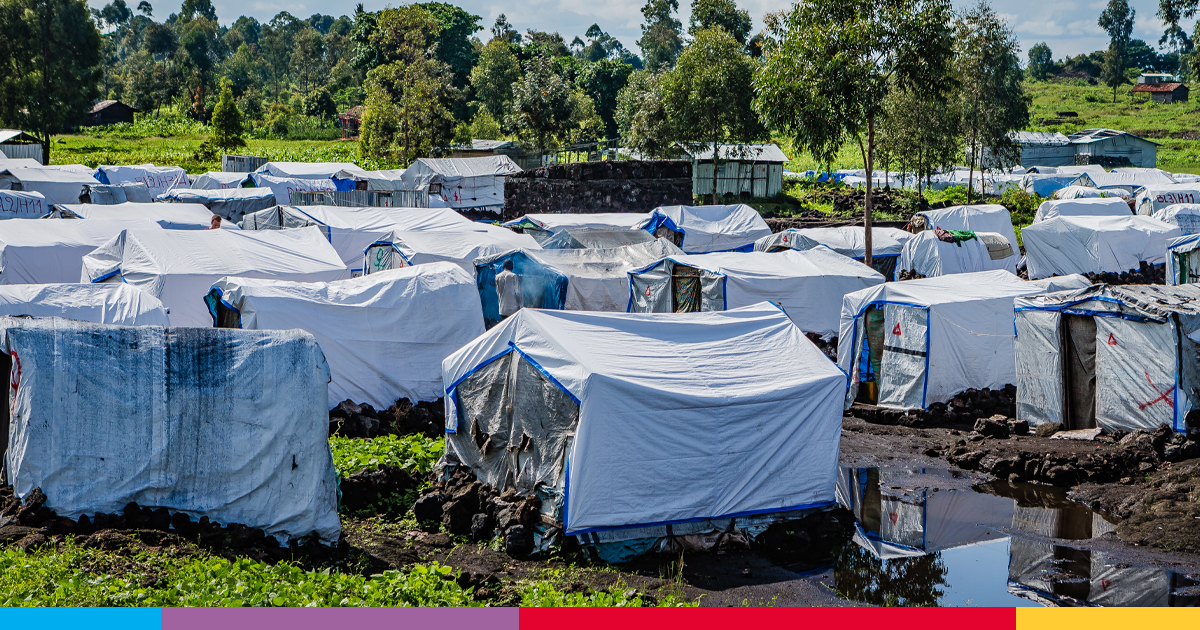
‘Access to asylum: The gateway to safety and refugee rights’ was the theme under which the Centre for Human Rights in the Faculty of Law at the University of Pretoria (UP) marked World Refugee Day during a panel discussion held recently.
- Details
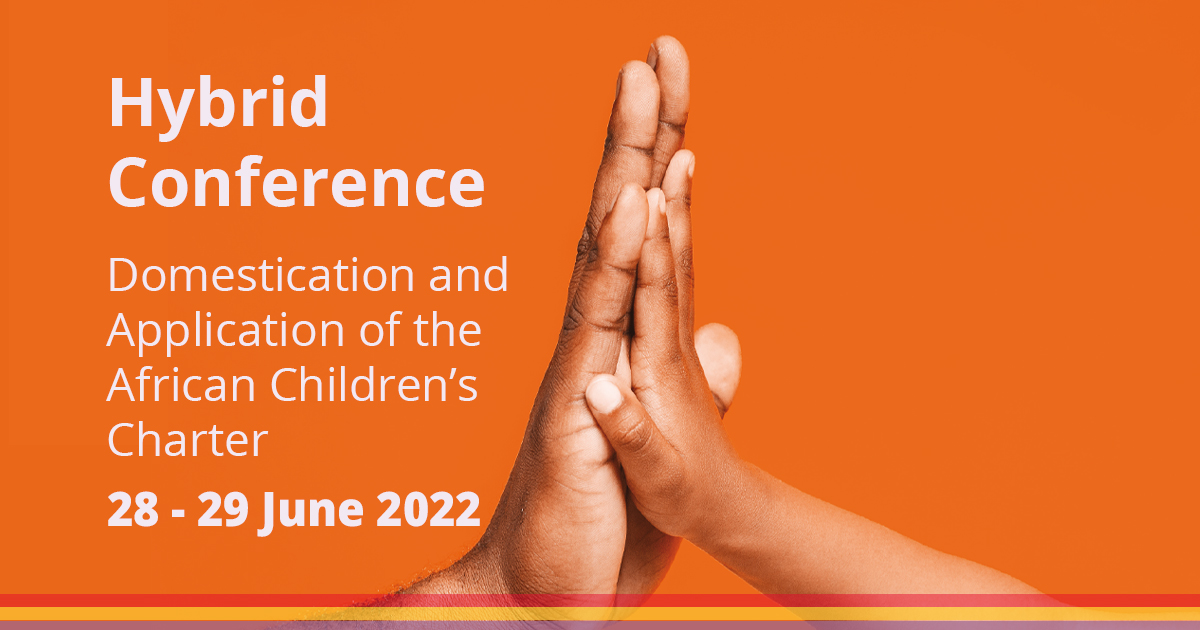
We are pleased to invite you to participate in a hybrid conference on children’s rights organised by the Centre for Human Rights, University of Pretoria. The conference is scheduled, to take place from 28 - 29 June 2022, in Pretoria, South Africa.
- Details
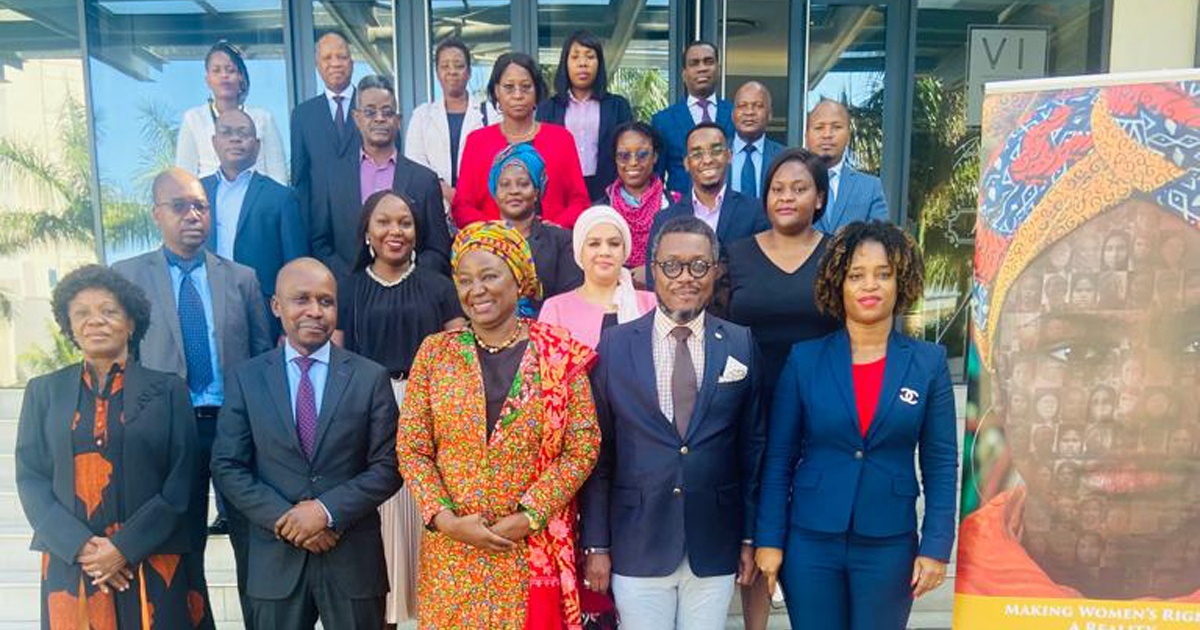
Of 55 member states of the African Union, only six have the Portuguese language as an official language. This presents challenges and opportunities for the African Commission on Human and Peoples’ Rights in its mandate to promote the respect for and monitor the implementation of human rights on the continent. The Centre for Human Rights (the Centre) in collaboration with the African Commission on Human and Peoples’ Rights (African Commission) are hosting a hybrid workshop with five PALOPs on using the state reporting process to monitor the implementation of the rights contained in the African Charter on Human and Peoples’ Rights (African Charter) and the Protocol to the African Charter on Human and Peoples’ Rights on the Rights of Women in Africa (Maputo Protocol).
- Details

The Centre for Human Rights (the Centre) is looking for experienced local researchers to conduct a review of discriminatory laws related to violence against women (VAW) in the following countries: Angola, Botswana, Gabonese Republic, Egypt, Tunisia, Algeria, Morocco, Sierra Leone, Mali and Cape Verde.
- Details
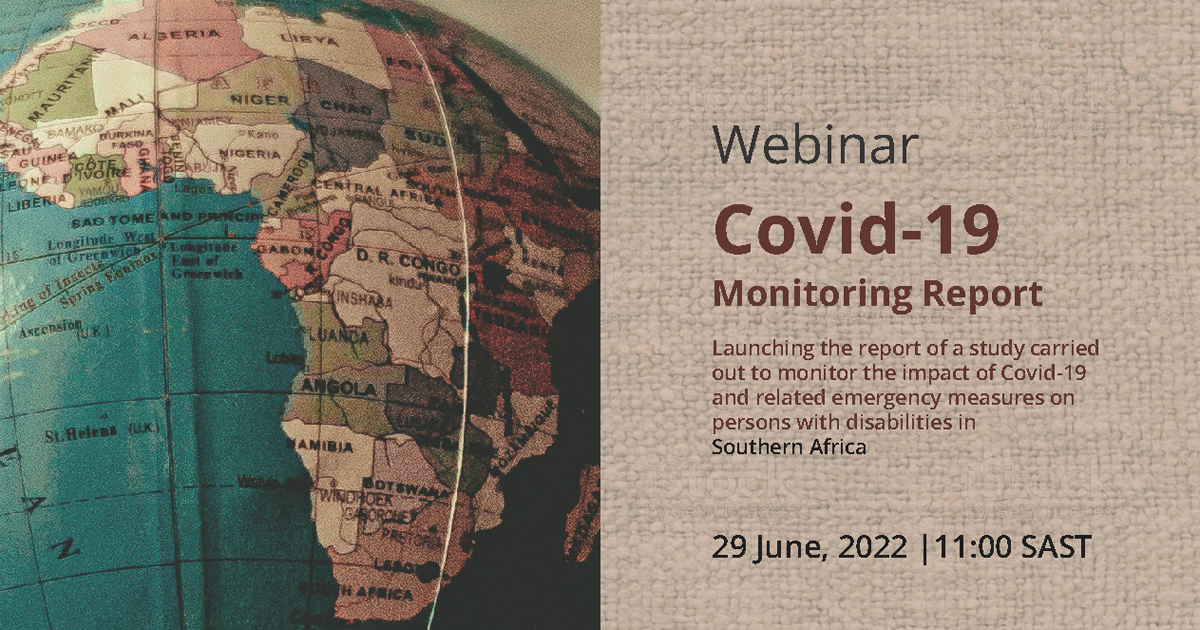
The Centre for Human Rights, University of Pretoria, cordially invites you to the launch of a report focusing on a study carried out to monitor the impact of COVID-19 and related emergency measures on persons with disabilities in Southern Africa.
- Details
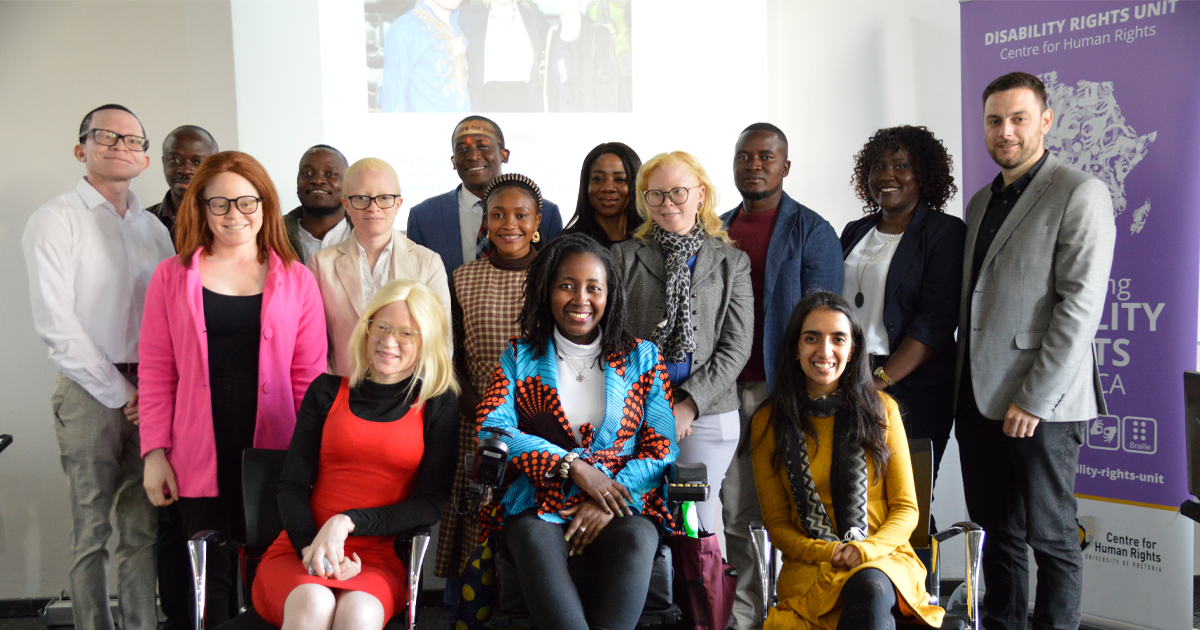
On 6 June 2022, the Disability Rights Unit at the Centre for Human Rights, University of Pretoria hosted a capacity-building training workshop for African civil society to implement and monitor the implementation of human rights of persons with albinism in Africa. The aim of the workshop was to equip persons with albinism with tools to enable them to be better placed to engage with National, regional and international mechanisms including and not limited to reporting, engagement with the UN systems such as independent experts and special rapporteurs and periodic reporting as advocacy tools. The countries represented at the workshop were Malawi, Mozambique, Zambia and Tanzania.
- Details

The Centre for Human Rights, University of Pretoria invites you to a webinar discussion on Climate Justice Litigation in Africa. The webinar discussion is part of the efforts of the Centre in improving climate justice in Africa. The discussion aims to raise awareness around the legal framework on climate justice and its application in Africa, and how litigation may be utilised as part of broader advocacy campaigns for climate justice. The discussion will feature experts and activists to discuss the existing climate change legal framework and the role of litigation in getting governments and other gas emitters to act.
- Details
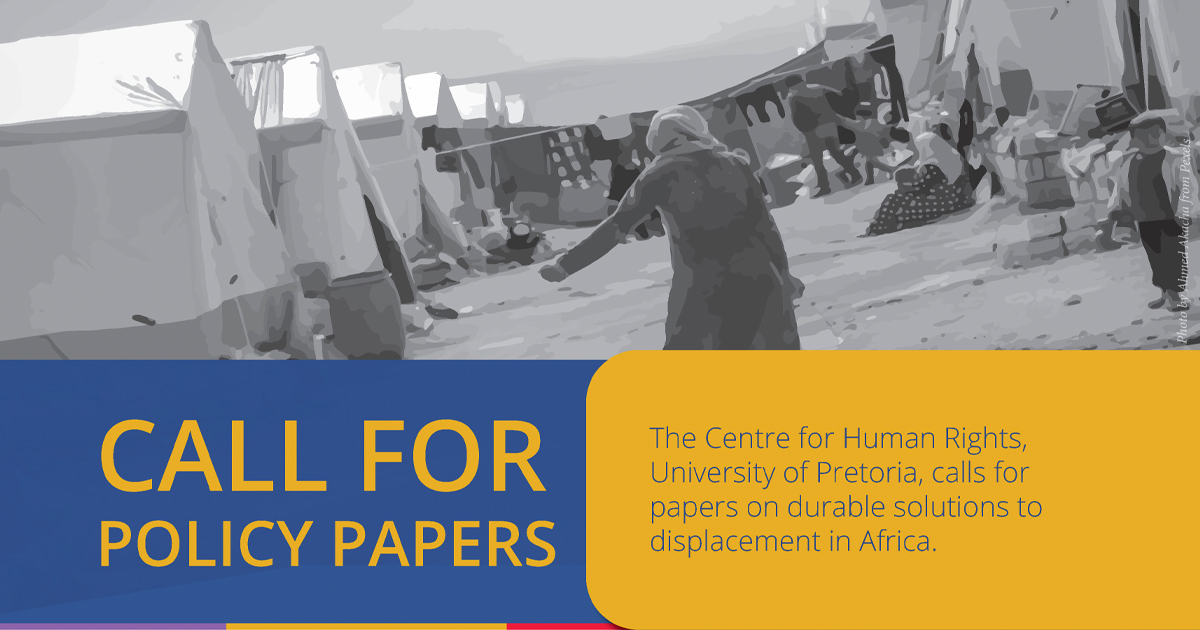
Most refugees and internally displaced persons (IDPs) in Africa remain displaced for prolonged periods of time. Often, their rights are highly restricted, and they live in precarious conditions which undermine their ability to attain durable solutions. The absence of durable solutions to the plights of many displaced persons affects their lives in displacement and beyond.
- Details
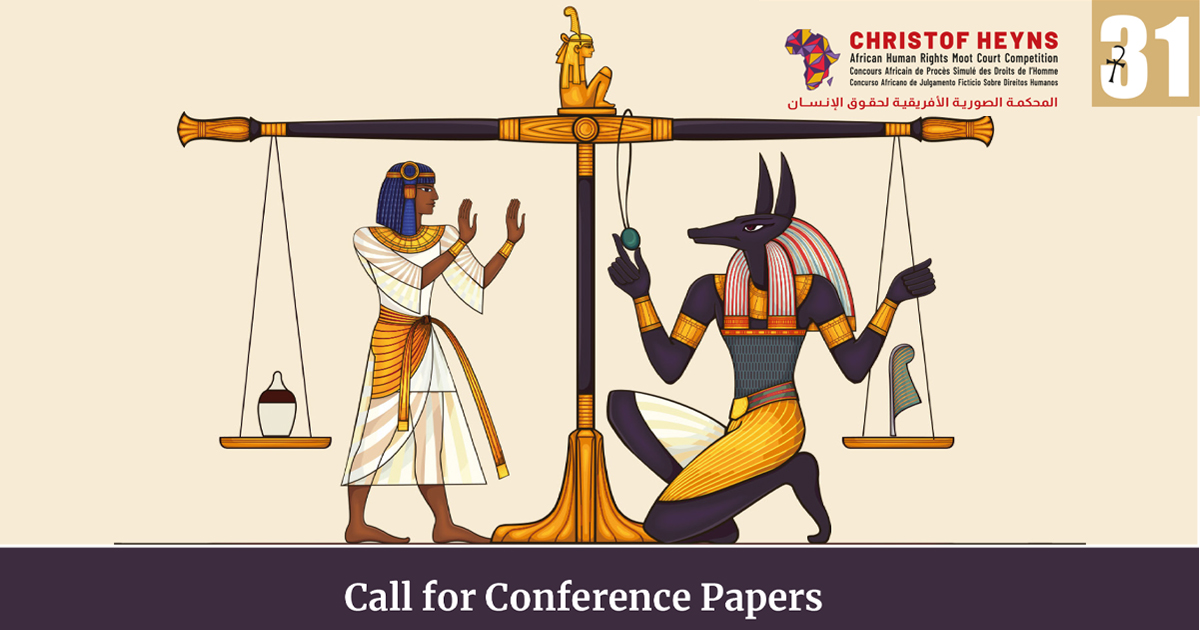
As part of the Christof Heyns African Human Rights Moot Court Competition, which takes place from 25 to 30 July 2022, at the Faculty of Law, the British University in Egypt, in Cairo, Egypt, a one-day International Human Rights Conference will also be held on 28 July 2022.
- Details

ACCA is seeking to hire an independent consultant to develop a 5-year strategic plan for the Coalition. The overall objective of this assignment is to facilitate and support the development of a Strategic Plan
- Details
Dans le cadre du Concours Africain de Procès Simulé des Droits de l’HommeDans le cadre du Concours Africain de Procès Simulé des Droits de l’HommeChristof Heyns, qui se déroulera du 25 au 30 juillet 2022, à la Facultéde droit de l’Université Britannique en Égypte, au Caire, en Égypte, uneconférence internationale d’une journée sur les droits de l’homme auraégalement lieu le 28 juillet 2022. Les langues de travail de la Conférence sontl’anglais, le français, le portugais et l’arabe avec interprétation simultanée.
- Details
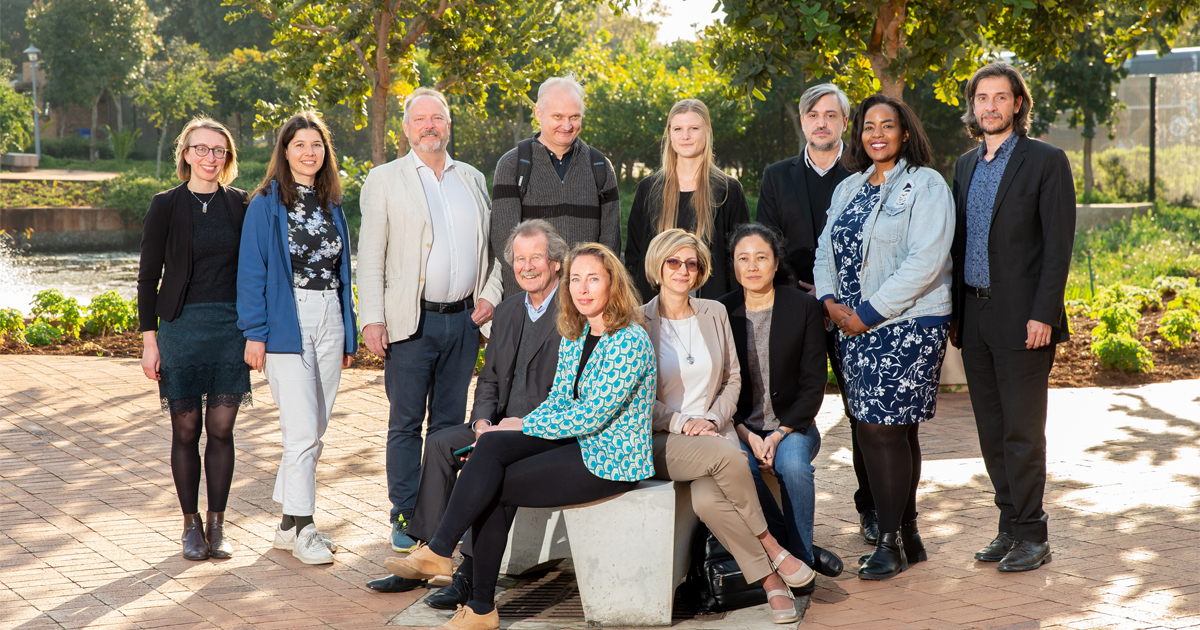
Over 100 students, academics and experts from more than 50 countries joined the four-day long Global Classroom 2022 on internal displacement, amiably hosted by the Centre for Human Rights, University of Pretoria. The programme included presentations by seven student research teams on regional approaches and case studies on topics such as climate disaster-induced displacement; the impact of ongoing conflicts on displaced women and children; an analysis of the Kampala Convention and the UN Guiding Principle on internal displacement; and the role of state and non-state organisations in supporting IDPs.
- Details
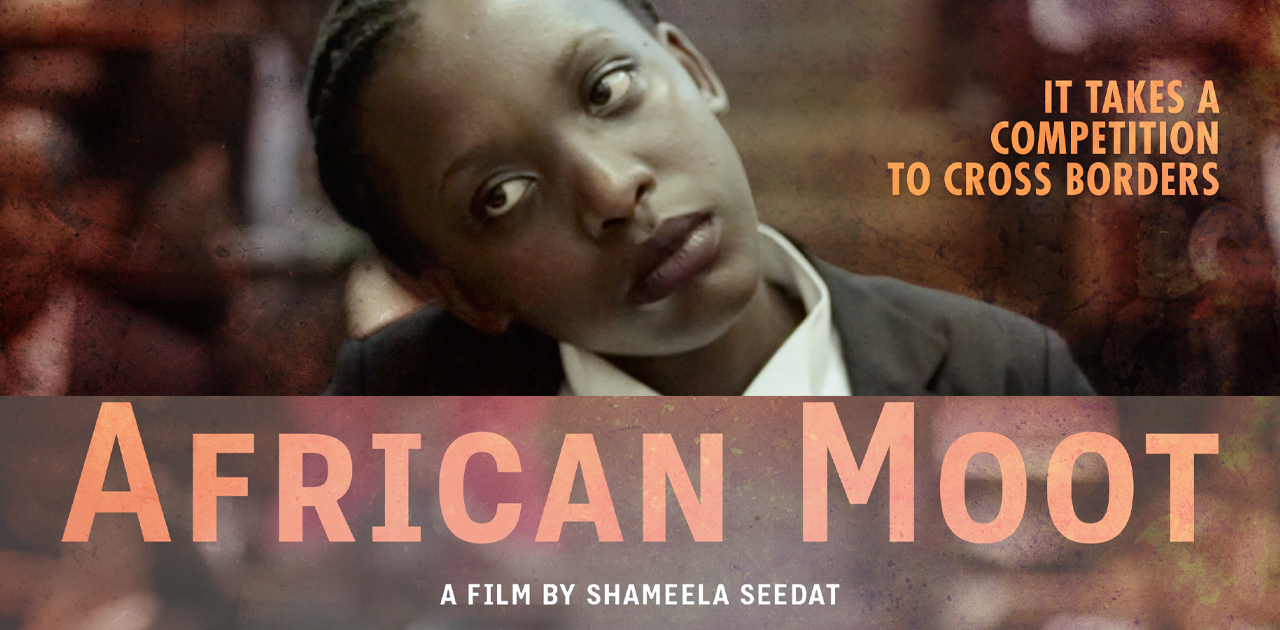
Every year, over a hundred talented law students from across the African continent gather in a different capital city to compete at the prestigious Christof Heyns African Human Rights Moot Court Competition, the largest mock court competition in Africa. Here, young aspiring lawyers act as both prosecution and defense in a cutting-edge fictional human rights court case, each hoping to win the case and bring back the trophy to their home country. African Moot follows four passionate teams from Cape Town, Cairo, Kampala and Nairobi during their months of preparation for a case dealing with refugee rights. The film joins them on their journey to Botswana, where they converge for one intense week of legal oratory, debate, adventure, bonding and high emotion, leading to a dramatic finale before international judges at Botswana’s highest court.
- Details
The Centre for Human Rights (CHR) and the Centre for Sexualities, AIDS, and Gender (CSA&G) at the University Pretoria together with the Center for Gender Studies and Feminist Futures (CGS) and the Center for Conflict Studies (CCS) at the Philipps-University Marburg cordially invite you the third edition of the Pretoria-Marburg Queer Conversations on the Colonial Legacies of Anti-LGBTIQ+ Rights in African States.
- Details
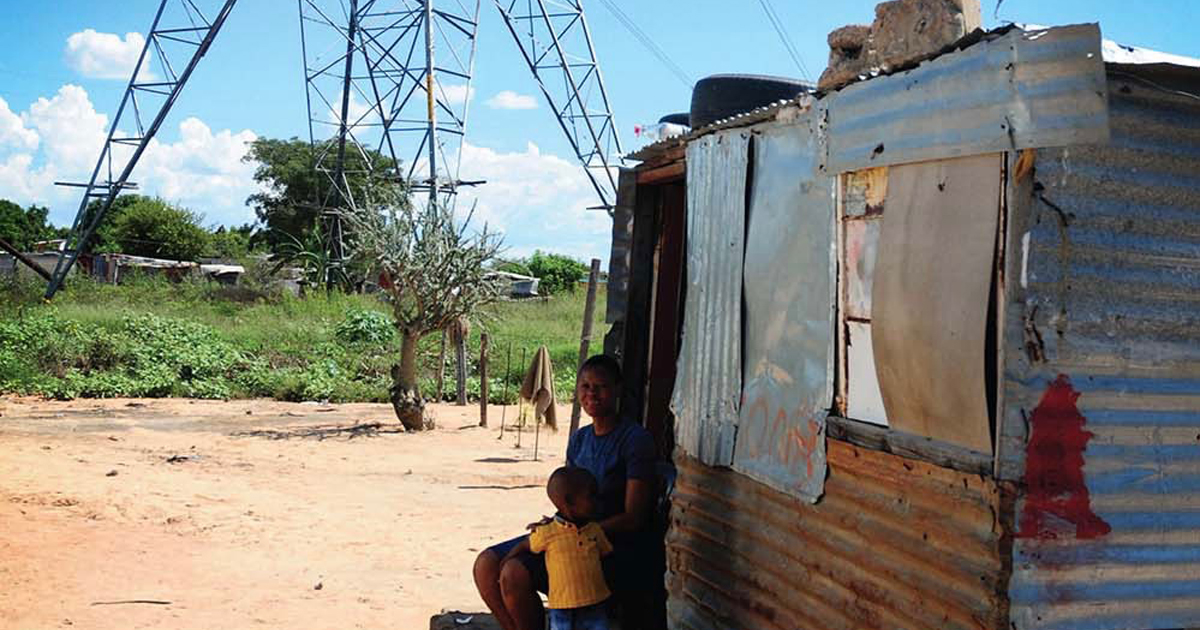
The International Development Law Unit, Centre for Human Rights together in collaboration with Oxfam cordially invite you to a hybrid webinar to launch the reports for the New Development Bank Transparency and Accountability Series.
- Details
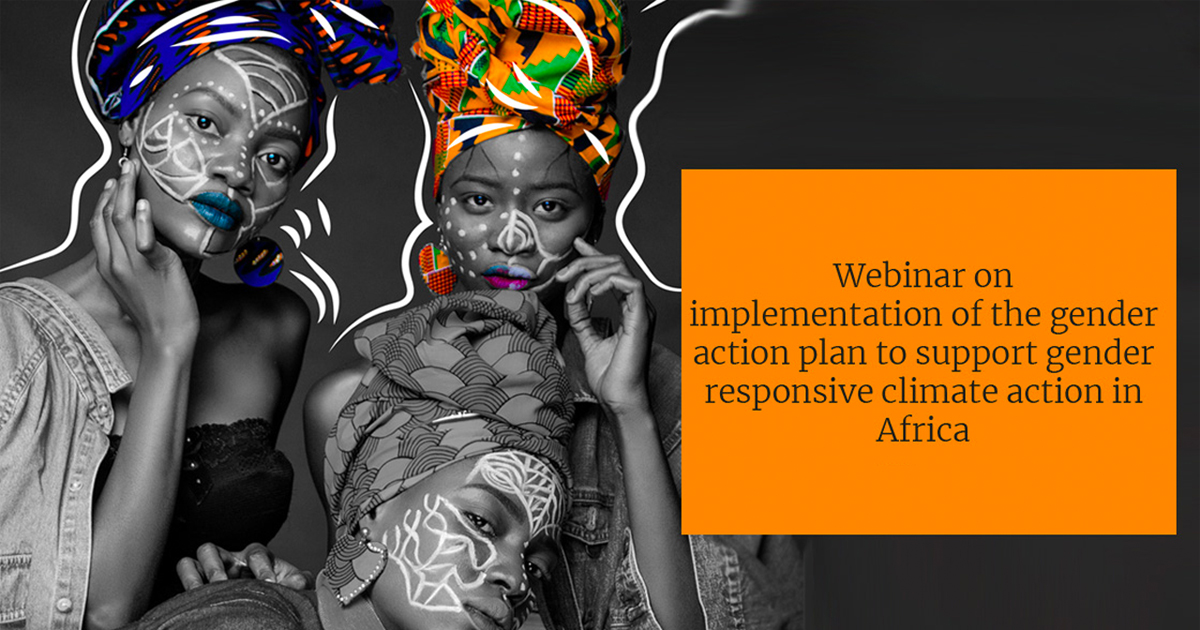
The Women’s Rights Unit Clinic, Centre for Human Rights, Faculty of Law, University of Pretoria, hosted a Zoom webinar on the implementation of the Gender Action Plan (2017) to support gender-responsive climate action in Africa.
- Details
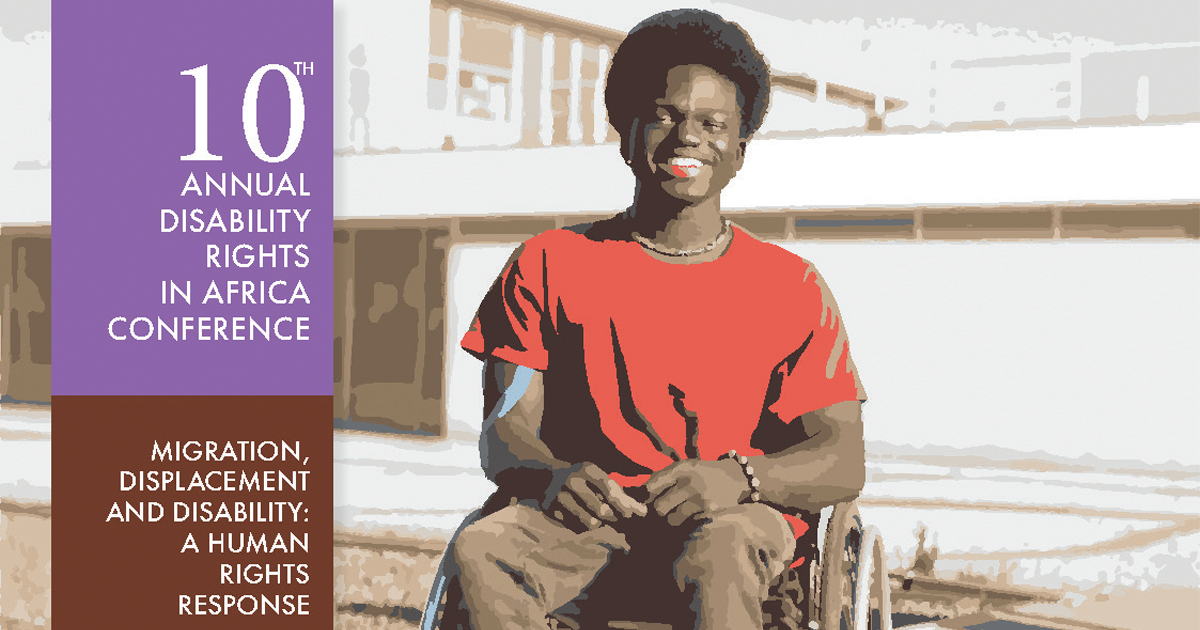
The Centre for Human Rights, University of Pretoria, hosts an annual conference on disability rights in an African context during the month of November. The inaugural disability rights conference was held in 2013. The annual conference serves as a platform for convening dialogue amongst key stakeholders on disability rights, and to spotlight pertinent and emerging disability rights concerns in the African region.
- Details
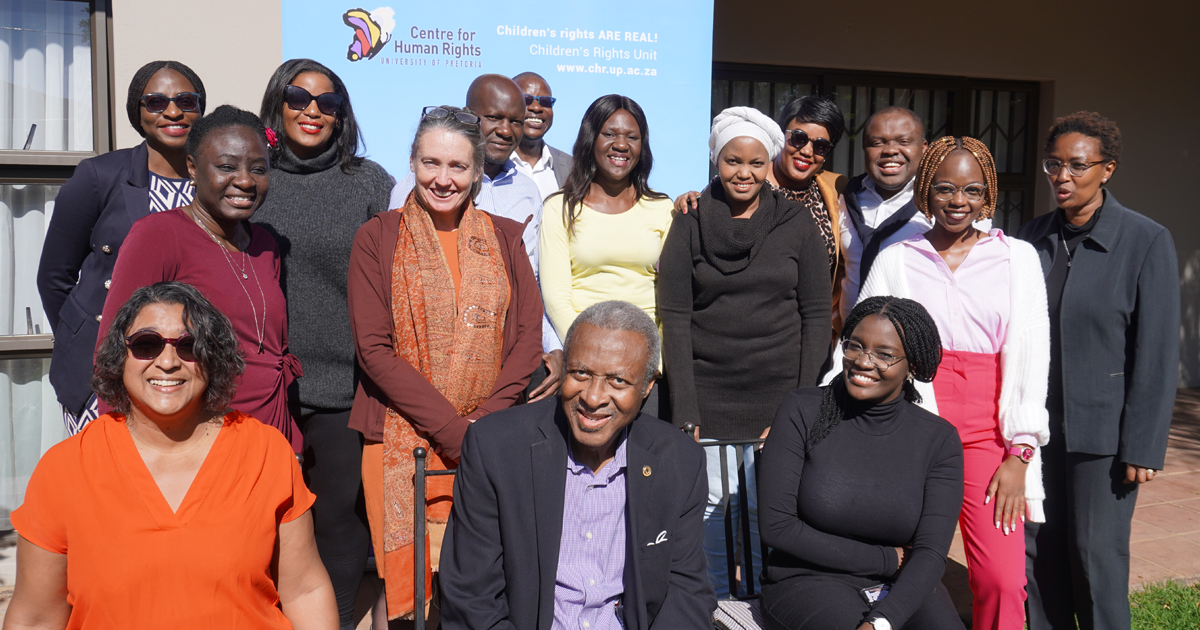
On the 26 and 27 May 2022, the Children’s Rights Unit at the Centre for Human Rights, University of Pretoria hosted a meeting to validate its draft regional study report on child participation in the implementation of the Global and Regional Development with a focus on the Sustainable Development Goals (SDGs), the African Union (AU) Agenda 2063, and the AU Agenda 2040 for Children.
- Details
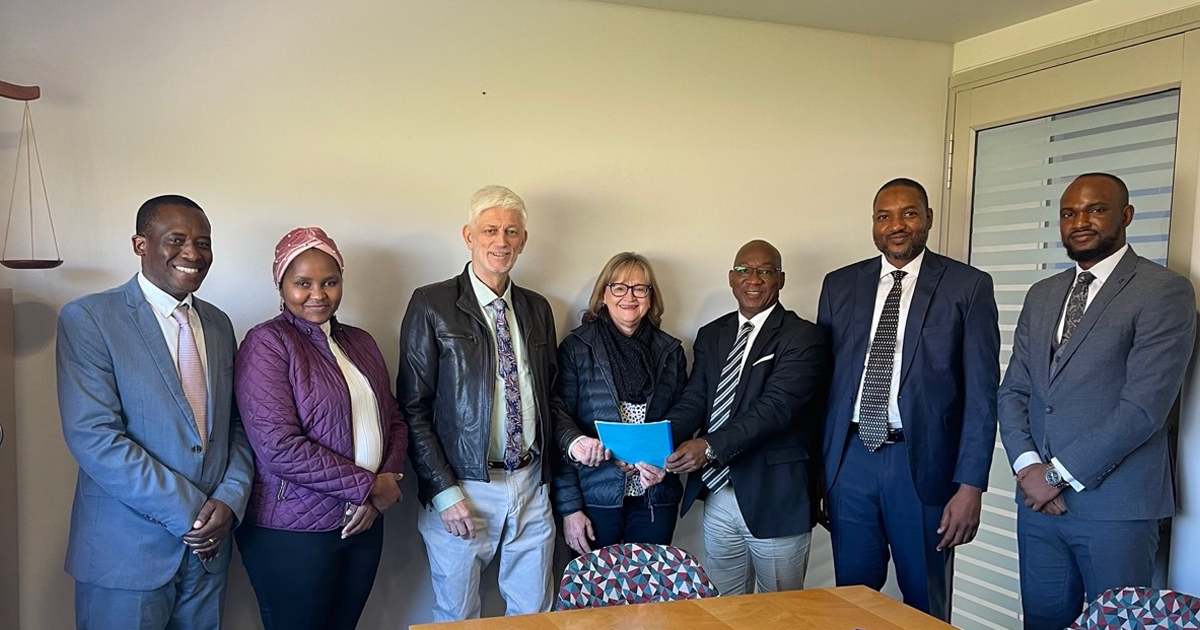
The Centre for Human Rights, Faculty of Law, University of Pretoria (the Centre) at a meeting on 24 May 2022, signed a Memorandum of Understanding (MOU) with the Office for Public Defender and Citizens’ Rights Commission in Kogi State, Nigeria (PDCRC). The PDCRC is a hybrid institution that provides legal aid for indigent individuals in Kogi State and also serves as a Human Rights Commission that tries to advance human rights in Kogi State.
- Details
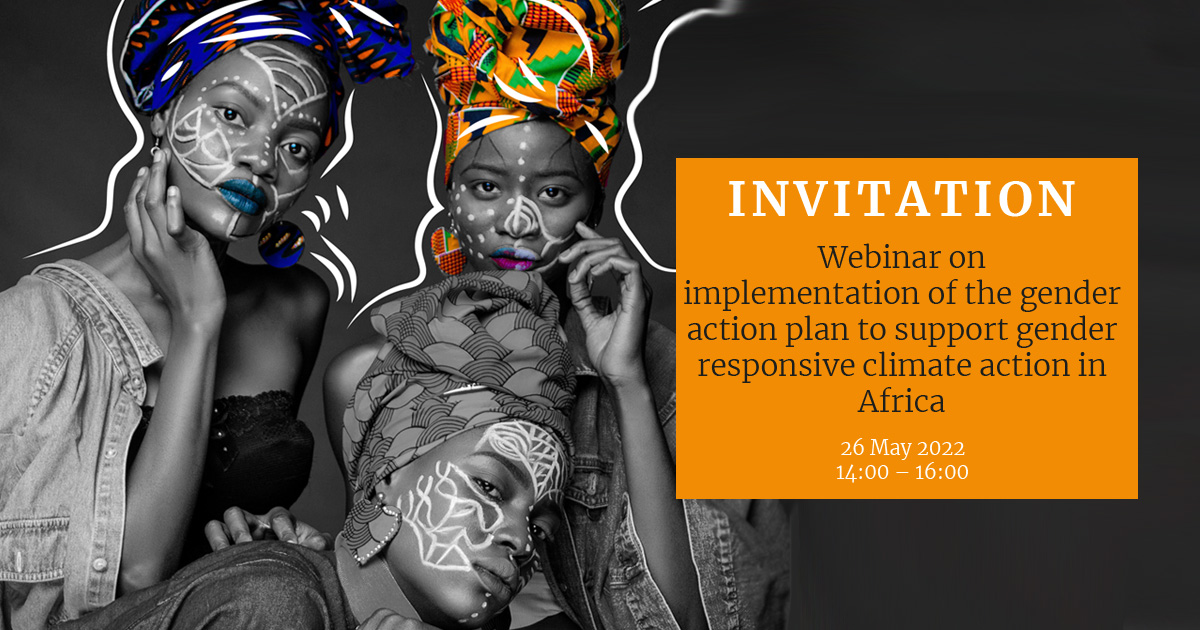
The Women’s Rights Unit of the Centre for Human Rights, Faculty of Law, University of Pretoria, cordially invites you to a webinar on implementation of the gender action plan to support gender responsive climate action in Africa.
- Details
Following the success of the first edition of the series, the 2022 Pretoria-Marburg Queer Conversations continues with a discussion on ‘Threats to Human Rights for LGBTIQ+ Communities: Hate Crimes and Conversion Therapy’.
- Details
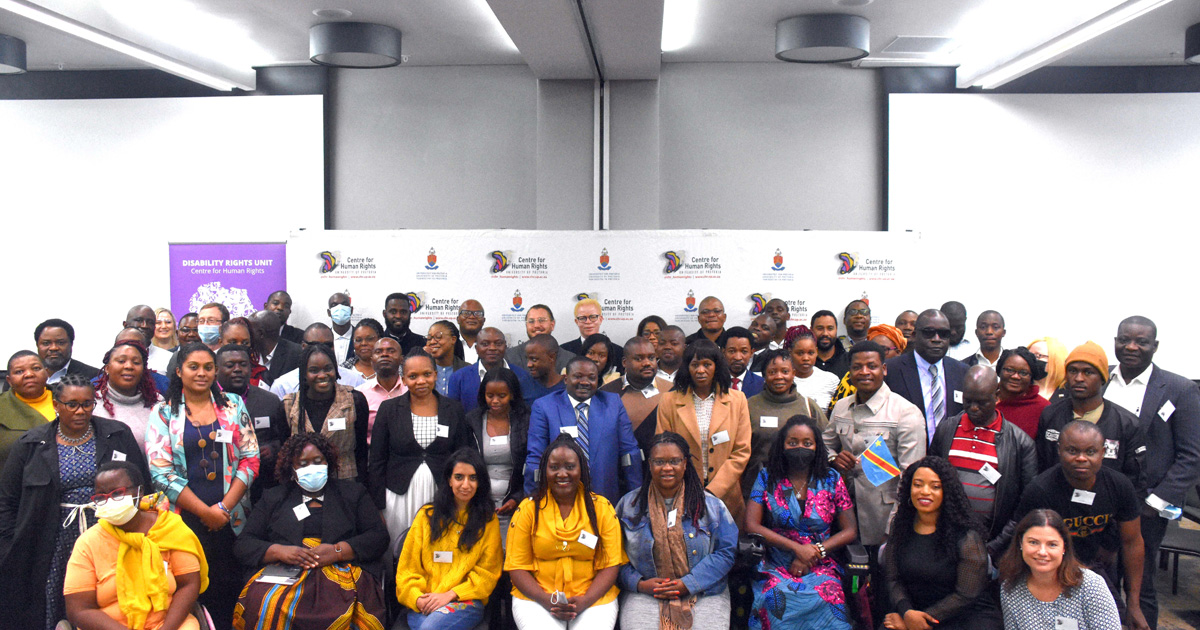
The Disability Rights Unit, Centre for Human Rights, University of Pretoria held a two-day regional convening on Promoting access to justice for persons with intellectual and psychosocial disabilities in Southern Africa from 16 to 17 May 2022 at Capital Hotel Menlyn Maine in Pretoria, South Africa.
- Details

The Institute for International and Comparative Law in Africa (ICLA) invites members of the Faculty and broader University Community to a seminar entitled: The role of constitutional courts in post-coup d’état and post-insurrection transitions: The West African cases of Niger, Burkina Faso, and Mali.
- Details
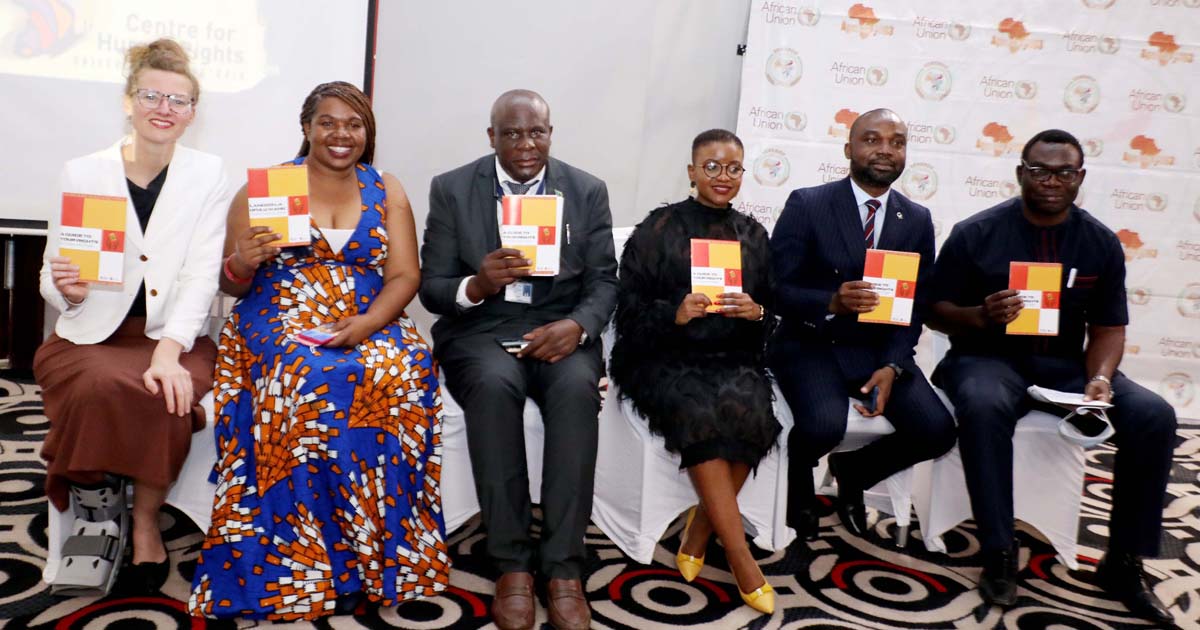
The Centre for Human Rights (CHR) in partnership with the Konrad Adenauer Stiftung (KAS) under the aegis of the Rule of Law Program for Sub Saharan Africa developed an easy reference booklet that summarises the Bill of Rights as espoused in the constitution of Zambia.
- Details
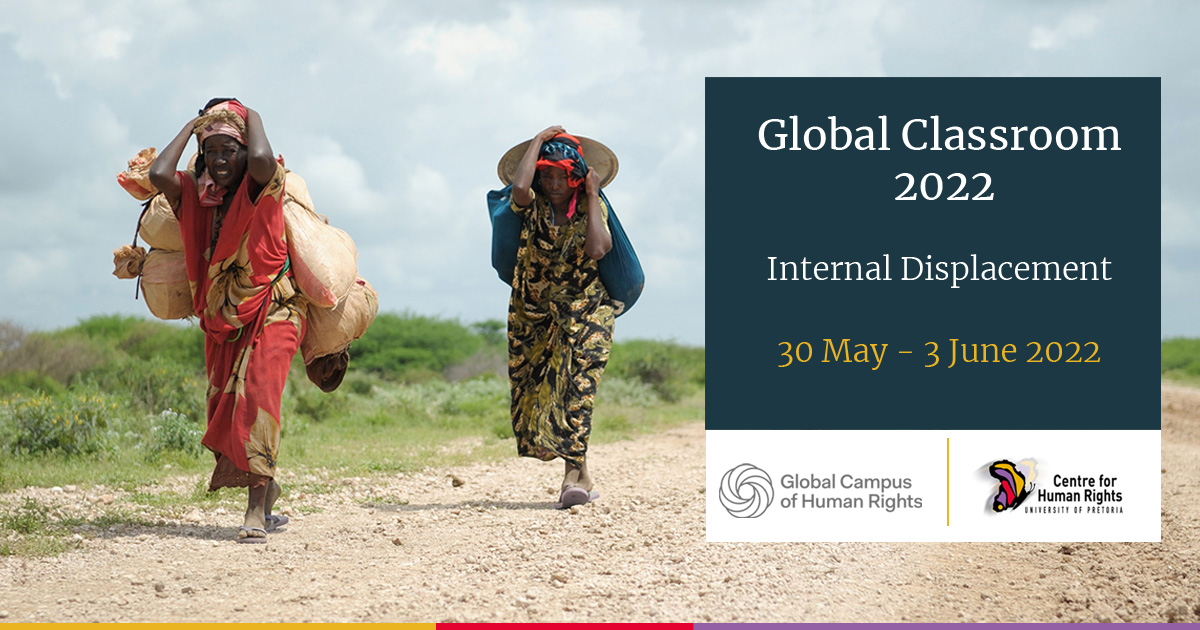
Global Campus Africa, in partnership with The Master’s Programme in Human Rights and Democratisation in Africa (HRDA) Centre for Human Rights, Faculty of Law, University of Pretoria, cordially invite you to the Global Classroom 2022 on Internal Displacement.
Dates: 30 May - 3 June 2022, 10:00-15:30 CEST
- Details
Shifting language(s): the evolving landscape of words and meanings in queer lives
On the occasion of IDAHOBIT 2022, the Centre for Human Rights, Faculty of Law, University of Pretoria, and the Centre for Sexualities, AIDS and Gender, University of Pretoria, in partnership with the Embassy of France in South Africa and the Alliance Française in Pretoria are hosting a panel discussion on the theme “Shifting language(s): the evolving landscape of words and meanings in queer lives”.
- Details
On 21 April 2022, the Centre for Sexualities, AIDS, and Gender (CSA&G) at the University Pretoria, facilitated the first webinar in the Pretoria-Marburg Queer Conversations: Scholarly and Activist Perspectives on LGBTIQ+ Lived Realities in Africa in collaboration with the Centre for Human Rights (CHR) and the Center for Conflict Studies (CCS) as well as the Center for Gender Studies and Feminist Futures (CGS), Philipps-University of Marburg. The Pretoria- Marburg Queer Conversations creates a monthly space for in-depth discussions designed to tap into the intersections of knowledge-production and transfer between diverse scholarly and activist spheres and contributes to methodological, conceptual, and normative aspects of centering LGBTIQ+ rights and lived realities in African contexts.
- Details
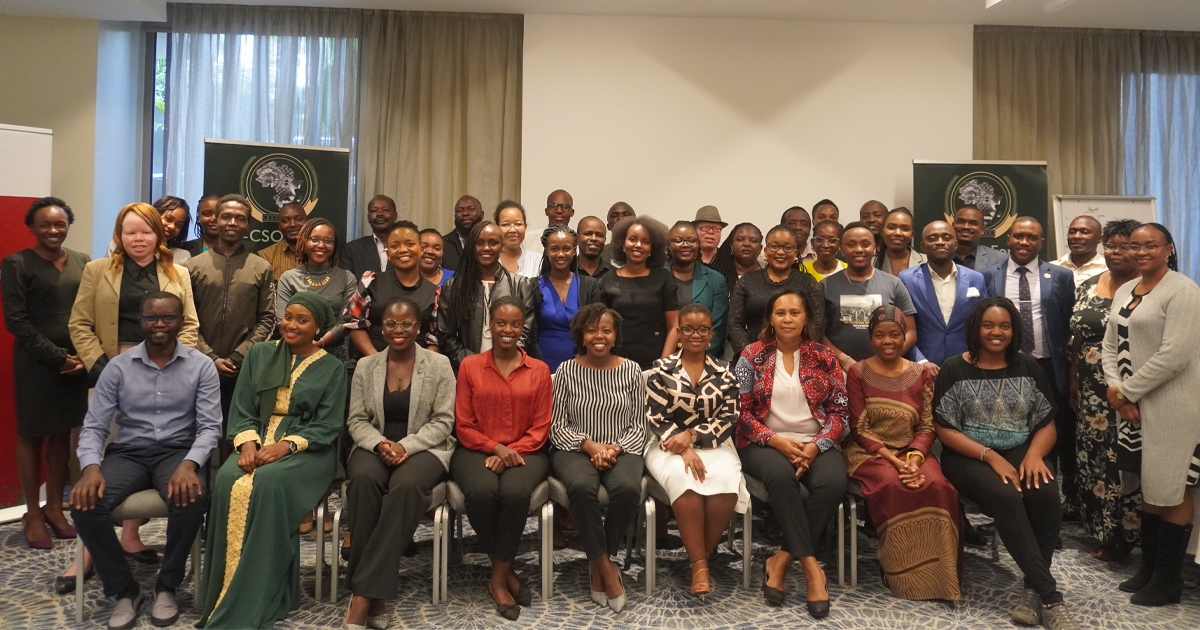
The Centre for Human Rights, University of Pretoria, and Mzalendo Trust in partnership with Parliamentary Network Africa (PNAfrica) hosted a two-day civil society engagement on the workings on the Pan-African Parliament (PAP) for the East African Community. This forum was held on Monday 25 and Tuesday 26 April 2022, in Nairobi, Kenya. The forum focused on developing networks for increased engagement between civil society in the East African region and the Pan-African Parliament.
- Details
The Centre for Human Rights University of Pretoria officially launched its #GreenJusticeAfrica campaign on the impact of climate change on the protection and fulfilment of human rights in Africa on 4 May 2022.
- Details
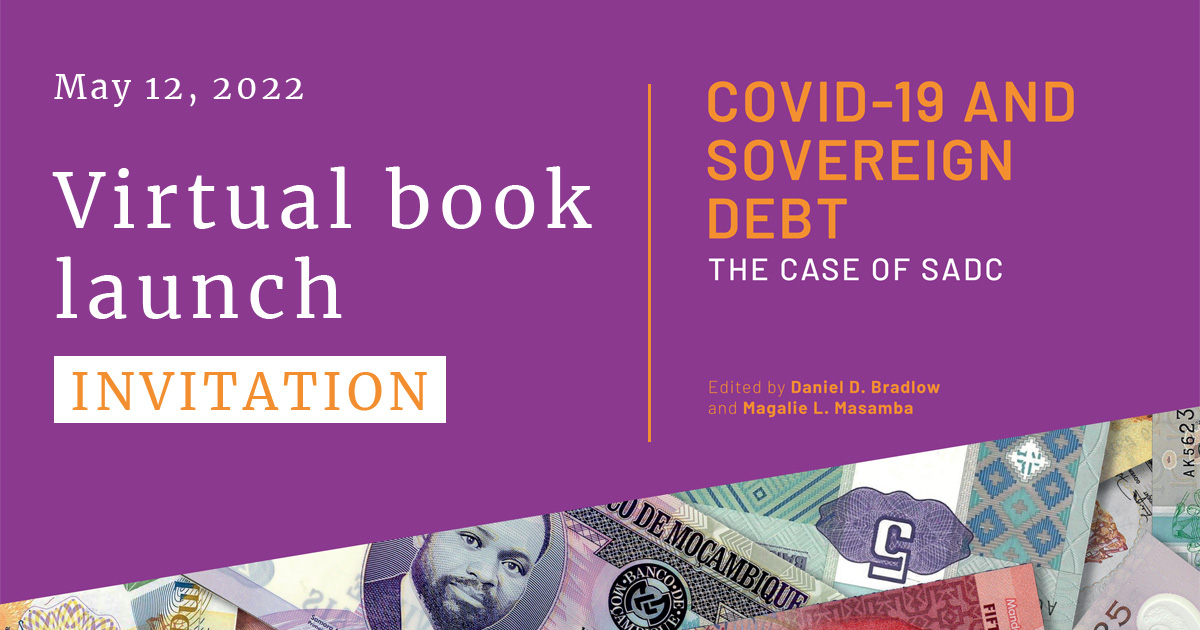
The Pretoria University Law Press (PULP) in partnership with African Forum and Network on Debt and Development (AFRODAD) and Afronomicslaw invites you to the virtual book launch of COVID-19 and Sovereign Debt, edited by Daniel D. Bradlow and Magalie L. Masamba (2022)
- Details
Today, Global Partners Digital (GPD), the Centre for Human Rights at the University of Pretoria (CHR), Article 19 West Africa, the Collaboration on International ICT Policy in East and Southern Africa (CIPESA) and PROTEGE QV jointly launch LEXOTA—Laws on Expression Online: Tracker and Analysis, a new interactive tool to help human rights defenders track and analyse government responses to online disinformation across Sub-Saharan Africa.
- Details
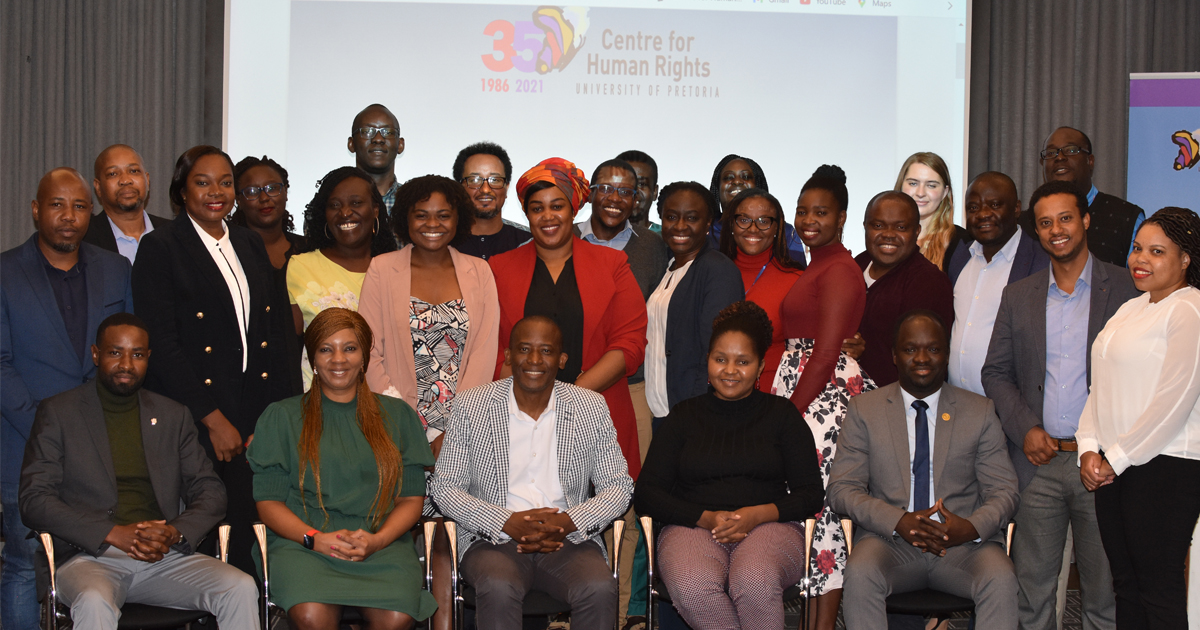
On 28 and 29 April 2022 the Children’s Rights Unit, at the Centre for Human Rights, Faculty of Law, University of Pretoria (the Centre), in collaboration with the Raoul Wallenberg Institute (Kenya office), hosted a stakeholder meeting and training workshop on Children’s Privacy Rights in Africa. During the event, the Center also launched its study on children’s right to privacy in the digital sphere in Africa. The event was attended by key stakeholders from various countries across the continent and representatives from the African and UN Children’s Committees.
- Details
Lesbian Day of Visibility is celebrated internationally on 26 April each year, as part of Lesbian Visibility Week. Lesbian Visibility Day seeks to combat the erasure of lesbians by celebrating their existence, achievements and contributions. The Centre for Human Rights is proud to celebrate Lesbian Visibility Day and to note the important role lesbians have played in the feminist, LGBTIQ+ and anti-apartheid movement in South Africa as well as various movements for justice across the continent and globe.
- Details

The Centre for Human Rights, University of Pretoria (the Centre), and ARTICLE 19 Eastern Africa are assessing state compliance with the Guidelines on Access to Information and Elections in Africa (the Guidelines) that the African Commission on Human and Peoples’ Rights (the African Commission) adopted during its 61st Ordinary Session in November 2017. The Centre completed its initial country assessment under the Guidelines focusing on the 2019 elections in South Africa. The Centre is collaborating with ARTICLE 19 Eastern Africa to examine the performance of stakeholders (Election Management Body; appointing authority; law enforcement agencies; political parties and candidates; media and regulatory bodies; election observers; and civil society) in proactively disclosing election-related information as envisaged under the Guidelines in the 2022 general elections in Kenya. The study is a joint initiative between the Centre and ARTICLE 19 Eastern Africa.
- Details

In pursuit of the ideals of excellence, the University of Pretoria wishes to invite applications for the following vacancy. The University of Pretoria's commitment to quality makes us one of the top research Universities in the country and gives us a competitive advantage in international development.
The Centre for Human Rights (the Centre) is looking for experienced local researchers to conduct a review of discriminatory laws related to violence against women (VAW) in the following countries: Uganda, Ethiopia, Mauritius, Tanzania, Madagascar, South Africa, Angola, Malawi, Mozambique, Botswana, Republic of Cameroon, Democratic Republic of Congo, Gabonese Republic, Egypt, Tunisia, Algeria, Morocco, The Gambia, Liberia, Sierra Leone, Nigeria, Ghana, Senegal, Mali and Cape Verde.
- Details
The Centre for Human Rights, Faculty of Law, University of Pretoria, invites you to a hybrid campaign launch event in the form of a #BrownPaperBag lunch. This event is the first of a series of activities for the #GreenJusticeAfrica campaign.
- Details
First of a series
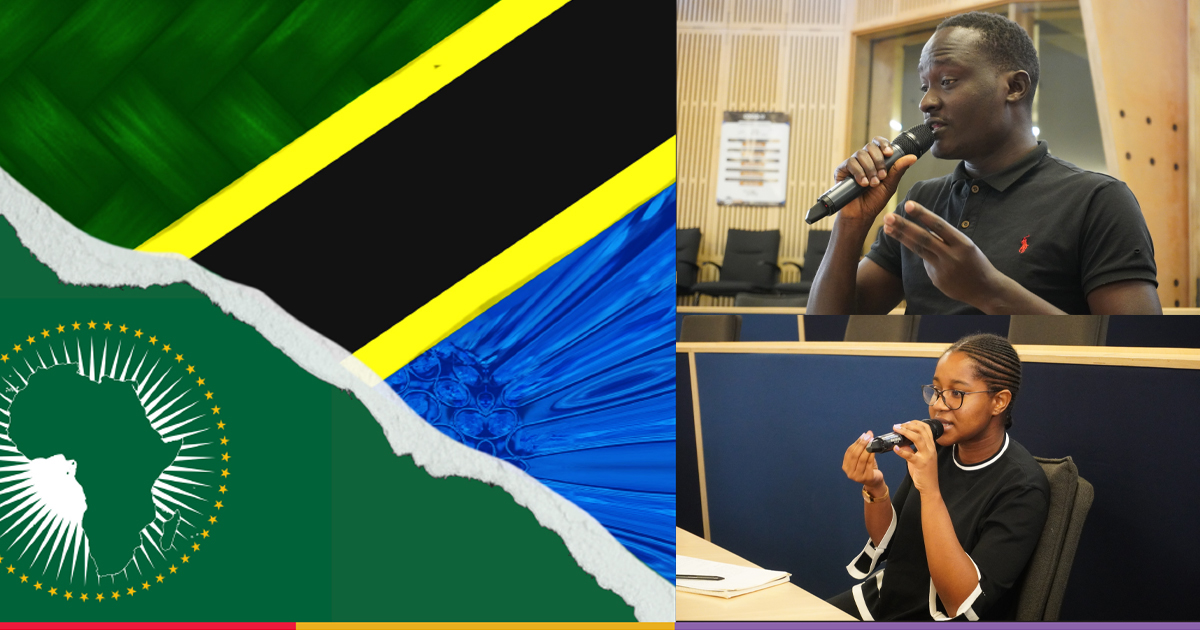
As part of its efforts in increasing awareness and understanding among relevant stakeholders about the jurisprudence of African human rights bodies, the Centre for Human Rights, Faculty of Law, University of Pretoria, on 7 April 2022 launched a quarterly webinar series on decisions of African human rights bodies.
- Details
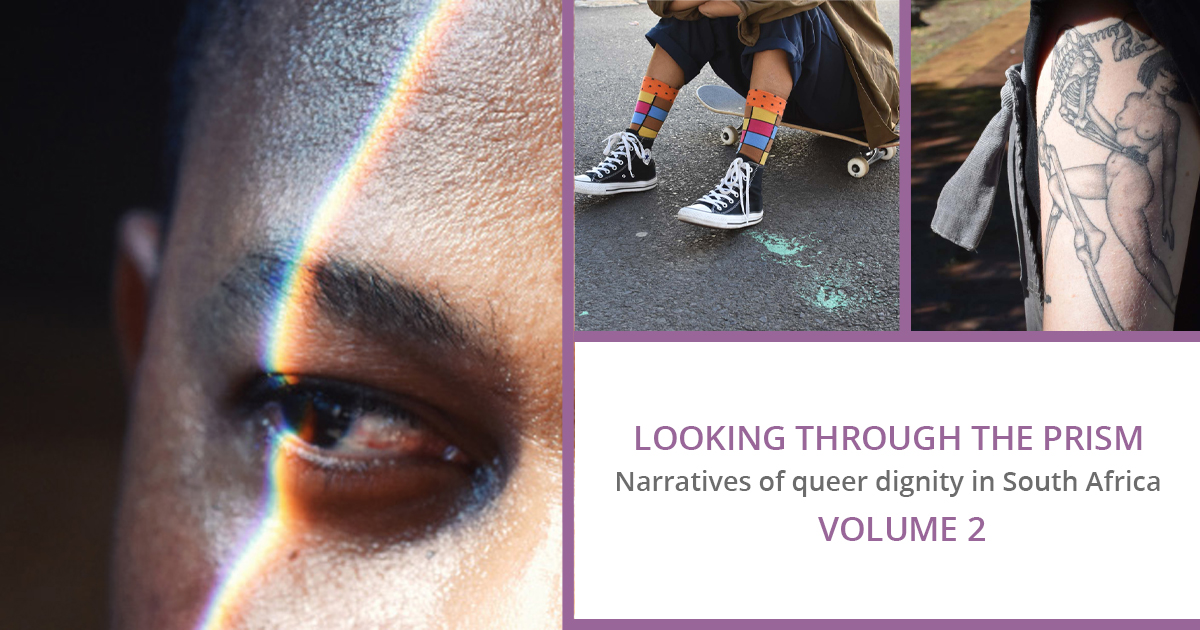
The Centre for Human Rights, Faculty of Law, University of Pretoria, has released volume 2 of the photobook series titled Looking through the prism: Narratives of queer dignity in South Africa. This series features photographs and narratives of the lives of LGBTIQ+ persons living in South Africa. Volume 2 of the series focuses on lesbian, bisexual and queer (LBQ) cisgender and transgender women.
- Details
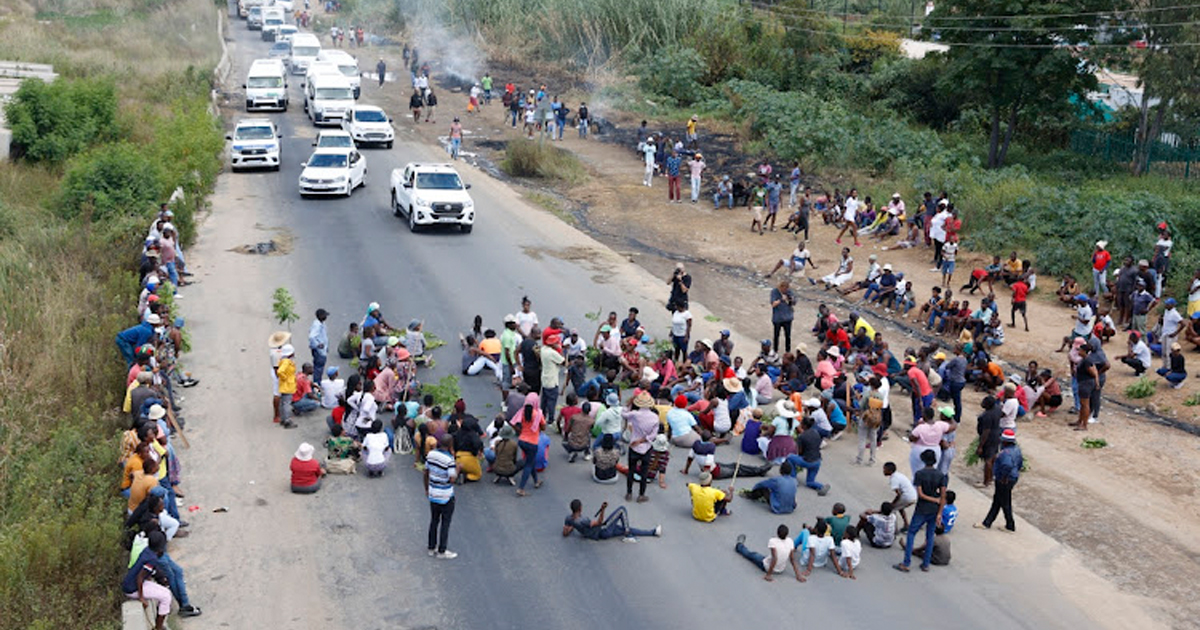
The Centre for Human Rights, Faculty of Law, University of Pretoria, condemns the xenophobic attacks against non-citizens in South Africa and in particular the brutal murder of Elvis Nyathi, a Zimbabwean national residing in the Johannesburg township of Diepsloot. Elvis’ brutal murder happened after several inflammatory statements targeting non-citizens, by representatives of political parties and vigilante groups. The state cannot allow vigilante groups to take the law into their own hands and in the name of curbing crime, engage in an extra-judicial killing of a person solely based on their nationality. If this behaviour is not curtailed through application of the rule of law and protection of the human rights of all people in South Africa by the government, more people will be killed and more livelihoods and property will be destroyed.
- Details
As South Africa get set for the 4th cycle of its review by the UPR in November 2022, the Social Policy Initiative (SPI) and the Centre for Human Rights (Centre) have requested the UPR Working group to encourage South Africa to adopt a new composite index in accordance with the recommendations of the United Nations Committee on Economic, Social and Cultural Rights.
- Details
Season 4 Episode 1: Reversing the commercialisation of public services with a particular focus on the right to health
In conversation with Dr Rosella de Falco and Ms Ashina Mtsumi
Everyone has the right to health which relates to both the right of individuals to obtain a certain standard of health and health care, and the State obligation to ensure a certain standard of public health with the community generally. This episode was published in light of the World Health Day. World Health Day is a global health awareness day celebrated every year on 7 April, under the sponsorship of the World Health Organisation (WHO), as well as other related organisations.
- Details
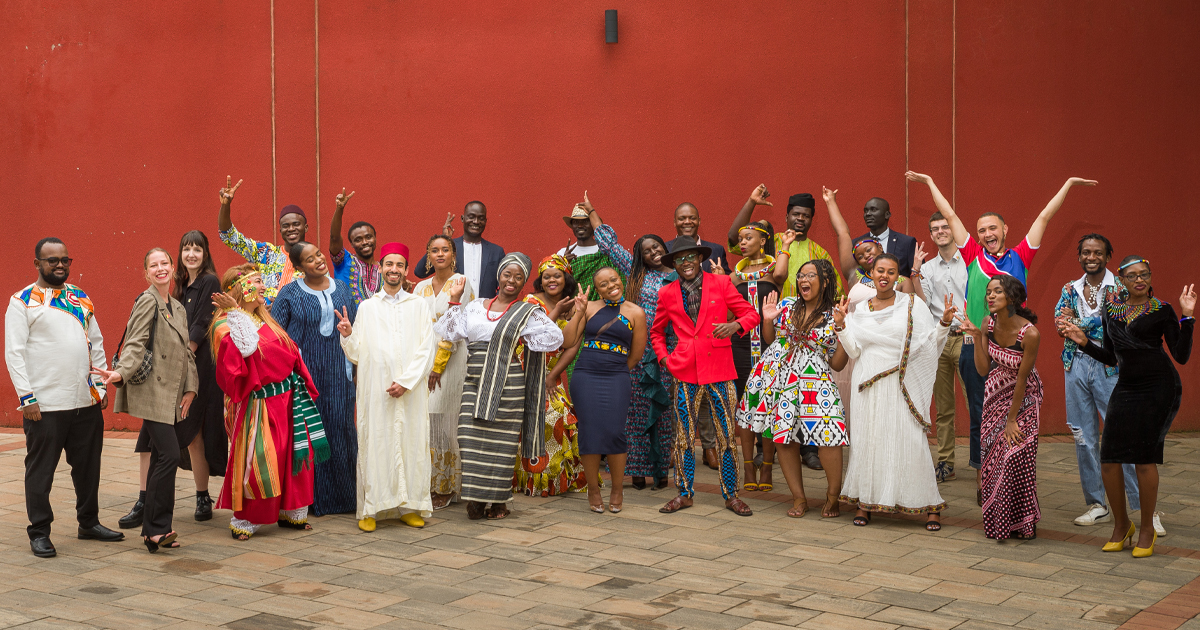
On Friday 25 March 2022, the Centre for Human Rights hosted an official ceremony to welcome and introduce the students of its Master’s students from three different programmes. This is an annual event, which was hosted in person after 2 years due to the COVID-19 pandemic.
- Details
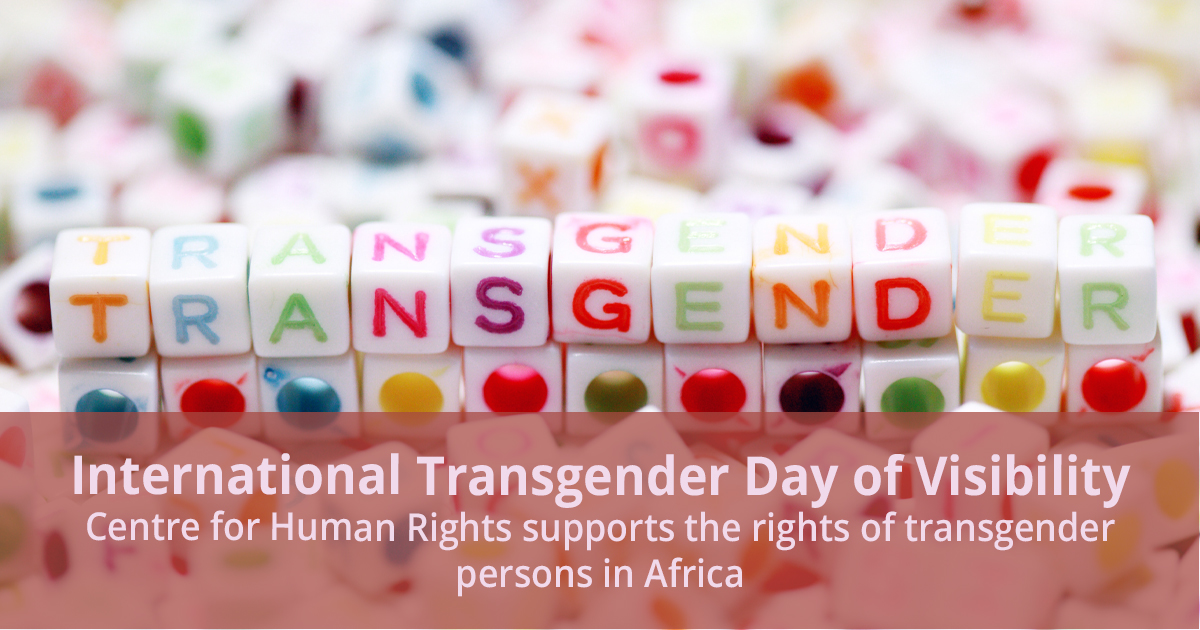
International Transgender Day of Visibility is celebrated globally on the 31st of March every year. International Transgender Day of Visibility celebrates the existence and achievements of transgender persons and seeks to raise awareness of the discrimination experienced by the trans community. Transgender persons have been at the forefront of LGBTIQ+ communities’ struggles and activism and have contributed to the collective human endeavour in fields as diverse as science, law, philosophy and the arts. Unfortunately, transgender persons in Africa and across the world experience a plethora of human rights violations that have not been effectively addressed, such as transphobic killings, inaccessibility to healthcare, lack of legal recognition and exclusion from public areas of life, such as sports and media. Increasingly, there are attempts to portray trans inclusion as anti-feminist, a move which must be rejected as bad faith and ill-informed. The Centre for Human Rights stands by the principle that human rights are universal and inalienable, indivisible, interdependent and interrelated.
- Details
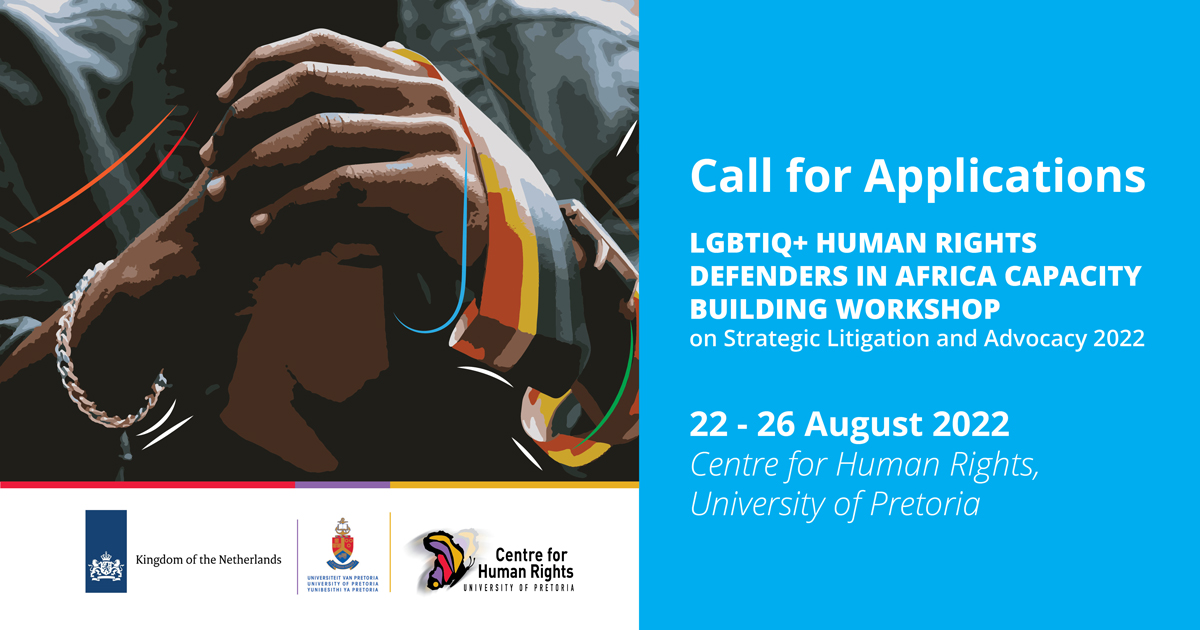
The Centre for Human Rights, Faculty of Law, University of Pretoria, with the support of the Embassy of the Kingdom of the Netherlands, cordially invites you to apply for its Capacity Building Workshop on Strategic Litigation and Advocacy for human rights defenders working on the promotion and protection of the rights of lesbian, gay, bisexual, transgender, intersex, and other non-binary and gender-nonconforming persons in Africa.
- Details
The Centre for Human Rights, Faculty of Law, University of Pretoria, invites you to a webinar discussion on two casesThe Centre for Human Rights, Faculty of Law, University of Pretoria, invites you to a webinar discussion on two cases recently decided by the African Court on Human and Peoples’ Rights. This event is the first of a series of discussions of decisions by African human rights bodies.
- Details
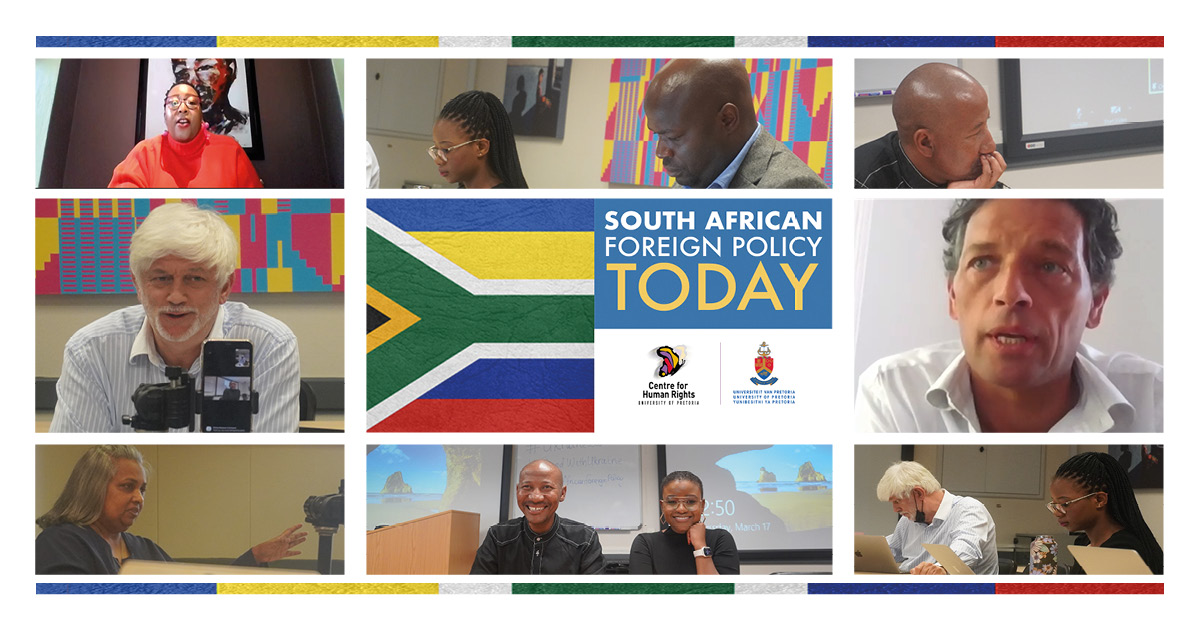
The Centre for Human Rights, in collaboration with the Department of Public Law at the University of Pretoria, held a panel discussion to reflect on South Africa's foreign policy, against the background of the Russian-Ukrainian war. The panel discussion was presented in a hybrid format on 17 March 2022. Panellists agreed that the invasion by Russia of Ukraine was a flagrant violation of international law. However, there were divergent views on the appropriateness of South Africa’s foreign policy position, which tends not to favour unequivocal condemnation of Russia’s actions.
- Details
Two Mondays, 22 years apart
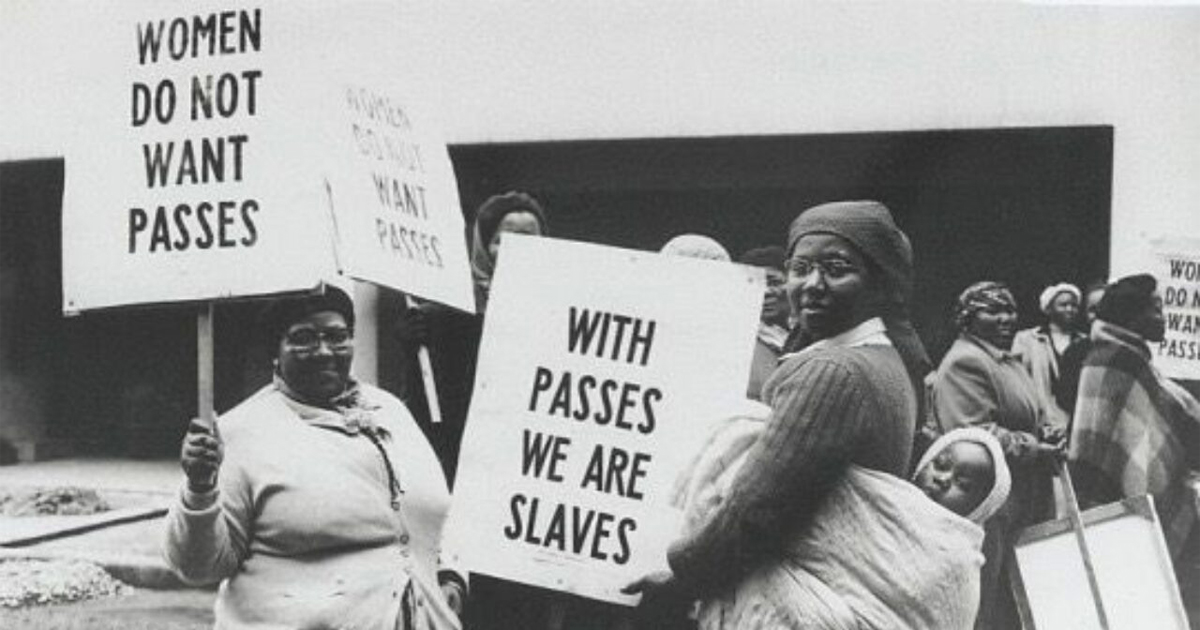
On Monday 21 March 1960, South Africans protesting a race-based and discriminatory pass-law system converged at a police station in Sharpeville. Their peaceful protest was met with state violence, leading to the death of an estimated 69 people. Today, on this Monday 21 March 2022, we mark ‘Human Rights Day’. We think back to those dark days of pervasive human rights violations and denial of basic human dignity. We are reminded that, despite the many causes for being disgruntled, we have come a long way.
- Details
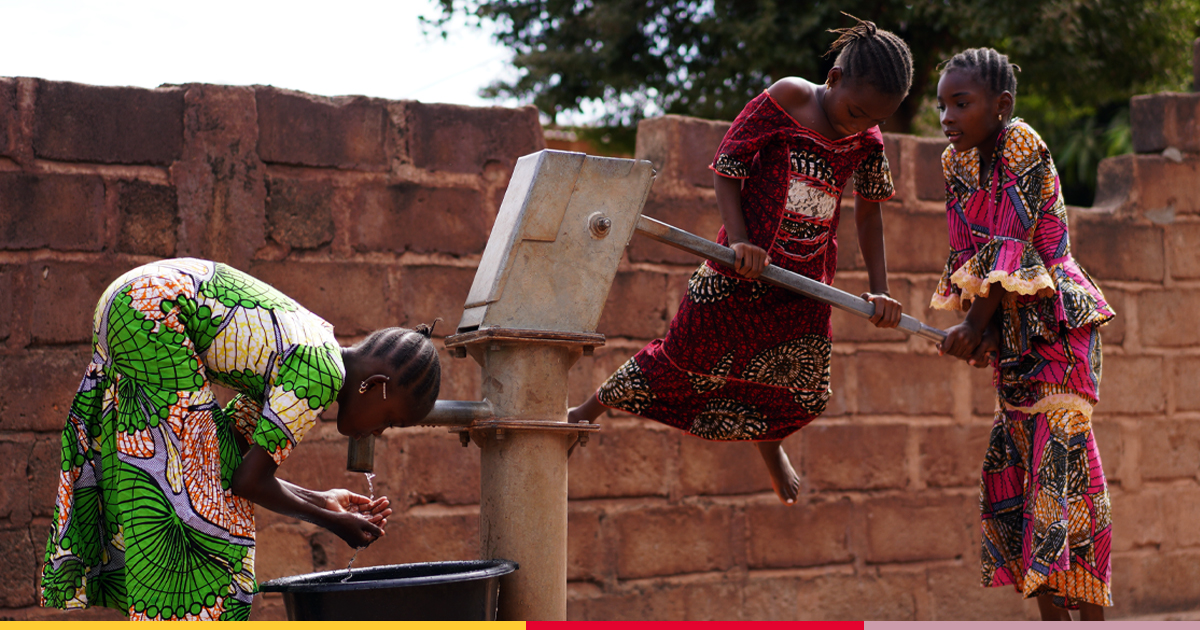
The Working Group seeks to collect inputs from States and civil society on private actor involvement in the provision of social services - including services such as health, education, social security, water and sanitation. The Working Group also seeks to take into account relevant perspectives on the human rights impacts of privatisation, financialisation and commodification in the social service sector.
- Details
The Centre for Human Rights cordially invites you to the Opening Ceremony of Human Rights Master’s Programmes. On this occasion, students on the Human Rights and Democratisation in Africa, Multidisciplinary Human Rights, Sexual and Reproductive Rights programmes in Africa will be individually introduced.
- Details
The African Court on Human and Peoples’ Rights, the African Commission on Human and Peoples’ Rights, and the African Committee of Experts on the Rights and Welfare of the Child are pleased to announce the call for papers for the sixth volume of the African Human Rights Yearbook (AHRY).
- Details
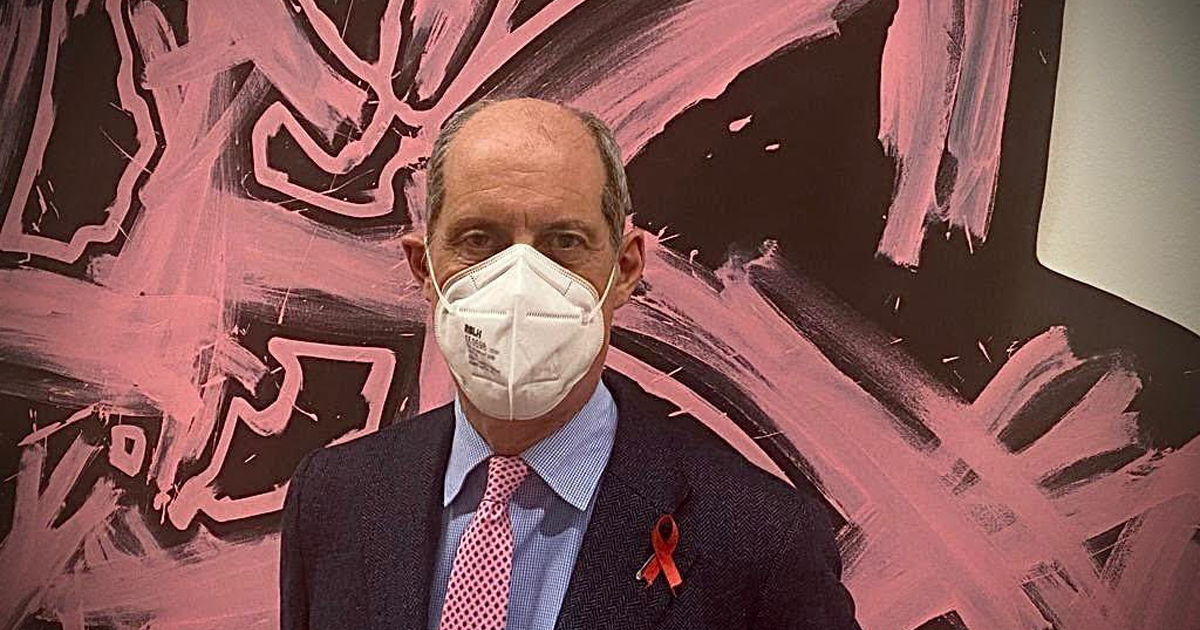
On Monday, 7 March 2022, Italian diplomat Fabrizio Petri, the country’s first Special Envoy for the Human Rights of LGBTQI+ persons, visited the Centre for Human Rights, Faculty of Law, University of Pretoria. Mr Petri is one of only four such Special Envoys globally. In this position, created in 2021 by the country’s Minister of Foreign Affairs and International Cooperation, he works towards promoting and protecting the rights of LGBTQ+ persons around the world, with special focus on the decriminalisation of same-sex sexual relationships.
- Details

The Centre for Human Rights, Faculty of Law, University of Pretoria, welcomes the recently improved pace of ratification of the 2018 Protocol to the African Charter on Human and Peoples’ Rights on the Rights of Persons with Disabilities in Africa (African Disability Protocol). In the past 12 months, Mali, Kenya and Rwanda have ratified the African Disability Protocol. We applaud these three states for demonstrating commitment and political will to promote and protect the rights of persons with disabilities. However, three ratifications in four years represent a very slow ratification rate. Fifteen ratifications are required for its entry into force. At the current rate of ratification, it would take decades for the Africa Disability Protocol to take effect. An acceleration in ratifications is therefore urgently needed.
- Details
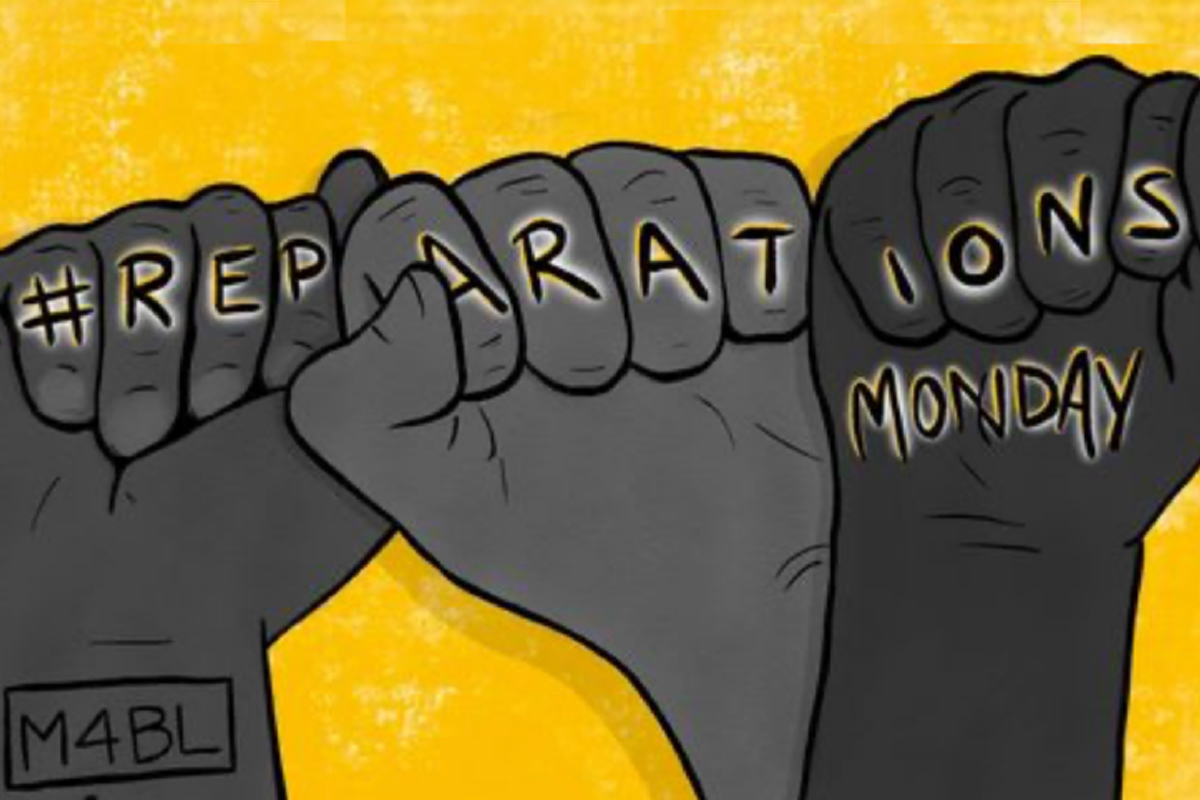
Wellspring’s International Human Rights (IHR) Program seeks a consultant with experience as a practitioner in the transitional justice field to support the Senior Program Officer to further develop a line of grant making to advance implementation of reparation programs for victims and survivors of mass or war-related atrocities and crimes.
- Details

Join the Global Campus Network for this online panel discussion on the current state of human rights in Afghanistan, the role of the UNin the crisis, and the social responsibility of universities.
- Details
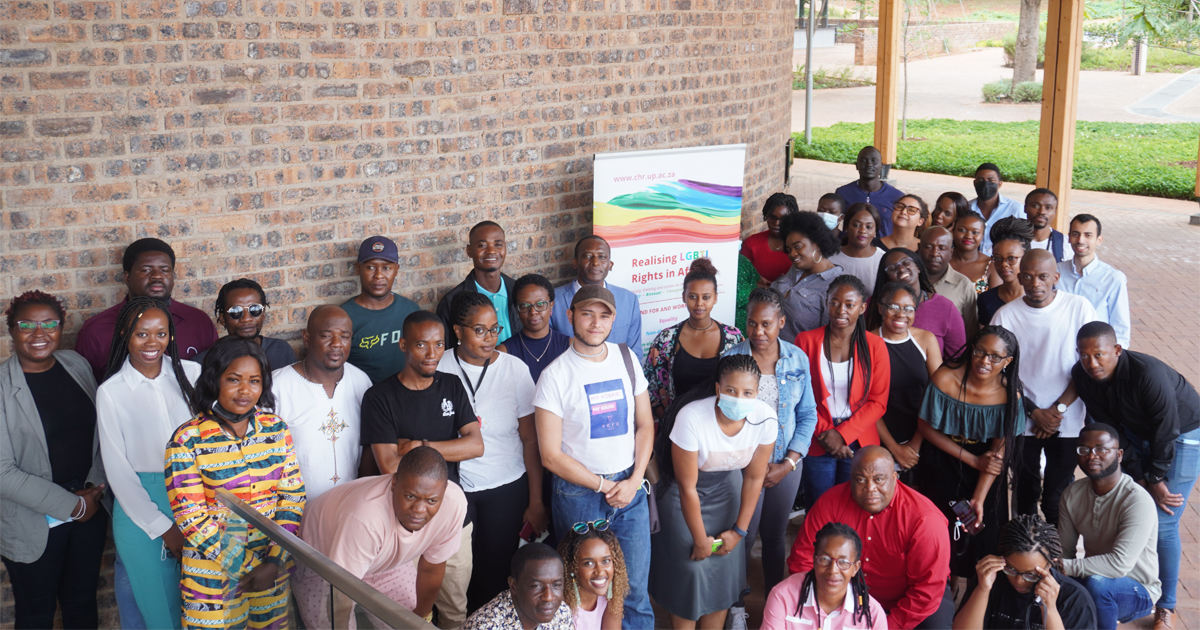
The Advanced Human Rights Courses (AHRC) and the Sexual Orientation, Gender Identity and Expression, and Sex Characteristics (SOGIESC) Units at the Centre for Human Rights (the ‘Centre’), University of Pretoria (UP) recently hosted the 2022 edition of its annual short course on Sexual Minority Rights in Africa. The course was presented through both virtual and physical sessions from 21 to 25 February 2022. The course was attended by 70 participants with more than 15 presenters from both across and outside Africa. Participants included the LLM/Mphil students of the Human Rights and Democratisation in Africa (HRDA) and the Sexual and Reproductive Rights in Africa (SRRA) Masters programmes in the Faculty of Law, UP. Also in attendance were researchers, academics, judicial officers, government workers, and members of civil society. The hybrid format provided an opportunity for the Centre to accommodate a larger group of participants in an interactive, virtual classroom in conjunction with those who physically attended the course.
- Details

Dear minister Enoch Godongwana
As you prepare for your first budget speech we urge you to provide the South African public with a full picture of how the government has used the resources it has received from international financial institutions (IFIs) and to announce the establishment of a South African IFI engagement group.
- Details
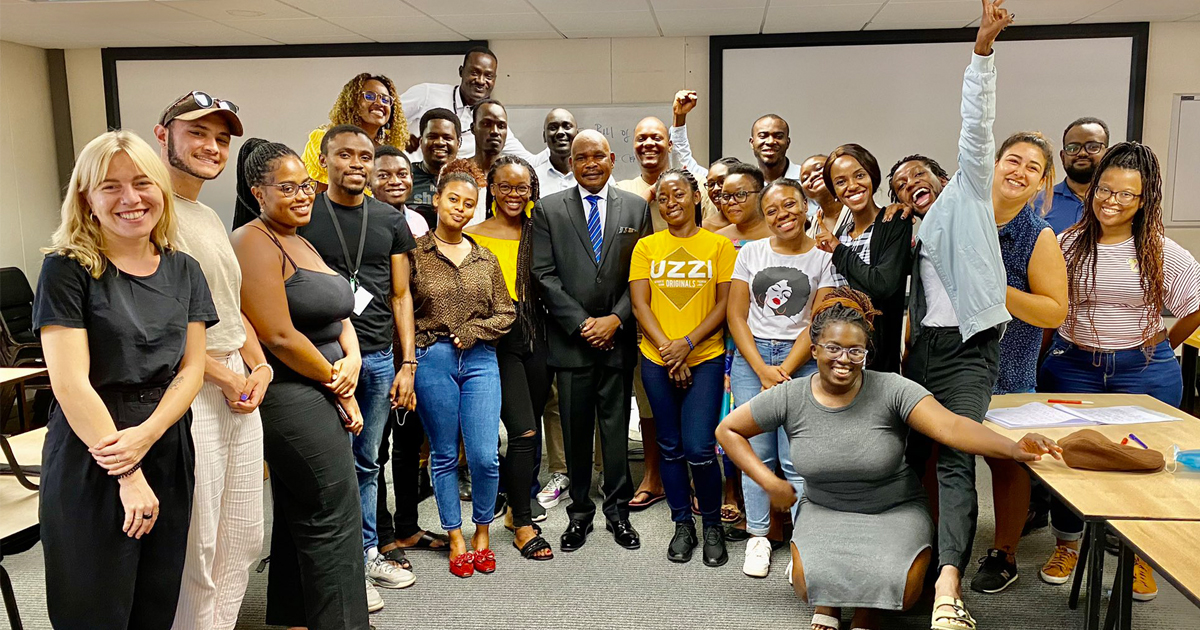
From 13 - 17 February, the Centre for Human Rights hosted Prof Mutua Makau, SUNY Distinguished Professor and Margaret W. Wong Professor from the SUNY Buffalo Law School to teach on the Master's Programme on Human Rights and Democratisation in Africa. Prof Mutua Makau focused on different topics such as duties in international human rights law, democracy and globalisation, and the rule of law and development in Africa.
- Details
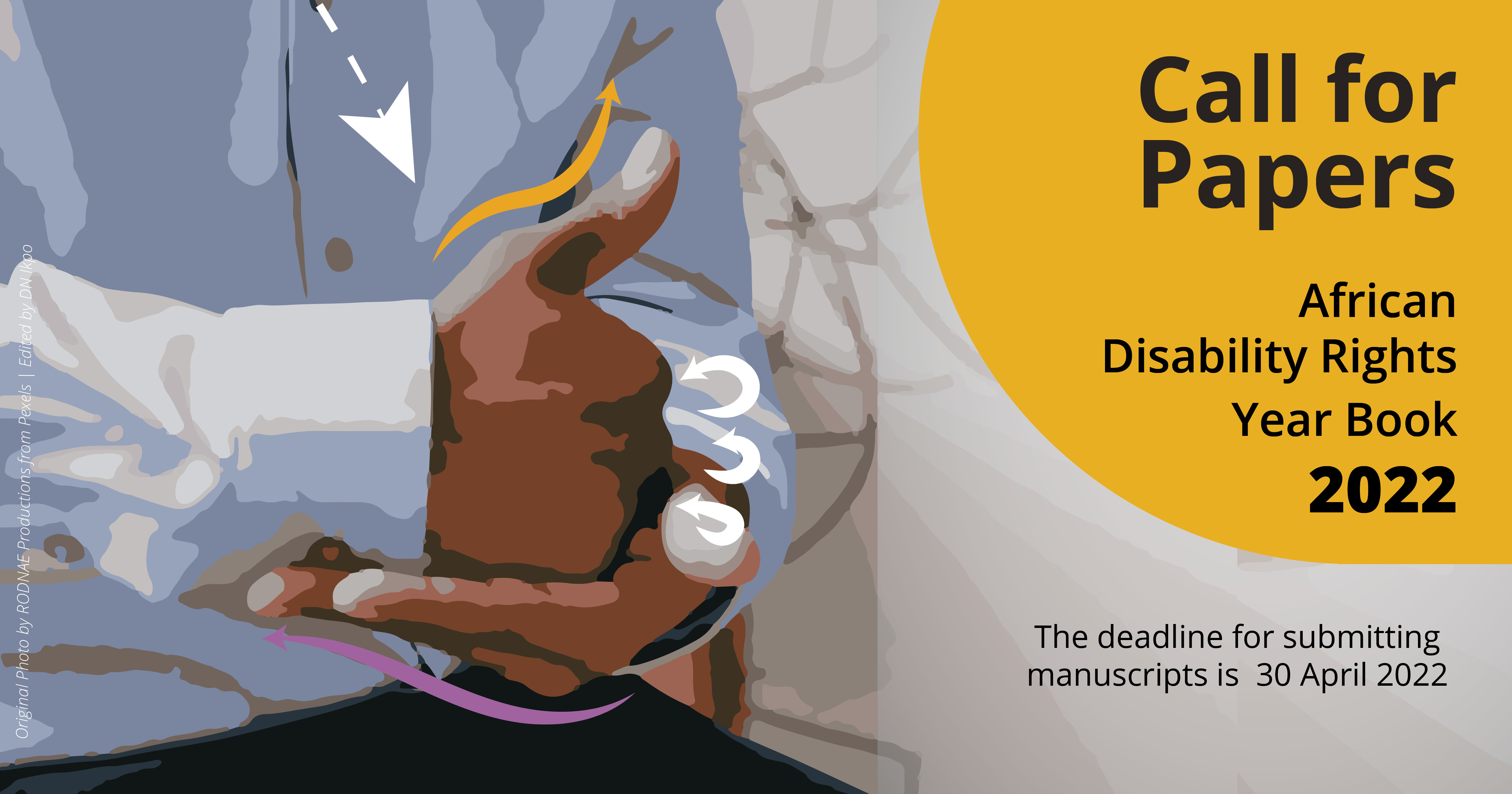
The African Disability Rights Yearbook (ADRY) is calling for papers for consideration for publication in Section A of the ADRY in 2022. The ADRY publishes once a year with a focus on disability rights issues and developments of contemporary concern to persons with disabilities on the African continent. The ADRY is published by the Pretoria University Law Press (PULP) and is published as a peer-reviewed open-access journal.
- Details

The Centre for Human Rights, University of Pretoria cordially invite you to a discussion on the impact of United Nations human rights treaties and mechanisms at the domestic level, organized jointly by the Norwegian Centre for Human Rights (University of Oslo) and the Centre for Human Rights (University of Pretoria) as part of a project funded by Diku’s UTFORSK programme.
- Details
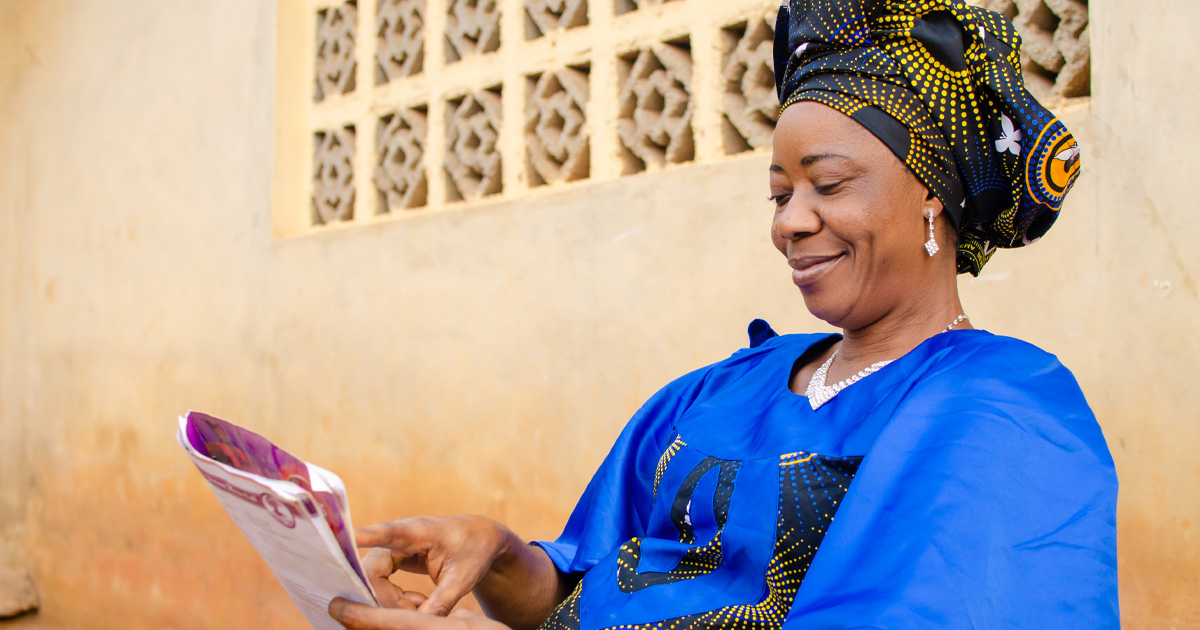
The Centre for Human Rights (Centre) in partnership with Konrad Adenauer Stiftung (KAS) under the aegis of the Rule of Law Program for Sub Saharan Africa developed simple-easy-reference booklets (for non-lawyers) that summarise the Bill of Rights as espoused in the constitutions of selected “Anglophone African” countries which are: Kenya, Malawi and Zambia.The broad aim is to promote human rights and constitutional literacy in Africa.